

Choosing the right argon mixture for MIG welding is key to achieving smooth, spatter-free, and strong welds. This guide breaks down the best gas blends for different metals, how to set up your system, and common mistakes to avoid.
Key Takeaways
- Argon is the base gas: Most MIG welding gas mixtures use argon as the primary component because it creates a stable arc and clean weld pool.
- CO2 adds penetration: Adding CO2 (typically 5–25%) increases arc stability and penetration, especially on steel.
- Tri-mix for stainless steel: A blend of argon, CO2, and helium (e.g., 90/7.5/2.5) improves heat input and weld appearance on stainless.
- Use pure argon only for non-ferrous metals: Aluminum and magnesium require 100% argon to prevent oxidation and ensure proper fusion.
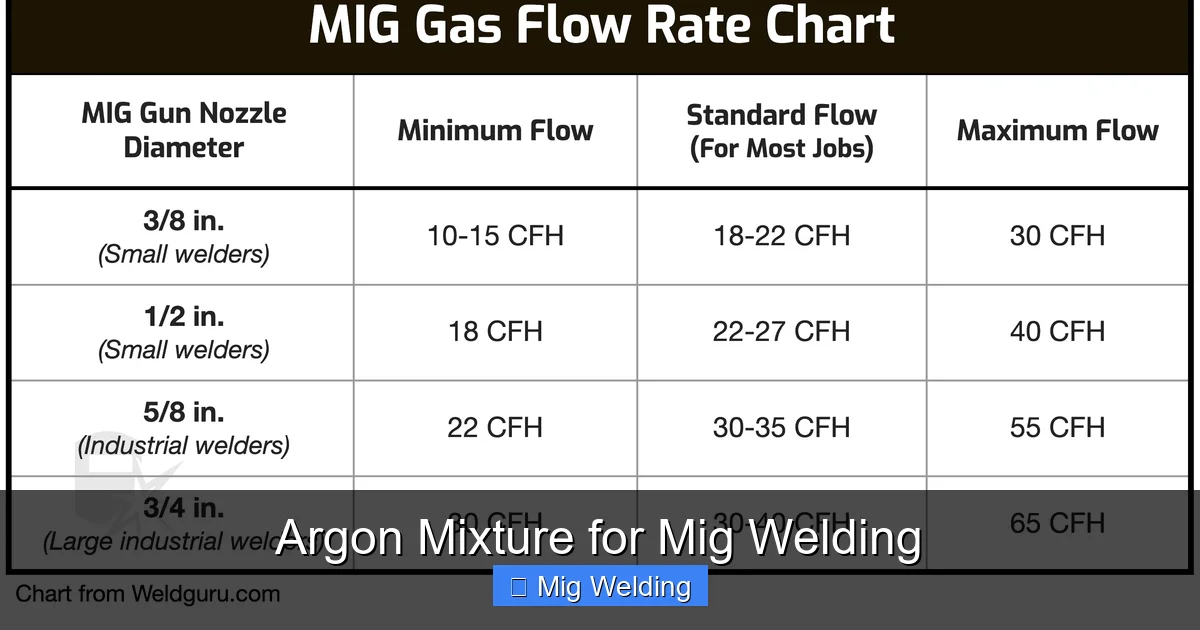
- Regulator and flow rate matter: Set your gas flow between 20–25 CFH and check for leaks to maintain consistent shielding.
- Store cylinders safely: Always secure gas tanks upright, away from heat, and use proper fittings to avoid accidents.
- Match gas to material and thickness: Thicker steel may need more CO2, while thin aluminum needs lower voltage and pure argon.
What Is an Argon Mixture for MIG Welding?
If you’re new to MIG welding, you might wonder why gas matters so much. The truth is, the argon mixture for MIG welding plays a huge role in how your welds look, feel, and hold up. MIG (Metal Inert Gas) welding uses a continuous wire feed and a shielding gas to protect the weld pool from contaminants like oxygen and nitrogen. Without the right gas, your welds can become porous, weak, or full of spatter.
Argon is the most common base gas because it’s inert—meaning it doesn’t react with molten metal. But pure argon isn’t always the best choice. Depending on the metal you’re welding, you’ll often mix argon with other gases like carbon dioxide (CO2) or helium to improve performance. This guide will walk you through everything you need to know to pick, set up, and use the right argon mixture for your projects.
Why Gas Mixtures Matter in MIG Welding
Shielding gas does more than just block air—it affects arc stability, penetration, spatter, and even the shape of your weld bead. A poor gas choice can lead to:
Visual guide about Argon Mixture for Mig Welding
Image source: weldingpros.net
- Porous or weak welds
- Excessive spatter (that sticky, burnt-looking residue)
- Unstable arc that’s hard to control
- Poor fusion between weld and base metal
Using the right argon mixture for MIG welding ensures a clean, strong, and professional-looking result. It also makes welding easier, especially for beginners.
Common Argon Gas Mixtures and Their Uses
Not all argon mixtures are created equal. Here’s a breakdown of the most popular blends and when to use them.
Visual guide about Argon Mixture for Mig Welding
Image source: weldingpros.net
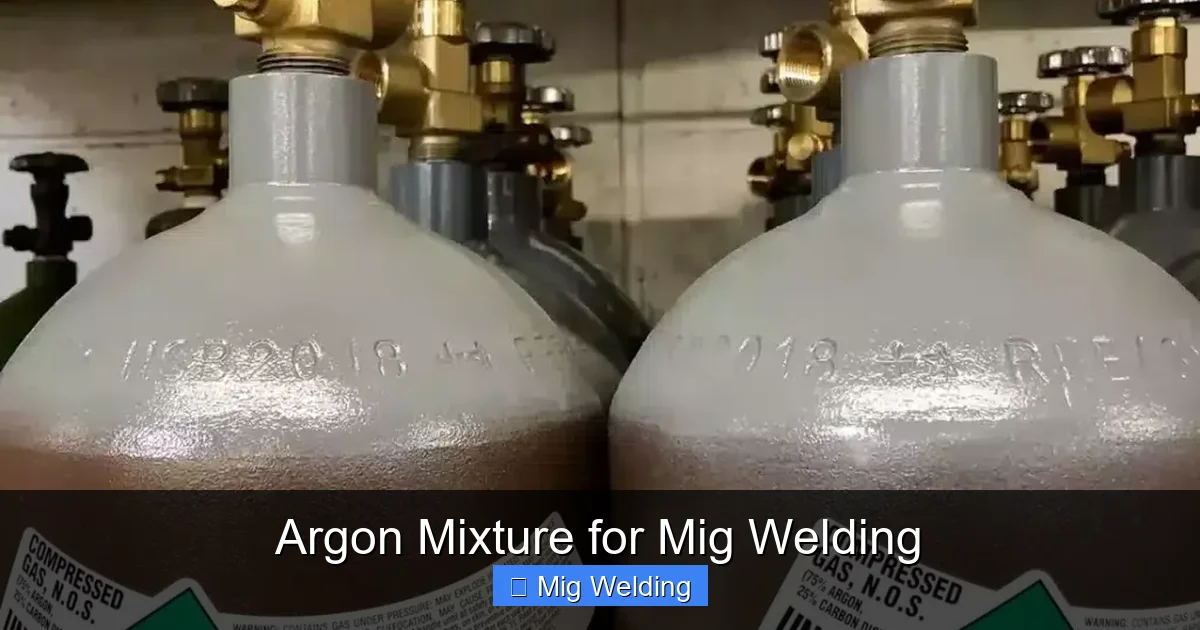
75% Argon / 25% CO2 (C25)
This is the most widely used mixture for welding mild steel. The 25% CO2 adds deep penetration and a strong arc, while argon keeps the weld pool clean and stable. It’s great for general fabrication, automotive repair, and structural work.
Best for: Mild steel, thicker materials (over 1/8 inch), high-speed welding.
Tip: C25 can produce more spatter than lower CO2 blends, so keep your gun angle consistent and use anti-spatter spray.
90% Argon / 10% CO2 (C10)
A smoother alternative to C25, this mix reduces spatter and gives a softer arc. It’s ideal for thinner steel where you don’t need deep penetration.
Best for: Thin-gauge steel, sheet metal, and out-of-position welding.
Example: Welding car body panels or HVAC ducts.
98% Argon / 2% CO2 (C2)
This ultra-low CO2 blend is used in precision welding, especially in automated or robotic systems. It produces very little spatter and a clean bead, but with less penetration.
Best for: Thin materials, high-quality cosmetic welds, robotic welding.
Tri-Mix (Argon + CO2 + Helium)
Commonly used for stainless steel, a tri-mix might be 90% argon, 7.5% helium, and 2.5% CO2. Helium increases heat input, which helps with fusion on stainless and improves weld appearance.
Best for: Stainless steel, especially thicker sections or when a smooth, shiny bead is desired.
Note: Helium is more expensive, so use tri-mix only when necessary.
100% Argon
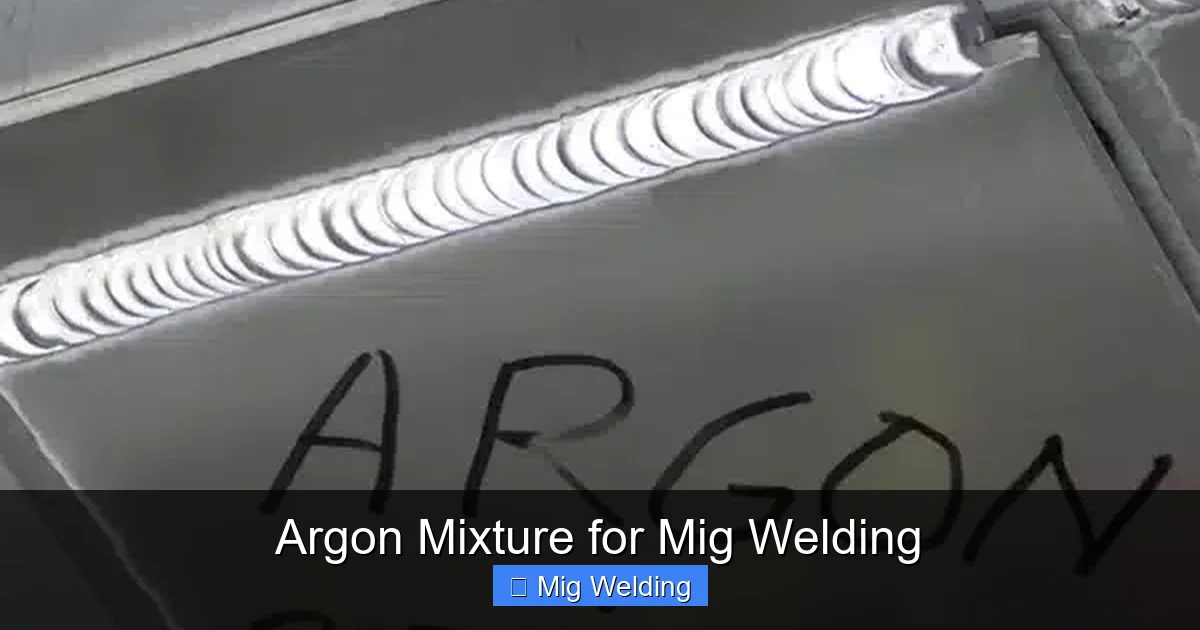
Pure argon is essential for welding non-ferrous metals like aluminum and magnesium. These metals oxidize quickly, and argon’s inert nature prevents contamination.
Best for: Aluminum, magnesium, and some copper alloys.
Tip: Use a spool gun or push-pull gun for aluminum to avoid wire feeding issues.
How to Choose the Right Argon Mixture
Selecting the correct gas blend depends on three main factors: the metal you’re welding, its thickness, and your welding position.
Step 1: Identify the Base Metal
- Mild steel: Use C25 (75/25) for most jobs, or C10 for thin materials.
- Stainless steel: Try a tri-mix or 98/2 argon/CO2 for best results.
- Aluminum: Always use 100% argon.
Step 2: Consider Material Thickness
- Thin materials (under 1/8 inch): Use lower CO2 blends (C10 or C2) to avoid burn-through.
- Thick materials (over 1/4 inch): Higher CO2 (C25) gives better penetration.
Step 3: Think About Welding Position
- Flat or horizontal: Most gas mixes work well.
- Vertical or overhead: Use lower spatter blends like C10 for better control.
Setting Up Your MIG Welder with Argon Mix
Once you’ve chosen your gas, it’s time to set up your machine properly. A good setup ensures consistent shielding and high-quality welds.
Step 1: Install the Gas Cylinder
- Secure the cylinder upright with a chain or strap.
- Remove the cap and inspect the valve for damage.
- Attach the regulator and tighten with a wrench—don’t over-tighten.
Step 2: Connect the Hose and Gun
- Connect the gas hose from the regulator to the MIG welder.
- Make sure all connections are snug and leak-free.
- Attach the welding gun and check for kinks in the cable.
Step 3: Set the Gas Flow Rate
- Open the cylinder valve slowly.
- Set the flow rate to 20–25 cubic feet per hour (CFH).
- Too low? You’ll get porosity. Too high? You waste gas and can disturb the weld pool.
Step 4: Test for Leaks
- Apply soapy water to all connections.
- Watch for bubbles—if you see any, tighten the fitting or replace the seal.
Practical Tips for Better Results
Even with the right gas, poor technique can ruin a weld. Here are some pro tips:
- Clean your metal: Remove rust, paint, and oil before welding. Contaminants react with gas and cause defects.
- Use the right wire: ER70S-6 for steel, ER4043 or ER5356 for aluminum.
- Maintain proper stick-out: Keep the wire 3/8 to 1/2 inch out of the nozzle for best gas coverage.
- Weld in a draft-free area: Wind or fans can blow away shielding gas. Use a welding curtain if needed.
- Pre-flow and post-flow: Let gas flow for 1–2 seconds before and after welding to protect the start and end of the weld.
Troubleshooting Common Gas-Related Problems
Still having issues? Here’s how to fix common problems caused by incorrect argon mixtures or setup.
Porosity (holes in the weld)
Cause: Contaminated gas, low flow rate, or air drafts.
Fix: Check for leaks, increase flow to 22–25 CFH, and weld in a sheltered area.
Excessive Spatter
Cause: Too much CO2, high voltage, or dirty metal.
Fix: Switch to a lower CO2 blend (like C10), reduce voltage, and clean the base metal.
Unstable Arc or Arc Blow
Cause: Poor grounding, magnetic fields, or incorrect gas mix.
Fix: Ensure a solid ground clamp, reposition it if needed, and verify your gas blend matches the material.
Weak or Incomplete Fusion
Cause: Low heat input or wrong gas for the metal.
Fix: Increase voltage or wire speed, and double-check that you’re using the right argon mixture.
Safety Tips When Using Argon Mixtures
Gas cylinders are safe when handled correctly, but they require caution.
- Always store cylinders upright and secured.
- Keep them away from heat, sparks, and direct sunlight.
- Use only approved regulators and hoses.
- Never use oil or grease on gas fittings—it can cause explosions.
- Ventilate your workspace—argon can displace oxygen in confined spaces.
Conclusion
Choosing the right argon mixture for MIG welding doesn’t have to be complicated. By matching your gas blend to the metal, thickness, and welding conditions, you’ll get cleaner, stronger, and more consistent welds. Whether you’re using C25 for steel, tri-mix for stainless, or pure argon for aluminum, proper setup and technique make all the difference. Remember to check for leaks, maintain the right flow rate, and keep your workspace clean and draft-free. With these tips, you’ll be welding like a pro in no time.
