

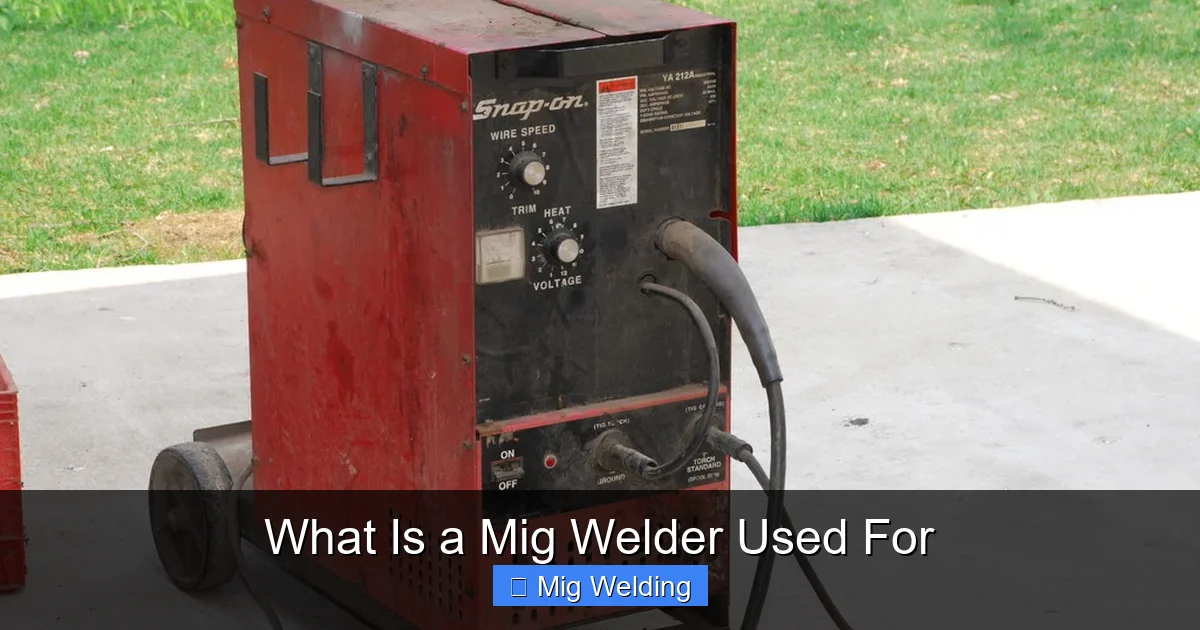
A MIG welder is a versatile tool primarily used for welding metals quickly and efficiently. This guide explains what a MIG welder is, its common applications, and tips for getting the best results in your projects.
What Is a MIG Welder Used For
If you’re new to welding or looking to expand your toolkit, understanding what a MIG welder is used for is essential. MIG welding, also known as Metal Inert Gas welding, is one of the most popular welding methods today. It offers speed, ease of use, and reliable results, making it suitable for both professionals and DIY enthusiasts.
In this comprehensive guide, you’ll learn what a MIG welder is, its common applications, and how to use it effectively. Whether you’re welding automotive parts, building a metal fence, or working on artistic projects, understanding the uses of a MIG welder will help you achieve better results.
Key Takeaways
- What is a MIG welder? A MIG welder uses a continuous wire feed and shielding gas to join metals quickly and cleanly.
- Primary uses MIG welders are ideal for welding thin to thick metals, including steel, stainless steel, and aluminum.
- Advantages They offer fast welding speeds, ease of use, and produce clean, strong welds, making them popular in many industries.
- Common applications MIG welders are used in automotive repairs, construction, manufacturing, and DIY projects.
- Safety tips Always wear protective gear, ensure proper ventilation, and follow safety guidelines when using a MIG welder.
- Choosing the right MIG welder depends on your project size, metal type, and experience level.
What Is a MIG Welder?
A MIG welder is a type of welding machine that uses a continuous wire feed as an electrode and a shielding gas to protect the weld from contamination. The process involves feeding a spool of consumable wire through a welding gun, which heats and melts the wire when it contacts the workpiece.
The shielding gas, typically argon, carbon dioxide, or a mix of both, surrounds the weld area to prevent oxidation and other impurities. This method results in clean, smooth welds that are strong and durable.
Common Uses of a MIG Welder
1. Automotive Welding
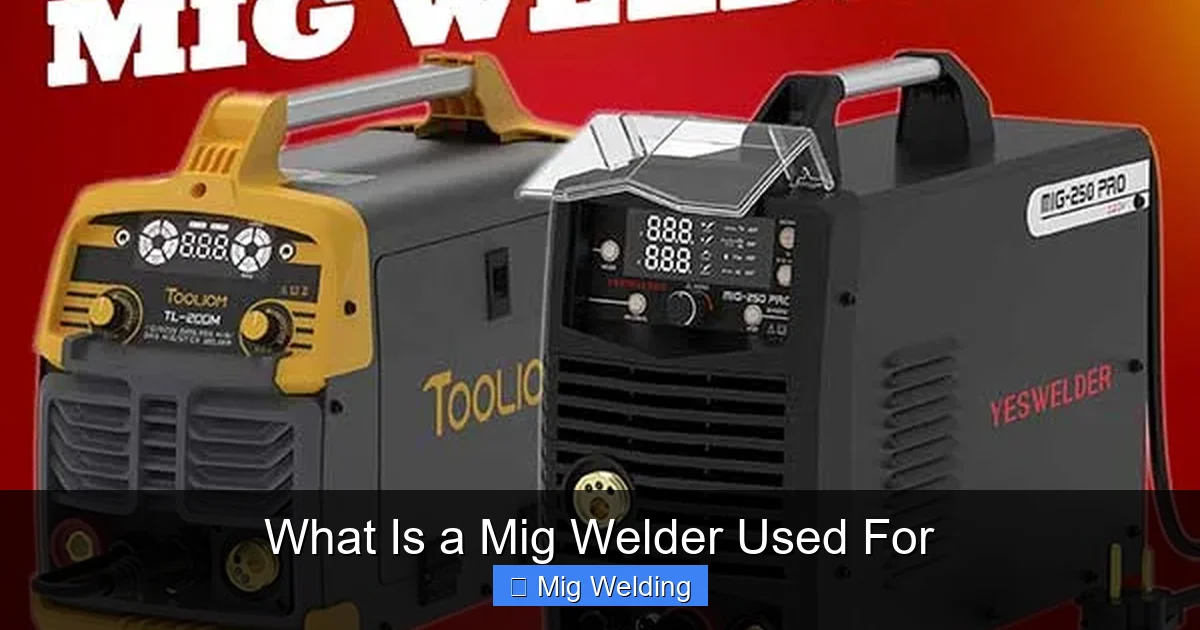
MIG welders are widely used in automotive repair shops and car manufacturing. They are perfect for welding thin sheet metal, such as car bodies, panels, and exhaust systems. The ability to make quick, clean welds helps in restoring vehicles efficiently.
Visual guide about What Is a Mig Welder Used For
Image source: weldever.com
2. Fabrication and Manufacturing
Factories and fabrication shops rely heavily on MIG welding to produce metal structures, frames, and equipment. Its speed and versatility allow for rapid production of large components.
3. Construction Projects
Building steel frameworks, fences, gates, and structural supports are common applications. MIG welding can handle large projects with ease, especially when working with steel and stainless steel.
4. DIY and Home Projects
Many hobbyists use MIG welders for personal projects like building furniture, art pieces, or repairing metal items. Its user-friendly nature makes it accessible for beginners.
5. Artistic and Custom Work
Artists and custom fabricators utilize MIG welders to create sculptures, decorative pieces, and unique custom metalwork. The clean welds and versatility make it ideal for detailed work.
Advantages of Using a MIG Welder
- Speed: MIG welding is faster than many other welding methods, saving time on projects.
- Ease of Use: Its straightforward operation makes it suitable for beginners and professionals alike.
- Clean Results: Produces smooth, professional-looking welds with minimal cleanup.
- Versatility: Can weld a variety of metals and thicknesses with appropriate settings and consumables.
- Less Skill Required: Compared to TIG or stick welding, MIG welding is easier to learn and master.
How to Use a MIG Welder: Step-by-Step Guide
Step 1: Prepare Your Workspace
Choose a well-ventilated area free of flammable materials. Wear appropriate safety gear, including gloves, welding helmet, protective clothing, and eye protection.
Visual guide about What Is a Mig Welder Used For
Image source: d2qc09rl1gfuof.cloudfront.net
Visual guide about What Is a Mig Welder Used For
Image source: machinesused.s3.amazonaws.com
Step 2: Gather Your Materials and Equipment
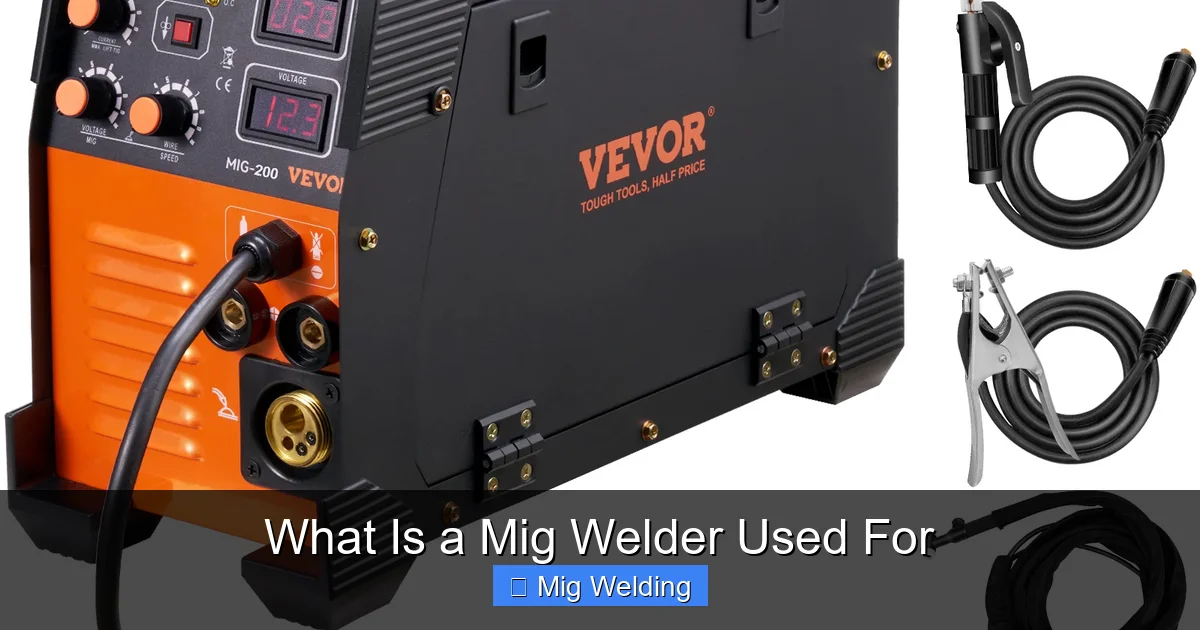
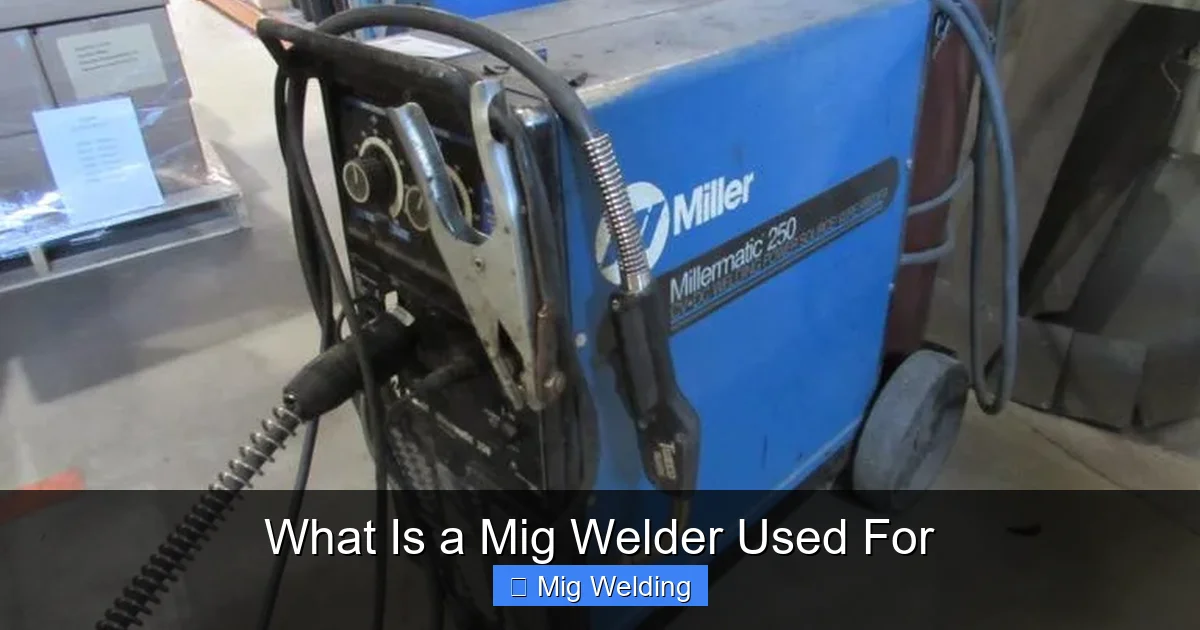
- MIG welder machine
- Welding wire spool suitable for your project
- Shielding gas (usually a mix of argon and CO2)
- Proper electrode tip and contact tips
- Workpieces to be welded
- Clamps or magnets to hold materials in place
Step 3: Set Up the MIG Welder
Adjust the Wire Feed Speed
Set the wire feed to a speed suitable for your metal thickness. Consult your welder’s manual for specific settings.
Set the Voltage
Adjust the voltage based on the metal type and thickness. Higher voltage for thicker metals.
Attach the Shielding Gas
Connect the gas cylinder and ensure the flow rate is appropriate—usually around 20-30 cubic feet per hour.
Step 4: Prepare the Metal Pieces
Clean the metal surfaces to remove rust, paint, or dirt. Use a wire brush or grinder if necessary. Clean surfaces ensure better weld quality.
Step 5: Make the Welding Connection
Position the Workpieces
Clamp materials securely and align them properly.
Start Welding
Hold the gun at a 15-20 degree angle, maintain a steady distance (about 1/4 inch) from the workpiece, and press the trigger to start the wire feed. Move steadily along the joint.
Step 6: Finish and Inspect
Once the weld is complete, release the trigger and allow the weld to cool. Inspect the weld for consistency, penetration, and any defects.
Practical Tips for Better MIG Welding Results
- Keep a consistent speed and angle for uniform welds.
- Practice on scrap metal before starting your project.
- Adjust settings based on material type and thickness.
- Maintain proper shielding gas flow for clean welds.
- Use a proper grounding clamp to prevent electrical issues.
Troubleshooting Common MIG Welding Issues
- Porosity or holes in weld: Check shielding gas flow and cleanliness of the metal.
- Weld not sticking or poor penetration: Increase voltage or wire feed speed, and ensure proper contact tip size.
- Spattering: Reduce voltage or wire feed speed, and ensure proper gun angle.
- Burn-through on thin metal: Lower voltage and use a smaller wire diameter.
Conclusion
A MIG welder is a powerful and versatile tool used for a wide range of metalworking projects. From automotive repairs to artistic creations, its ease of use and efficiency make it a favorite among professionals and hobbyists alike. By understanding what a MIG welder is used for and following proper procedures, you can achieve strong, clean welds and complete your projects confidently.
Final Tips
Start with small projects to build your skills. Always prioritize safety, and don’t hesitate to seek training or tutorials if you’re new to welding. With practice, you’ll unlock the full potential of your MIG welder and tackle more complex tasks effectively.
