
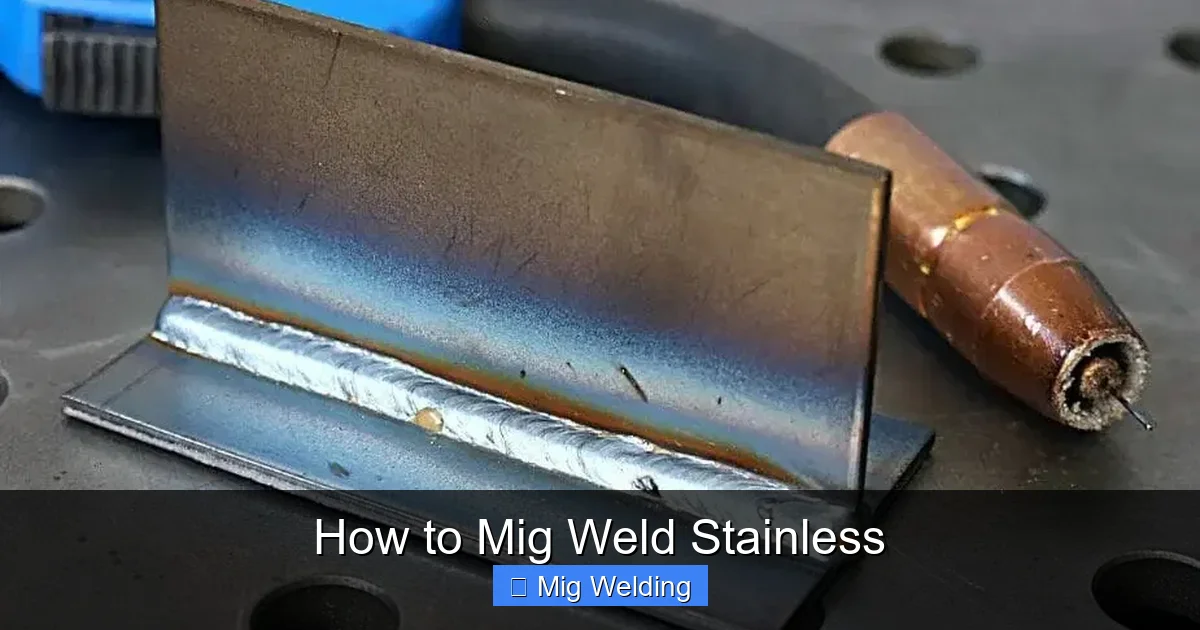
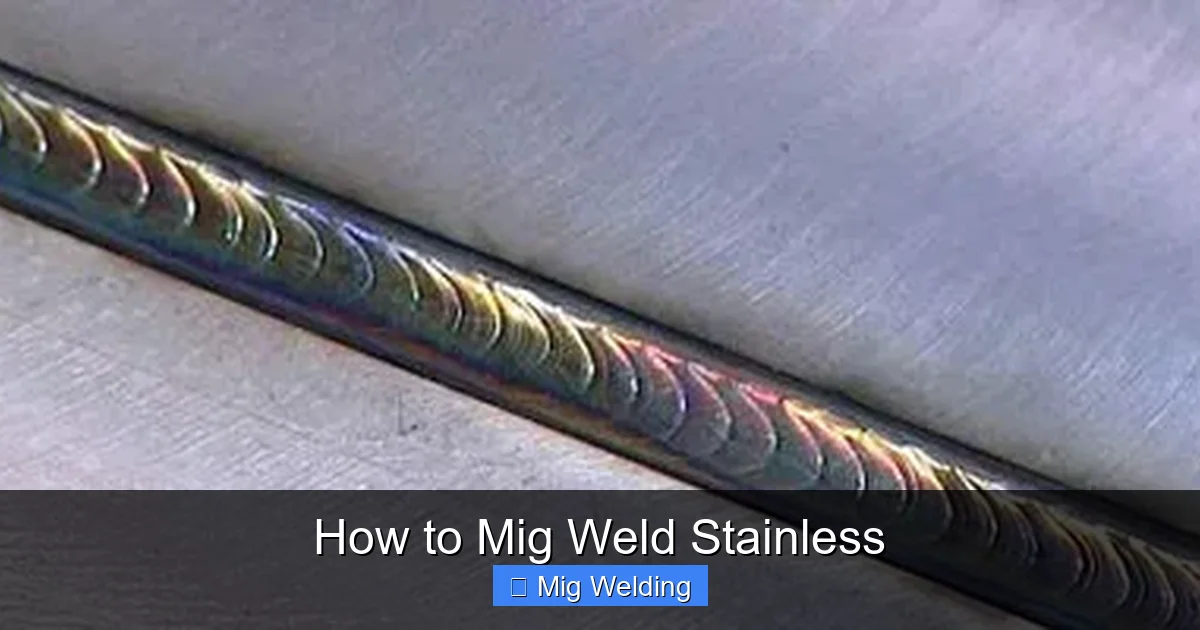
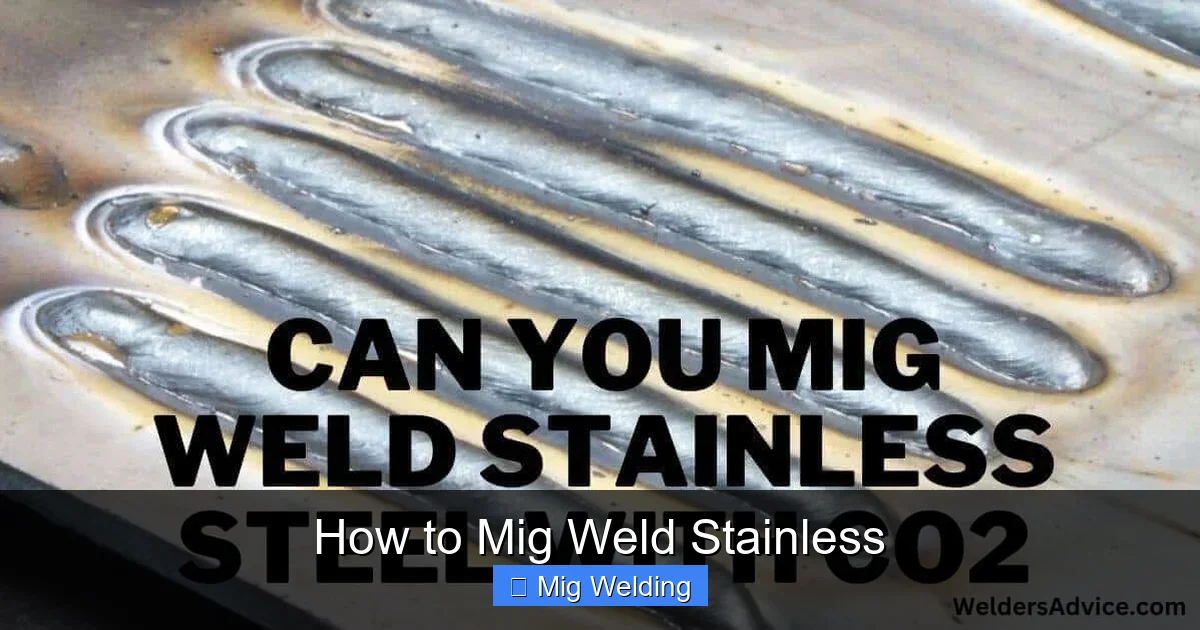
MIG welding stainless steel is a popular choice for many metal fabrication projects. It offers a clean, strong weld with minimal fuss. Whether you’re repairing a part or building something new, knowing how to MIG weld stainless steel correctly makes a big difference in the quality of your work. In this guide, you’ll learn step-by-step how to set up your equipment, choose the right materials, and execute high-quality welds. Let’s get started! MIG (Metal Inert Gas) welding, also known as GMAW (Gas Metal Arc Welding), uses a continuous wire feed and shielding gas to weld metals. When welding stainless steel, the goal is to create a clean, corrosion-resistant weld that maintains the material’s integrity. Stainless steel requires specific settings and materials to prevent contamination and achieve strong, smooth welds. Visual guide about How to Mig Weld Stainless Image source: cdn.sheetstainlesssteel.com Ensure your MIG welder is capable of handling stainless steel wire and shielding gases. A machine with adjustable voltage and wire feed speed is ideal for precise control. Visual guide about How to Mig Weld Stainless Image source: cdn.shopify.com Use stainless steel MIG wire like ER308L, ER308, ER316L, or ER316 depending on the type of stainless steel you’re welding. ER308L is common for 304 stainless steel, while ER316L is suitable for 316 stainless steel. Use pure argon or an argon-CO2 mix (commonly 98% argon, 2% CO2) for MIG welding stainless steel. Pure argon provides a cleaner weld with less spatter. Thoroughly clean the stainless steel surface. Remove oil, grease, rust, or paint using a wire brush, grinder, or stainless steel cleaner. Contaminants can cause weld defects or rust in the weld zone. Visual guide about How to Mig Weld Stainless Image source: weldersadvice.com Secure the workpiece firmly. Proper positioning ensures better control and weld quality. Use clamps to prevent movement during welding. Set your welding machine to the correct wire diameter and gas flow rate. Run a few test welds on scrap to fine-tune your settings. Hold the MIG gun at a 10-15 degree angle to the workpiece. Keep the tip about 1/4 inch from the surface. Maintain a steady hand and consistent travel speed. Move at a moderate, steady pace. Too slow can cause excess buildup and a hot weld, while too fast might result in weak or incomplete fusion. For most applications, a straight stringer bead is best. For wider joints, a slight weaving motion can help fill gaps evenly. Begin by striking an arc, then slowly move along the joint, maintaining your chosen angle and distance. Keep a consistent speed and avoid pausing mid-weld. Use back-and-forth or circular motions only if necessary, but generally, a steady, straight motion produces the best results. Allow the weld to cool naturally. Inspect the weld for uniformity, smoothness, and proper fusion. Look for signs of contamination, cracks, or porosity. If needed, lightly grind the weld to remove sharp edges or spatter, but avoid damaging the weld bead. MIG welding stainless steel is a versatile skill that, with proper setup and technique, yields clean, strong welds. Remember to always prioritize safety, keep your workspace clean, and practice regularly. With patience and attention to detail, you’ll be welding stainless steel like a pro in no time! Always wear appropriate PPE, work in a well-ventilated area, and follow safety guidelines to prevent injuries and health hazards during welding.Key Takeaways
Introduction
Understanding MIG Welding Stainless Steel
1. Gather Your Equipment and Materials
Welding Machine
Welding Wire
Shielding Gas
Safety Equipment
2. Prepare Your Work Area and Materials
Cleaning the Surface
Clamping and Positioning
3. Set Up Your MIG Welder
Choosing the Right Parameters
Adjusting the Machine
4. Practice Proper Welding Technique
Welding Position and Torch Angle
Travel Speed
Weaving or Stringer Bead
5. Executing the Weld
6. Post-Weld Care and Inspection
7. Troubleshooting Common Issues
Conclusion
Additional Tips for Success
Safety Reminder
How to Mig Weld Stainless
 By Alex Carter
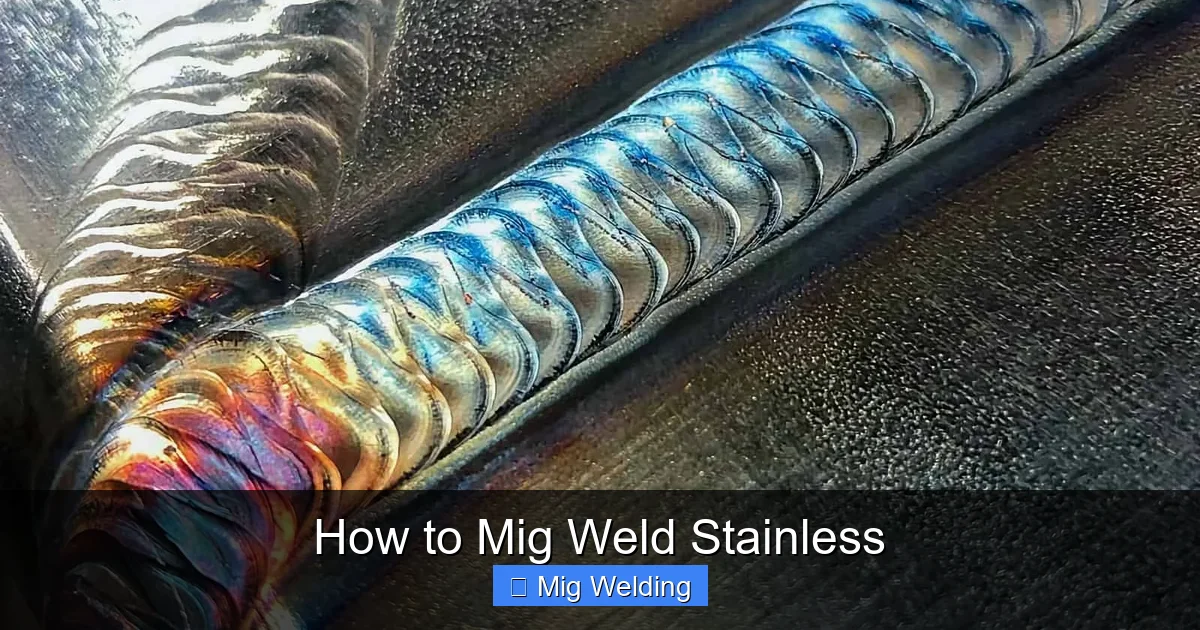
Image for How to Mig Weld Stainless
