

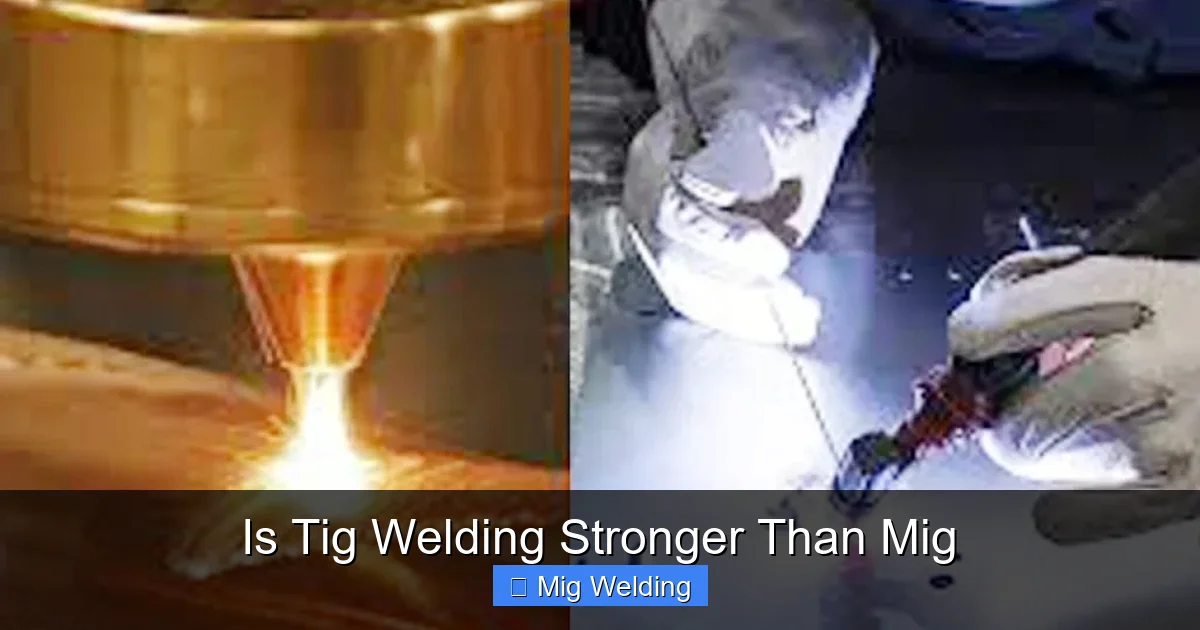
In this guide, we explore whether TIG welding is stronger than MIG welding. You’ll learn the key differences, advantages, and limitations of each method to help you make an informed choice for your welding needs. Understanding these differences can improve your weld quality and project success.
Is TIG Welding Stronger Than MIG?
If you’re new to welding, you might wonder which method produces stronger welds: TIG or MIG? Both techniques have their strengths and ideal applications, but understanding their differences can help you choose the best method for your project. In this comprehensive guide, we’ll compare TIG and MIG welding in terms of strength, quality, ease of use, and cost, so you can make an informed decision.
Key Takeaways
- Strength Comparison: TIG welding generally produces stronger, more precise welds due to better control and cleaner welds.
- Application Differences: MIG is faster and better for large projects, while TIG offers higher quality for detailed work.
- Material Compatibility: Both methods work on various metals, but TIG handles thin materials and exotic metals better.
- Ease of Use: MIG welding is easier for beginners, whereas TIG requires more skill and practice.
- Cost Factors: TIG equipment can be more expensive, but it provides superior weld quality in the long run.
- Strength of Welds: The strength depends on proper technique, but TIG welds often have higher tensile strength due to better penetration and cleaner welds.
Introduction: What You Will Learn
By the end of this guide, you’ll know:
- The fundamental differences between TIG and MIG welding
- Which welding method produces stronger, more durable welds
- The advantages and limitations of each technique
- Practical tips to maximize weld strength and quality
- Common troubleshooting tips for weak or defective welds
Understanding the Basics: TIG vs. MIG Welding
TIG Welding (Tungsten Inert Gas)
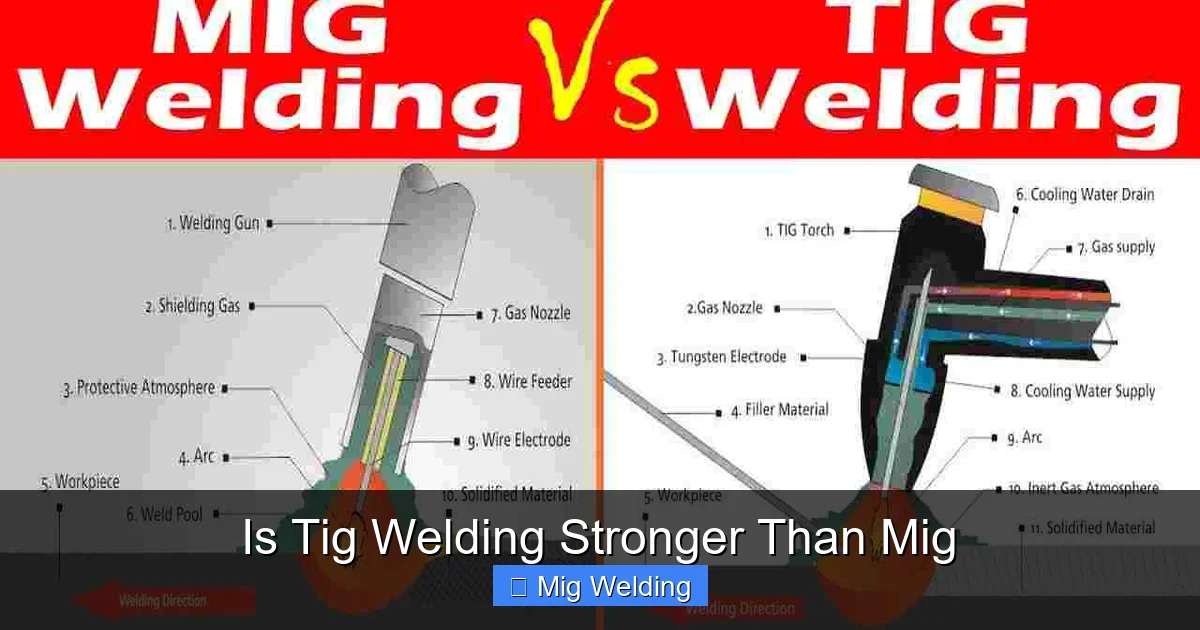
TIG welding uses a non-consumable tungsten electrode to produce the weld. Filler metal can be added manually, and shielding gas (typically argon) protects the weld from contamination. TIG is known for its precision, clean welds, and suitability for thin or delicate materials.

Visual guide about Is Tig Welding Stronger Than Mig
Image source: weldingproperty.com
MIG Welding (Metal Inert Gas)
MIG welding employs a consumable wire electrode fed through a welding gun. Shielding gas (such as argon or CO2) protects the weld pool. It’s faster and easier to learn, making it popular for industrial and large-scale projects.
Which Welding Method Is Stronger?
The question of strength depends on many factors, including technique, material, and application. Generally:
Visual guide about Is Tig Welding Stronger Than Mig
Image source: weldingproperty.com
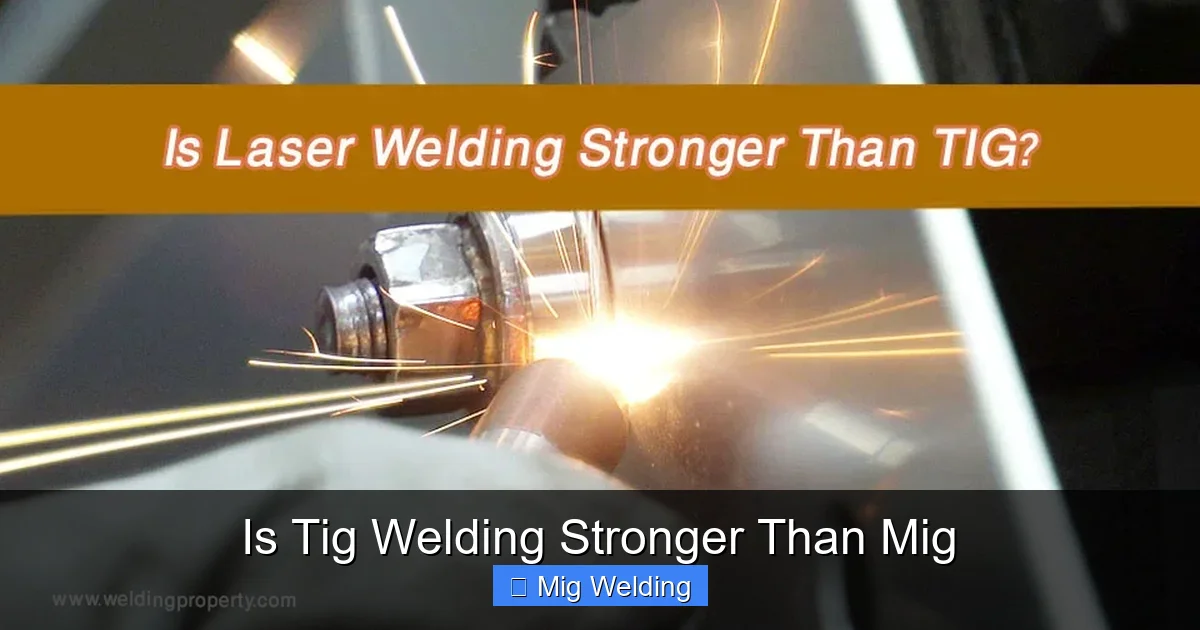
- TIG welds tend to be stronger and more precise. They offer superior penetration and cleaner welds, which translate into higher tensile strength and durability.
- MIG welds can be just as strong if performed correctly, especially on thicker materials. However, they may contain more slag and require more finishing work to match TIG quality.
In terms of ultimate tensile strength, TIG welds often outperform MIG because of better control and less contamination. But for high-volume, fast welding, MIG can be sufficiently strong and more practical.
Factors That Affect Weld Strength
Material Type and Thickness
Thinner materials and exotic metals like aluminum or stainless steel often benefit from TIG welding, which produces cleaner, stronger welds. For thicker steel structures, MIG offers faster, reliable welds.
Visual guide about Is Tig Welding Stronger Than Mig
Image source: weldingofwelders.com
Welding Technique and Skill
The strength of a weld is largely determined by the welder’s skill. Proper technique, consistent heat, and correct filler placement are essential, regardless of the method.
Equipment Quality
High-quality welding machines and accessories lead to better welds. Poor equipment can cause weak welds, regardless of the technique used.
Practical Tips to Achieve Strong Welds
- Proper Preparation: Clean your materials thoroughly to remove rust, oil, and dirt.
- Correct Settings: Use the right amperage, voltage, and wire feed speed for your material and method.
- Consistent Technique: Maintain steady movement and proper torch angle.
- Practice: Regular practice improves control and weld quality.
- Inspection: Always inspect your welds for defects like cracks or porosity that weaken strength.
Common Troubleshooting for Weak or Poor-Quality Welds
- Poor Penetration: Increase heat or adjust torch angle.
- Porosity: Ensure proper shielding gas coverage and clean materials.
- Cracks or Weaknesses: Avoid rapid cooling and ensure proper filler metal use.
- Inconsistent Bead: Practice steady movement and maintain consistent settings.
Conclusion: Which Is Better for Strength?
Both TIG and MIG welding can produce strong, durable welds when done correctly. TIG generally offers superior strength due to cleaner, more precise welds and better control, especially on thin or delicate materials. However, MIG is faster and suitable for large or thick projects where speed is essential. Your choice depends on your specific needs, skill level, and project requirements.
Final Thoughts
If ultimate strength and precision are your goals, and you’re willing to invest time in learning, TIG welding is the better choice. For quick, large-volume tasks where strength is still critical, MIG remains an excellent, cost-effective option. Understanding these differences ensures you select the best technique to get strong, reliable welds every time.
Happy Welding!
Remember, practice makes perfect. The more you weld, the better your welds will be—whether you choose TIG or MIG.
