

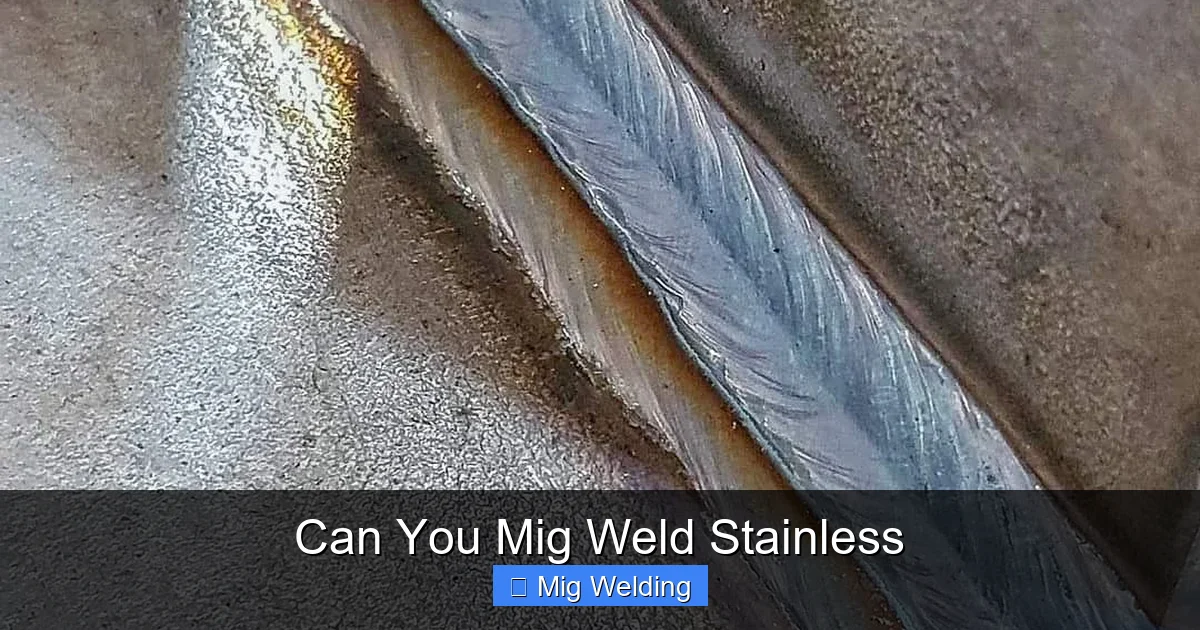
Can you MIG weld stainless? Yes, you can. MIG welding stainless steel is a popular method for its speed and ease. This guide will walk you through the essential steps, tips, and tricks to achieve professional-quality stainless welds.
Key Takeaways
- Yes, MIG welding is suitable for stainless steel: It’s a common method for welding stainless, offering fast and clean results.
- Use the right shielding gas: Typically, a 98% argon and 2% oxygen mix works best for stainless steel MIG welding.
- Choose the correct wire: Use stainless steel MIG wire, usually ER308L or ER316L, depending on your project.
- Adjust your settings: Proper voltage, wire feed speed, and travel speed are crucial for quality welds.
- Prepping the material: Clean stainless thoroughly to remove contaminants for strong welds.
- Practice and troubleshooting: Experiment with settings and techniques to perfect your welds and resolve common issues.
Introduction
Many welders ask, “Can you MIG weld stainless?” The answer is a resounding yes. MIG (Metal Inert Gas) welding, also known as GMAW (Gas Metal Arc Welding), is one of the most popular methods for welding stainless steel. It’s fast, versatile, and produces clean, strong welds when done correctly. In this guide, we’ll explore everything you need to know to MIG weld stainless steel successfully, from equipment setup to troubleshooting common issues. Whether you’re a beginner or looking to refine your technique, this comprehensive guide will give you the confidence to weld stainless like a pro.
Understanding MIG Welding for Stainless Steel
MIG welding uses a continuously fed wire that melts and joins materials together. When welding stainless steel, it’s important to understand the unique properties of stainless and how they influence welding techniques. Stainless steel is corrosion-resistant and strong but can be sensitive to heat, warping, and contamination. Proper setup, shielding gas, and technique are essential for high-quality welds.
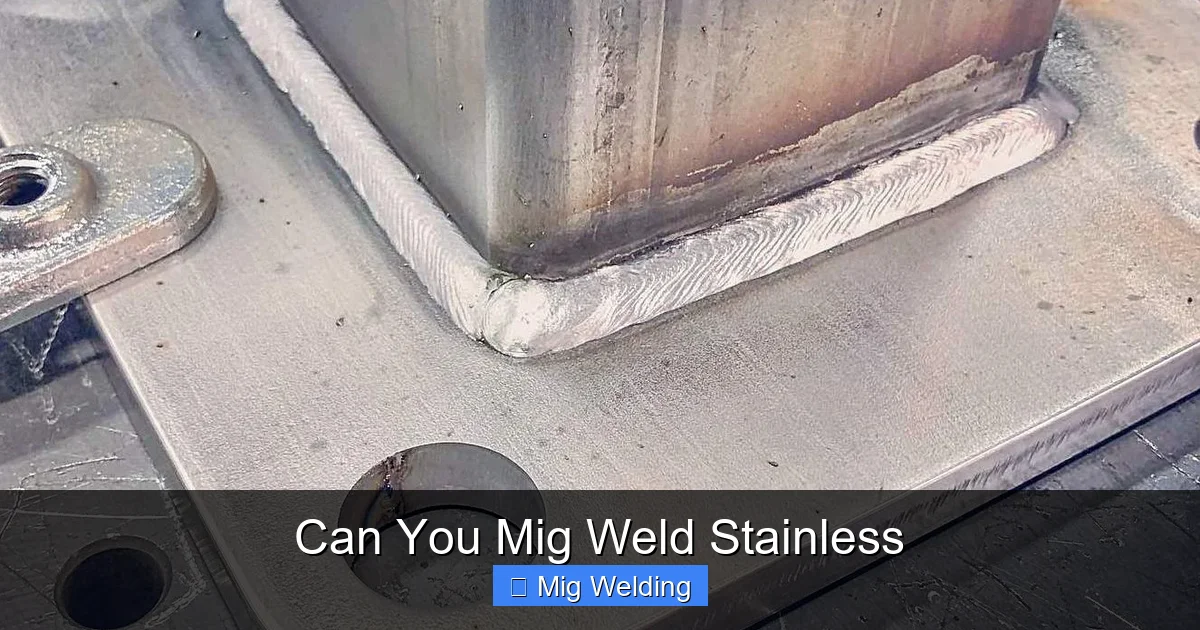
Visual guide about Can You Mig Weld Stainless
Image source: weldguru.com
Step 1: Gather Your Equipment and Materials
Choose the right welding machine
Use a MIG welder capable of handling stainless steel wire and adjustable settings. Many modern MIG welders have adaptable controls suitable for stainless steel welding.
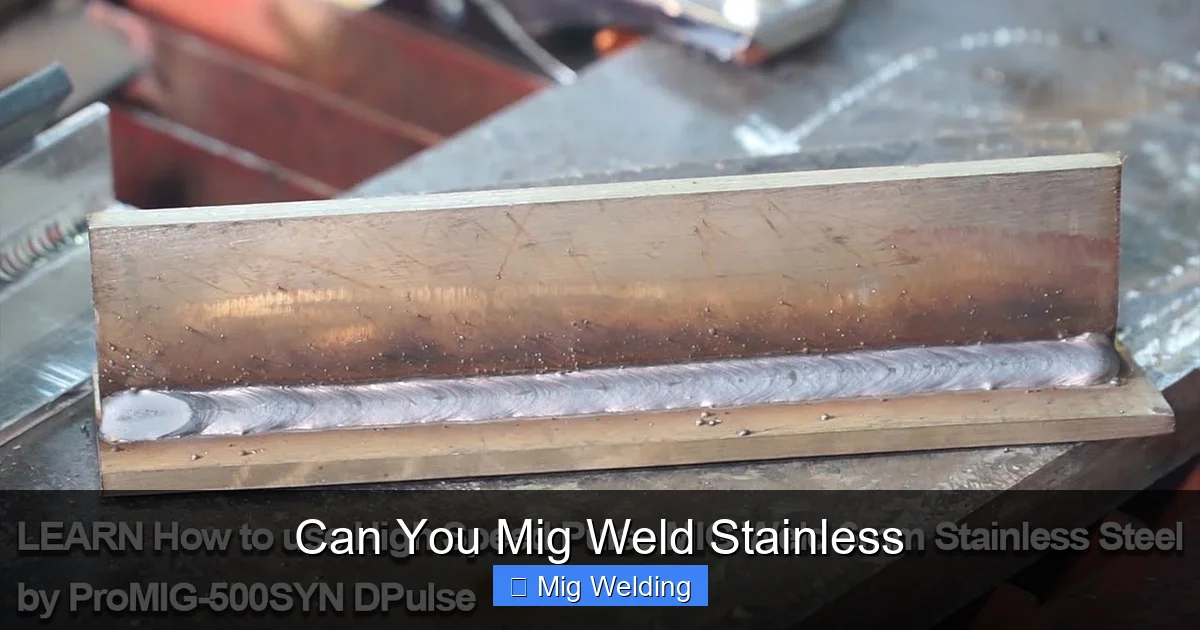
Visual guide about Can You Mig Weld Stainless
Image source: i.ytimg.com
Select the appropriate welding wire
- Type: ER308L, ER309L, ER316L, depending on your base material.
- Diameter: 0.030-inch (0.8 mm) or 0.035-inch (0.9 mm) are common choices.
Pick the right shielding gas
- Typical mix: 98% argon / 2% oxygen or 100% argon for cleaner welds.
- Note: Avoid CO2 for stainless, as it causes more spatter and oxidation.
Additional tools and safety gear
- Welding helmet with appropriate shade
- Welding gloves
- Protective clothing
- Clamps and a clean workspace
Step 2: Prepare Your Stainless Steel Material
Clean the surface
Remove oil, grease, dirt, and rust. Use a stainless steel brush or a stainless cleaner to eliminate surface contaminants. This step prevents porosity and weak welds.
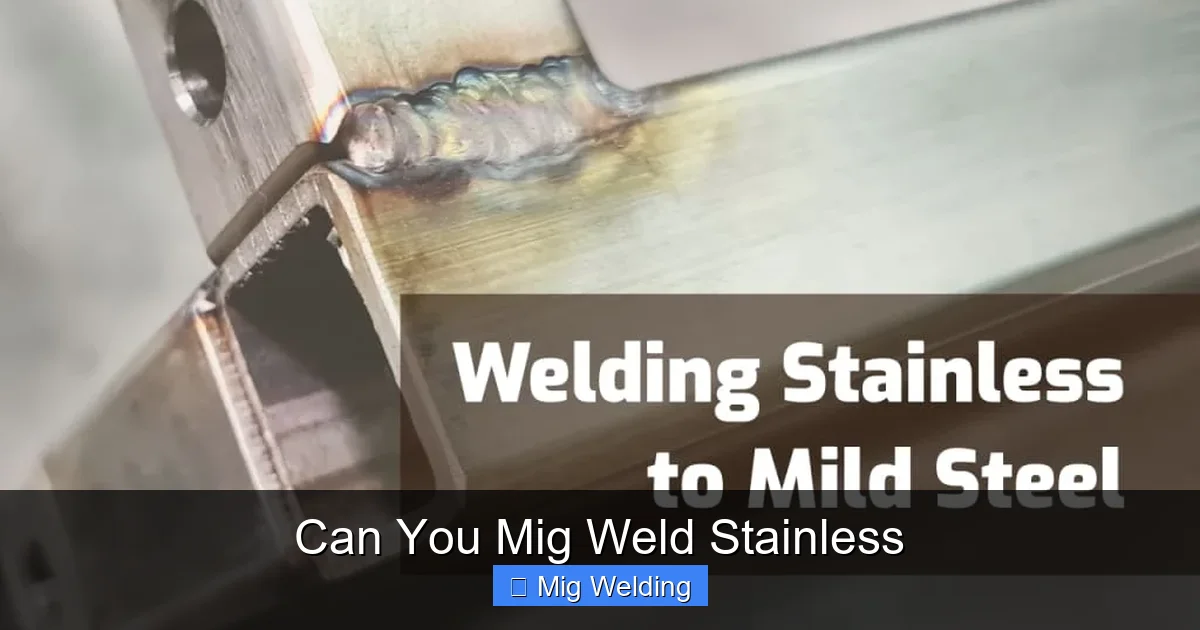
Visual guide about Can You Mig Weld Stainless
Image source: weldguru.com
Cut and fit the pieces
Ensure your pieces fit tightly. Use clamps to hold parts in place during welding. Proper fit-up reduces gaps and improves weld quality.
Step 3: Set Up Your MIG Welder
Configure the machine
- Wire feed speed: Start around 200-300 inches per minute, adjusting as needed.
- Voltage: Set according to your wire size and thickness, typically 15-20 volts for stainless steel.
- Shielding gas: Use the selected mix and ensure proper flow rate (around 20-30 CFH).
Test your settings
Before welding your actual pieces, run a few test beads on scrap stainless to fine-tune your settings. Look for smooth, consistent beads without spatter or porosity.
Step 4: Welding Technique
Start with a good root pass
Begin with a steady hand, maintaining a consistent travel speed. Keep the electrode at a 10-15 degree angle, slightly tilted toward the direction of travel.
Maintain proper travel speed and arc length
- A too slow speed causes excessive heat and warping.
- A too fast speed results in poor penetration.
Keep the arc length about the diameter of the wire for optimal heat transfer.
Use stringer beads for finishing
Apply steady, continuous beads without weaving. For better control, avoid excessive side-to-side movement.
Step 5: Post-Welding Cleanup and Inspection
- Allow the weld to cool naturally.
- Clean the weld area with a stainless steel brush to remove slag and oxidation.
- Inspect the weld for porosity, cracks, or weak spots.
Tips for Successful Stainless Steel MIG Welding
- Maintain consistent travel speed: Consistency leads to cleaner welds.
- Keep the wire and workpiece clean: Contaminants cause defects.
- Use the correct shielding gas: Pure argon or a mix with oxygen minimizes oxidation.
- Adjust settings as needed: Fine-tune your voltage and wire feed for different thicknesses.
Troubleshooting Common Issues
Porosity in welds
Cause: Contaminants, dirty surface, or improper shielding gas. Solution: Clean thoroughly and check gas flow.
Spatter
Cause: Incorrect wire feed speed or excessive voltage. Solution: Adjust settings and ensure proper gas flow.
Cracks or weak welds
Cause: Overheating or improper technique. Solution: Use proper heat settings, avoid overheating, and ensure correct technique.
Conclusion
MIG welding stainless steel is a practical and effective method for many projects. With the right equipment, proper preparation, and good technique, you can produce strong, clean welds that stand the test of time. Practice makes perfect—so don’t be discouraged if your first few welds aren’t perfect. Keep experimenting, and you’ll master stainless steel MIG welding in no time!
Final Tips
- Always wear safety gear.
- Work in a well-ventilated area.
- Keep your equipment clean and well-maintained.
- Practice on scrap before working on your main project.
