

In MIG welding, knowing whether to push or pull the welding gun can improve your results. This guide explains both techniques, their benefits, and when to use each for optimal welds. Whether you’re a beginner or experienced welder, understanding the correct approach will help you achieve better quality and efficiency.
Key Takeaways
- Push Technique: Pushing the weld torch creates a wider, flatter bead and reduces spatter, ideal for thinner materials.
- Pull Technique: Pulling produces a narrower, deeper weld, suitable for thicker materials and maximum penetration.
- Technique Choice: The choice between push and pull depends on the project, material thickness, and desired weld quality.
- Consistent Speed: Maintain a steady travel speed regardless of pushing or pulling to ensure uniform welds.
- Practice and Adjustment: Experiment with both techniques to find what works best for your specific welding tasks.
- Safety First: Always wear proper protective gear and ensure your workspace is safe before welding.
Introduction
If you’re new to MIG welding or looking to improve your technique, one of the most common questions is: do you push or pull when MIG welding? The answer isn’t entirely straightforward because both methods have their benefits and ideal scenarios. In this guide, we’ll explore the differences between pushing and pulling the MIG gun, when to use each, and how to master both for better welds. By the end, you’ll understand which technique suits your project and how to execute it confidently.
Understanding MIG Welding Techniques
MIG (Metal Inert Gas) welding is popular for its ease and versatility. It involves feeding a continuous wire electrode through a welding gun, which melts to join metals together. The way you hold and move the gun significantly impacts the quality, appearance, and strength of the weld.
Visual guide about Do You Push or Pull When Mig Welding
Image source: theweldingapprentice.com
The two main techniques are pushing and pulling, also known as forehand and backhand welding. Each has its advantages, disadvantages, and ideal use cases. Let’s dive into each method to see how they differ.
The Push Technique (Forehand Welding)
What Is Pushing?
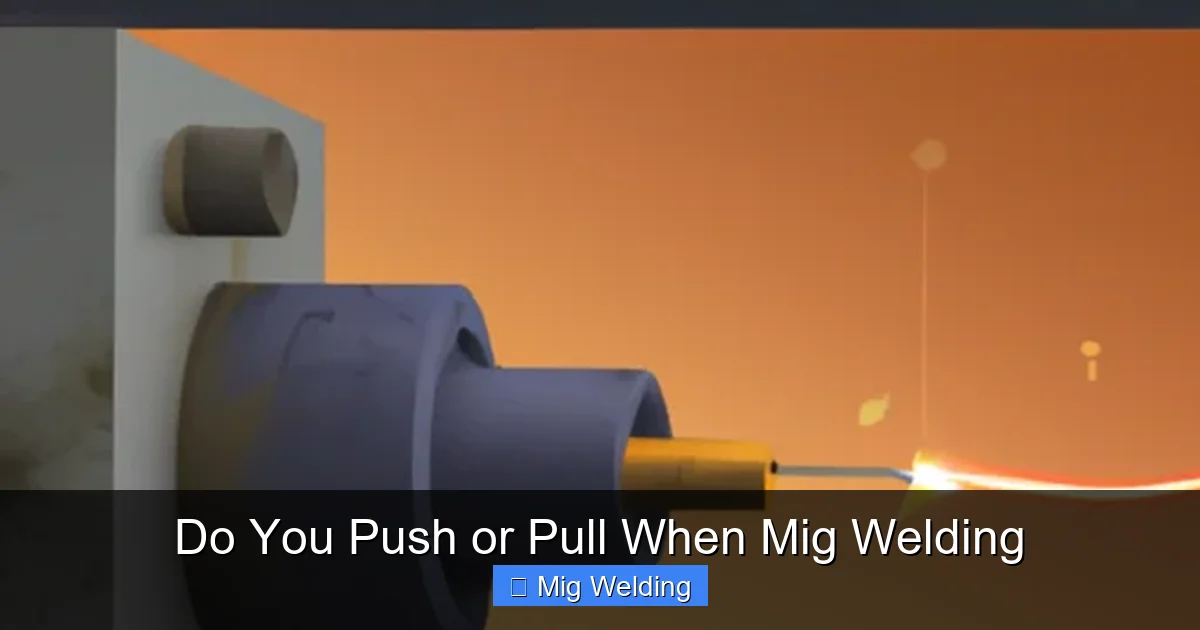
When you push the MIG gun forward, you’re applying the electrode in a way that directs the shielding gas and molten metal away from the weld. This creates a wider, flatter bead with less penetration, making it excellent for certain applications.

Visual guide about Do You Push or Pull When Mig Welding
Image source: theweldingapprentice.com
How to Push When MIG Welding
- Grip the Gun: Hold the MIG gun firmly but comfortably, maintaining a steady hand.
- Position Yourself: Stand so that your body is slightly in front of the weld joint.
- Maintain an Angle: Keep the gun at a 10-15 degree angle in the direction of travel.
- Move Smoothly: Push the gun steadily along the weld line at a consistent speed.
- Adjust Distance: Keep the nozzle about 1/4 inch from the workpiece for optimal shielding gas coverage.
Advantages of Pushing
- Produces a wider, flatter bead with reduced spatter.
- Better for thin materials, preventing burn-through.
- Offers good visibility of the weld pool.
Limitations of Pushing
- Less penetration, which may weaken welds on thicker materials.
- Not ideal for deep welds requiring high strength.
The Pull Technique (Backhand Welding)
What Is Pulling?
Pulling involves dragging the MIG gun backward, away from the weld pool. This method focuses on deeper penetration, making it suitable for thicker metals and structural welds.

Visual guide about Do You Push or Pull When Mig Welding
Image source: theweldingapprentice.com
How to Pull When MIG Welding
- Grip and Position: Hold the gun comfortably, angling it at about 10-15 degrees in the opposite direction of travel.
- Maintain Consistent Speed: Move the gun steadily along the weld line, controlling the pace for uniform penetration.
- Adjust Distance: Keep a consistent distance from the workpiece, about 1/4 inch.
Advantages of Pulling
- Provides deeper penetration, resulting in stronger welds.
- Better for thicker materials and structural joints.
- Less likely to cause burn-through on thicker metals.
Limitations of Pulling
- Produces a narrower, more convex bead.
- May increase spatter if not done carefully.
Which Technique Should You Use?
The choice between pushing and pulling depends on several factors:
- Material Thickness: Push for thin sheets; pull for thick plates.
- Weld Type: For flat, cosmetic welds, pushing is preferable. For structural, deep welds, pulling is better.
- Weld Penetration: Use pull to achieve deeper penetration; push for shallower, wider beads.
- Visibility: Pushing offers better visibility of the weld pool, helpful for beginners.
In practice, many welders switch between both techniques based on the specific task.
Practical Tips for Effective MIG Welding
- Maintain a Steady Speed: Moving too fast or too slow affects weld quality regardless of push or pull.
- Keep the Correct Distance: About 1/4 inch from the nozzle to the workpiece ensures proper shielding.
- Adjust Your Angle: Slight angles improve penetration and bead shape.
- Practice Consistently: Practice both techniques on scrap metal to develop muscle memory.
- Use Proper Settings: Ensure your wire feed speed and voltage are appropriate for the technique and material.
Common Troubleshooting Tips
Spatter and Porosity
If you notice excessive spatter or porosity, check your shielding gas flow, wire feed, and tip condition. Adjust your technique to maintain a consistent distance and movement.
Inconsistent Bead
Maintain a steady speed and angle. Practice smooth, controlled movements to achieve uniform welds.
Poor Penetration
Switch to pulling technique for deeper penetration. Also, verify your machine settings are suitable for the material thickness.
Conclusion
Both pushing and pulling have their place in MIG welding. Understanding when and how to use each technique can significantly improve your weld quality. Experiment with both methods, practice regularly, and adjust based on your project needs. With time, you’ll develop a versatile skill set that allows you to tackle a wide range of welding tasks confidently.
Final Words
Remember, safety first! Always wear appropriate protective gear and work in a safe environment. Mastering push and pull techniques will make you a more competent and efficient MIG welder, ready to take on different materials and welding challenges.
