

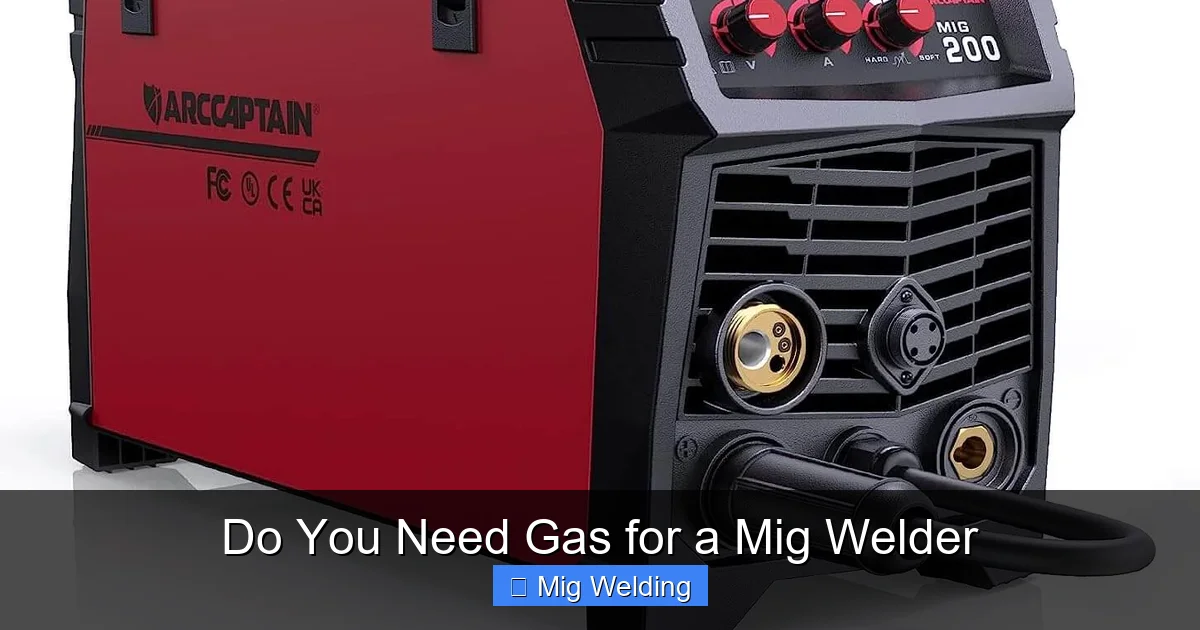
< strongly >MIG welders typically require shielding gas to produce clean, strong welds. < /strong > However, some models can operate without gas using flux-cored wire. This guide explains when gas is needed, how to use it, and tips for optimal welding results.
Do You Need Gas for a MIG Welder?
If you’re new to MIG welding, one common question is whether you need gas for your welder to work properly. The answer depends on the type of wire you use and the kind of welding you want to do. In this guide, we’ll explore when you need shielding gas, how it works, and the options available so you can make the best choice for your projects.
Key Takeaways
- Most MIG welders need shielding gas: Shielding gas protects the weld pool from contamination and results in better weld quality.
- Flux-cored wire offers a gasless option: Some MIG welders can use flux-cored wire, which contains flux to shield the weld without external gas.
- Choosing the right method depends on the project: Gas shielding is ideal for clean, strong welds on steel, while gasless welding is better for outdoor or windy conditions.
- Proper handling of shielding gas: Use correct gas flow rates, leaks prevention, and storage practices for best results.
- Safety considerations: Always use appropriate protective gear when working with gases and welding equipment.
- Cost and convenience: Gasless welding can be more convenient but may produce more spatter and less clean welds.
What is MIG Welding?
MIG welding, or Metal Inert Gas welding, is a popular welding process that uses a wire electrode fed through a welding gun. It creates a weld by melting the wire and the base metal while shielding the weld from contamination. This process is known for being fast, versatile, and relatively easy for beginners.
Do You Need Gas for a MIG Welder?
In most cases, yes, you do need shielding gas for a MIG welder, but there are exceptions. The type of wire you use plays a big role in whether you need gas or not. Let’s look at the two main options:

Visual guide about Do You Need Gas for a Mig Welder
Image source: weldingtroop.com
1. MIG Welding with Shielding Gas
This is the standard method. When using solid wire electrodes, you typically need a shielding gas to protect the weld pool from atmospheric contamination. Common gases include argon, carbon dioxide (CO2), or a mix of both.
2. Gasless MIG Welding (Flux-Cored Wire)
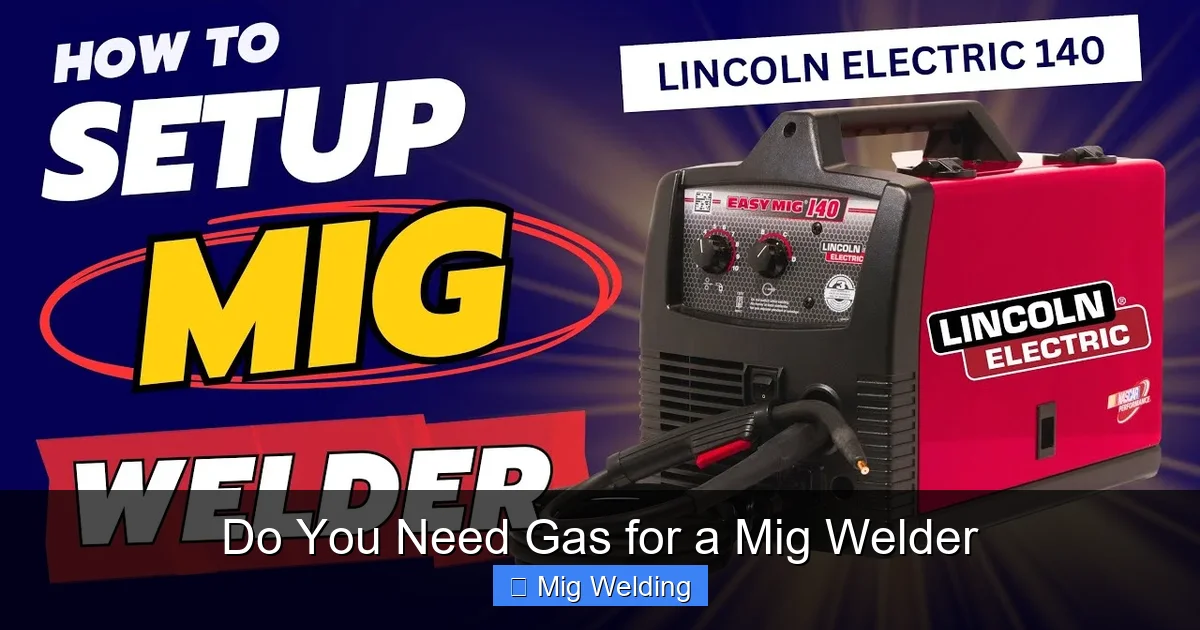
Some MIG welders can operate without external gas by using flux-cored wire. This wire has a flux core that generates its own shielding gas when heated. It’s useful for outdoor welding or windy conditions where gas shielding might be blown away.
How Shielding Gas Works in MIG Welding
Shielding gas surrounds the weld area and prevents oxygen, nitrogen, and other contaminants from causing weld defects like porosity or weak spots. The choice of gas affects the quality, appearance, and strength of your welds.
Visual guide about Do You Need Gas for a Mig Welder
Image source: i.ytimg.com
When Do You Need Gas for Your MIG Welder?
Here are some scenarios to help you decide:
Visual guide about Do You Need Gas for a Mig Welder
Image source: weldguru.com
- Indoor welding on clean steel: Use shielding gas for best results.
- Outdoor welding or windy conditions: Flux-cored wire can be more reliable without external gas.
- Working on thin or decorative metals: Gas shielding provides cleaner, more precise welds.
- Heavy-duty or structural welding: Gas-shielded MIG welding ensures stronger, cleaner welds.
Choosing the Right Shielding Gas
The most common shielding gases are:
- Argon: Best for welding aluminum and non-ferrous metals. Also used for MIG welding thin steel.
- Carbon Dioxide (CO2): Cheaper, provides deep penetration, good for thick steel but produces more spatter.
- Argon-CO2 Mix: Combines benefits of both gases, offering good weld quality and manageable spatter.
How to Set Up Your MIG Welder with Gas
Step 1: Select the Correct Gas and Regulator
Make sure to choose the right shielding gas for your project and install a compatible regulator on your gas cylinder.
Step 2: Connect the Gas Line
Attach the gas hose from your regulator to the MIG welder’s gas inlet. Ensure all connections are tight to prevent leaks.
Step 3: Adjust the Gas Flow Rate
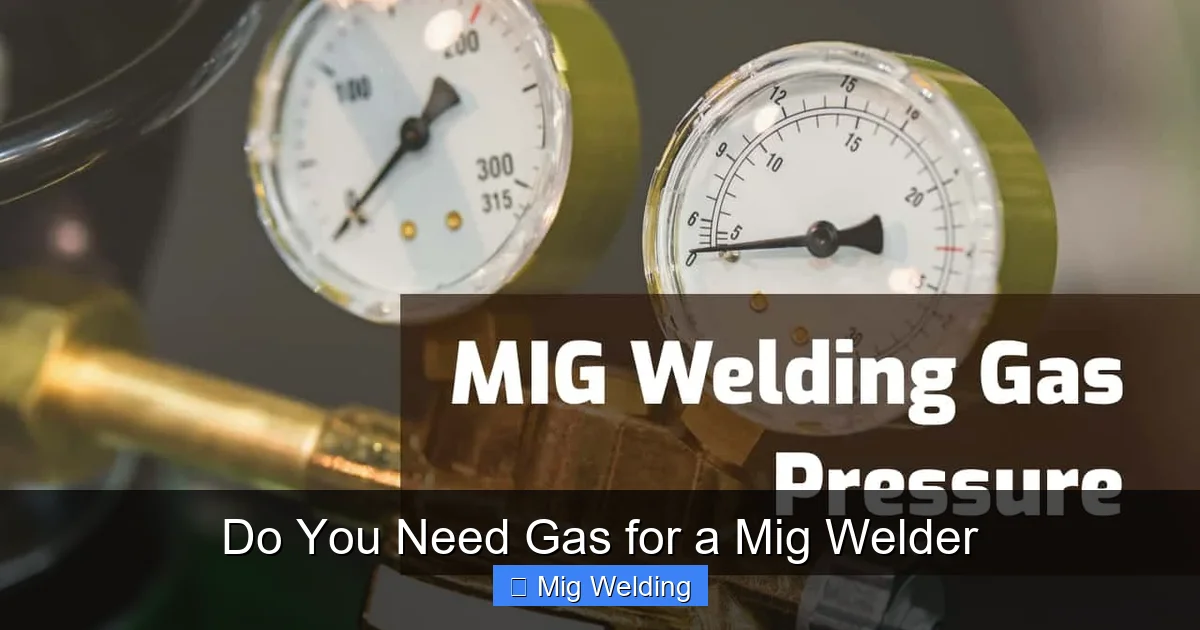
Set the flow rate according to your welder’s specifications, typically between 20-30 cubic feet per hour (CFH). Use the regulator’s gauge to monitor flow.
Step 4: Check for Leaks
Open the gas valve slightly and listen for leaks. Use soapy water to check connections—bubbles indicate leaks, which need fixing.
Step 5: Prepare Your Welding Area
Clear the workspace, wear proper safety gear, and set your welder’s wire feed and voltage according to the material and wire type.
Using Flux-Cored Wire (Gasless MIG Welding)
If you’re using flux-cored wire, you can skip the gas setup. Just load the flux-cored wire, set the correct wire feed speed, and adjust voltage. Remember, flux-cored welding tends to produce more spatter and less clean finishes, but it’s excellent for outdoor conditions.
Practical Tips for MIG Welding with Gas
- Maintain proper gas flow: Too high or too low flow can cause weld defects.
- Store gas cylinders safely: Keep upright, secure in place, and handle with care.
- Use clean materials: Dirt, rust, or oil can compromise weld quality despite proper gas shielding.
- Practice with scrap metal: Before working on your main project, test your setup to fine-tune settings.
Common Troubleshooting Tips
- Porosity in welds: Check for leaks, increase gas flow, or ensure clean metal surfaces.
- Spatter issues: Adjust voltage or gas mixture; flux-cored wire may produce more spatter.
- Inconsistent welds: Verify wire feed speed and proper grounding.
Conclusion
In most MIG welding applications, you do need shielding gas for the best results. Gas provides a cleaner, stronger, and more aesthetically pleasing weld, especially on steel and aluminum. However, flux-cored wire offers a gasless alternative suitable for outdoor or windy conditions. Understanding your project needs and environment will help you choose the right method and ensure successful welding.
Final Tips
- Always follow safety procedures when handling gas cylinders and welding equipment.
- Practice on scrap pieces to master your settings.
- Invest in good quality shielding gas and equipment for the best results.
