

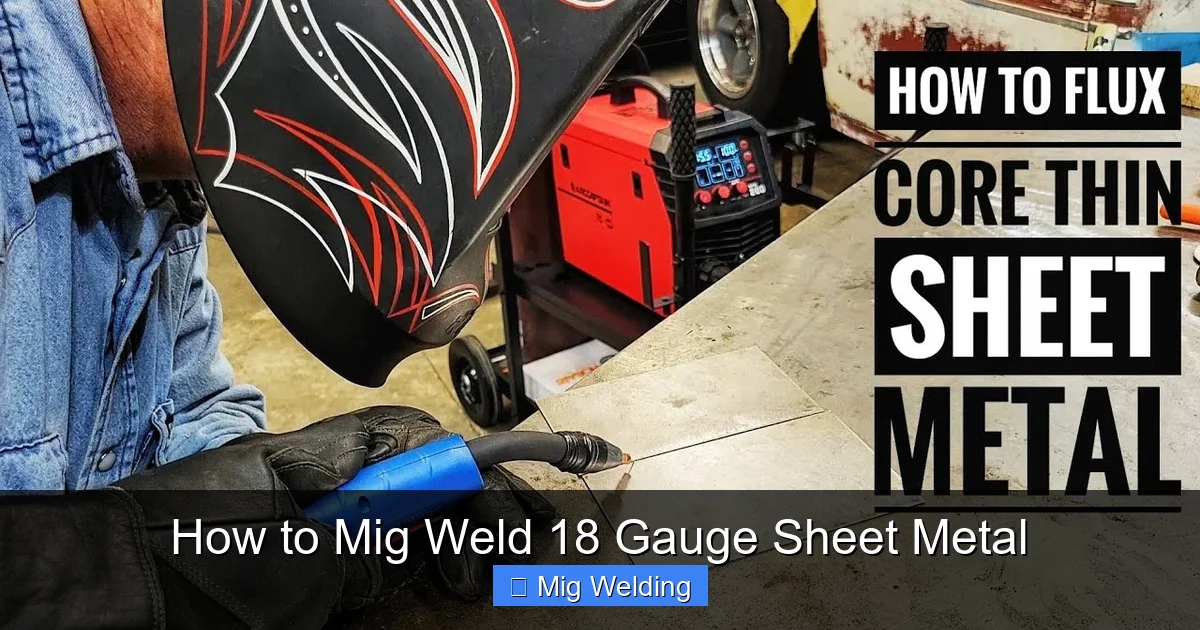
This guide walks you through how to MIG weld 18 gauge sheet metal safely and effectively. You’ll learn the right equipment, settings, and techniques to avoid warping, burn-through, and weak joints.
Key Takeaways
- Use the right wire and gas: Choose 0.023″ or 0.030″ ER70S-6 solid wire with 75% argon / 25% CO2 shielding gas for clean, stable welds.
- Adjust voltage and wire speed: Start with low settings—around 16–18 volts and 150–200 IPM—then fine-tune based on your machine and material.
- Keep the metal clean and clamped: Remove rust, oil, and paint. Use clamps or magnets to prevent movement during welding.
- Use a push technique and short welds: Push the gun away from the weld pool and use stitch or skip welding to control heat input.
- Prevent burn-through with proper technique: Maintain a 1/8″ to 3/16″ standoff distance and use a backing bar if needed.
- Practice on scrap metal first: Test your settings and technique before welding your actual project.
- Post-weld care matters: Grind down rough spots and apply rust prevention to extend the life of your weld.
How to MIG Weld 18 Gauge Sheet Metal
Welding thin materials like 18 gauge sheet metal can be tricky—even for experienced welders. At just 0.0478 inches thick (about 1.2 mm), this metal is prone to warping, burn-through, and weak joints if not handled correctly. But with the right setup, technique, and a little practice, you can achieve strong, clean welds every time.
In this guide, you’ll learn exactly how to MIG weld 18 gauge sheet metal—from choosing the right equipment to troubleshooting common problems. Whether you’re working on automotive panels, ductwork, or custom fabrication, these steps will help you get professional results at home or in the shop.
Why 18 Gauge Sheet Metal Is Challenging
Thin-gauge steel doesn’t tolerate high heat well. Unlike thicker metals that can absorb and dissipate heat, 18 gauge steel heats up quickly and can easily burn through or warp. That’s why precision and control are essential.
The key is managing heat input. Too much heat causes distortion or holes. Too little heat leads to poor fusion and weak welds. The goal is to deliver just enough energy to melt the base metal and filler wire without overdoing it.
Essential Equipment and Materials
Before you strike an arc, make sure you have the right tools.
MIG Welder
Use a MIG welder with adjustable voltage and wire feed speed. A 110V machine with a minimum output of 70–90 amps works well for 18 gauge steel. Inverter-based welders offer better control and smoother arcs, which is ideal for thin materials.
Visual guide about How to Mig Weld 18 Gauge Sheet Metal
Image source: mekalite.com
Visual guide about How to Mig Weld 18 Gauge Sheet Metal
Image source: sesteelpipe.com
Welding Wire
Choose a 0.023-inch or 0.030-inch ER70S-6 solid wire. The smaller diameter wire provides better control and lower heat input. Avoid flux-cored wire unless you’re welding outdoors—it tends to run hotter and can burn through thin metal.
Shielding Gas
Use a 75% argon / 25% CO2 mix (also called C25). This blend offers a stable arc, good penetration, and minimal spatter. Pure CO2 is too aggressive for thin steel and increases the risk of burn-through.
Welding Helmet and Safety Gear
Always wear a welding helmet with auto-darkening lens, flame-resistant gloves, long sleeves, and closed-toe shoes. Ventilation is also important—use a fan or work in a well-ventilated area to avoid inhaling fumes.
Clamps and Backing Material
Use C-clamps, locking pliers, or magnetic clamps to hold pieces in place. For extra protection against burn-through, place a copper or aluminum backing bar behind the weld zone. These materials conduct heat away from the weld, reducing the chance of holes.
Step-by-Step Guide to MIG Welding 18 Gauge Sheet Metal
Step 1: Prepare the Metal
Cleanliness is critical. Any oil, grease, rust, or paint can cause porosity or weak welds.
- Use a wire brush or grinder to remove surface contaminants.
- Wipe the area with acetone or a degreaser.
- Ensure edges are aligned and fit tightly—gaps larger than 1/16″ can cause problems.
Step 2: Set Up Your Welder
Start with these baseline settings for 18 gauge steel:
- Voltage: 16–18 volts
- Wire Feed Speed: 150–200 inches per minute (IPM)
- Gas Flow Rate: 20–25 cubic feet per hour (CFH)
These are starting points. Adjust based on your machine, wire size, and joint type. Always refer to your welder’s manual for recommended settings.
Step 3: Choose the Right Technique
For thin metal, use a push technique—point the gun nozzle away from the weld pool. This gives you better visibility and helps prevent burn-through by directing the arc away from the molten metal.
- Hold the gun at a 10–15 degree angle.
- Maintain a short stick-out (1/4″ to 3/8″) to keep the arc stable.
- Keep a consistent travel speed—too slow causes heat buildup; too fast leads to lack of fusion.
Step 4: Use Short, Controlled Welds
Instead of welding continuously, use stitch welding or skip welding:
- Make a 1/2″ to 1″ weld, then skip 1–2 inches.
- Return later to fill in the gaps.
This method reduces heat buildup and minimizes warping. It’s especially useful for long seams or large panels.
Step 5: Control Heat with Travel Speed and Pauses
If you notice the metal starting to glow red or bubble, you’re applying too much heat.
- Increase travel speed slightly.
- Use a “dab and pause” motion—dip the wire into the puddle, pause for a split second, then move on.
- Let the metal cool between passes if needed.
Step 6: Post-Weld Cleanup
After welding, let the metal cool naturally. Don’t quench it with water—this can cause cracking.
- Use a wire brush or grinder to remove slag and spatter.
- Inspect the weld for holes, undercut, or lack of fusion.
- Apply a rust-inhibiting primer or paint to protect the weld and surrounding area.
Troubleshooting Common Problems
Burn-Through (Holes in the Metal)
Cause: Too much heat, slow travel speed, or incorrect voltage.
Solution: Reduce voltage or wire speed. Use a backing bar. Switch to a shorter arc length. Try pulsing the trigger or using stitch welding.
Warping or Distortion
Cause: Uneven heat distribution.
Solution: Use clamps to hold parts rigid. Weld in short segments and alternate sides. Preheat slightly with a heat gun if needed.
Poor Penetration or Weak Welds
Cause: Too little heat or incorrect wire size.
Solution: Slightly increase voltage or wire speed. Ensure good fit-up and clean surfaces. Use a 0.023″ wire for better control.
Excessive Spatter
Cause: Incorrect gas mix, dirty metal, or wrong voltage.
Solution: Check gas flow and mix. Clean the metal thoroughly. Adjust voltage down slightly.
Porosity (Air Pockets in the Weld)
Cause: Contamination, poor gas coverage, or wind.
Solution: Clean the metal and wire. Ensure proper gas flow. Weld indoors or use a windscreen.
Pro Tips for Better Results
- Practice on scrap metal: Always test your settings on a piece of 18 gauge scrap before welding your project.
- Use a welding table with a ground clamp nearby: This ensures a clean electrical connection and stable arc.
- Keep your MIG gun liner clean: A clogged liner can cause wire feeding issues and inconsistent welds.
- Store wire properly: Keep welding wire in a dry, sealed container to prevent moisture absorption.
- Consider a spool gun for aluminum: If welding aluminum 18 gauge, use a spool gun with 0.035″ aluminum wire and 100% argon gas.
Conclusion
Learning how to MIG weld 18 gauge sheet metal takes patience and practice, but it’s absolutely achievable with the right approach. Focus on clean preparation, proper machine settings, and controlled welding techniques. Use low heat, short welds, and the push method to avoid burn-through and warping.
Remember, every welder starts somewhere. Don’t get discouraged by a few mistakes—each one teaches you something valuable. With time, you’ll develop the feel for the arc and the confidence to tackle even the thinnest materials.
Whether you’re fixing a car fender, building a custom enclosure, or crafting decorative metalwork, mastering 18 gauge MIG welding opens up a world of possibilities. So grab your gear, set up your welder, and start welding smarter—not harder.
