

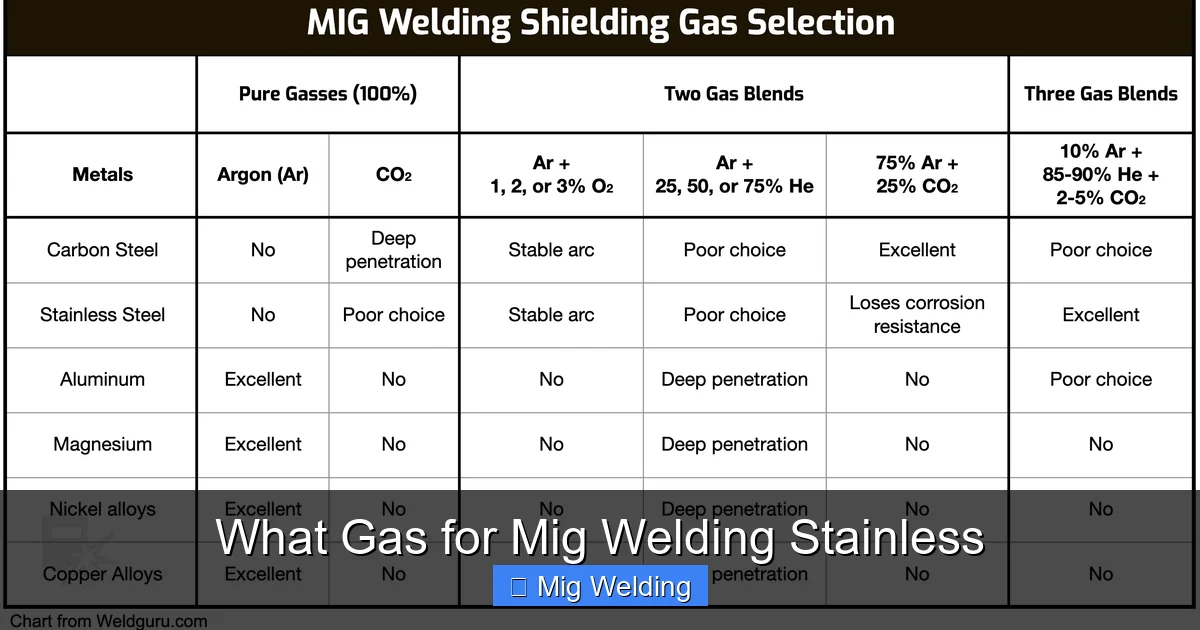
In this guide, you’ll learn what gas to use for MIG welding stainless steel. We cover the different types of shielding gases, their benefits, and how to select the best one for your project. Get ready to improve your weld quality with expert tips and practical advice.
Key Takeaways
- Use a mixture of argon and CO₂: This combination provides good weld quality and ease of use for stainless steel.
- Pure argon offers a smooth finish: Ideal for thin stainless steel or delicate welds where a clean appearance matters.
- Gas mixture ratios matter: Typical mixes are 98% argon with 2% CO₂ or 90% argon with 10% CO₂ for optimal results.
- Adjust your settings accordingly: Different gases require specific welding parameters; follow manufacturer recommendations.
- Safety first: Always wear proper gear and ensure proper ventilation when welding stainless steel.
- Practice makes perfect: Test different gases and settings to find what works best for your specific application.
Introduction
If you’re into MIG welding stainless steel, choosing the right shielding gas is crucial. The gas not only protects your weld from contamination but also influences the weld’s appearance, strength, and ease of welding. In this comprehensive guide, we’ll explore what gas for MIG welding stainless, discuss different types of shielding gases, and provide practical tips to help you achieve professional-quality welds. Whether you’re a beginner or an experienced welder, understanding your options will make a big difference in your results.
Understanding MIG Welding and Shielding Gases
MIG welding, also known as Gas Metal Arc Welding (GMAW), uses a continuous wire feed and a shielding gas to protect the weld pool from atmospheric contamination. For stainless steel, using the right shielding gas ensures corrosion resistance, a clean finish, and strong welds.
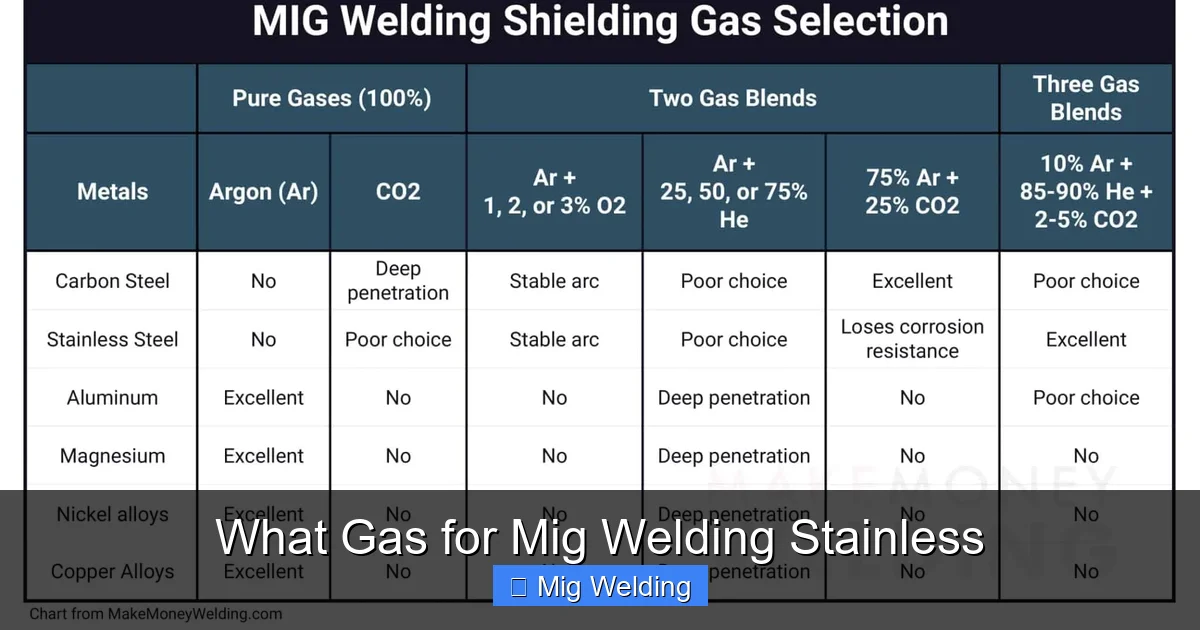
Visual guide about What Gas for Mig Welding Stainless
Image source: makemoneywelding.com
The main role of shielding gas is to create an inert or semi-inert environment around the weld pool. Different gases influence arc stability, spatter, weld appearance, and penetration. Let’s explore the common shielding gases used for stainless steel.
Types of Shielding Gases for MIG Welding Stainless Steel
1. Pure Argon
Pure argon is a popular choice for MIG welding thin stainless steel sheets. It provides a smooth, bright weld with minimal spatter. However, it may result in less penetration and a less stable arc compared to other mixes. Pure argon is best suited for delicate, thin materials or when a clean finish is desired.

Visual guide about What Gas for Mig Welding Stainless
Image source: makemoneywelding.com
2. Argon-CO₂ Mixtures
The most common gases for stainless steel MIG welding are mixtures of argon and carbon dioxide (CO₂). These blends balance weld quality, ease of use, and cost-effectiveness.
- 98% Argon / 2% CO₂: This mix offers excellent weld quality with minimal spatter and a stable arc. Ideal for thin stainless steel or when a clean finish is needed.
- 90% Argon / 10% CO₂: Slightly more aggressive, this mix provides better penetration and faster welding speeds, suitable for thicker stainless steel or structural applications.
3. Argon-Helium Mixtures
Adding helium to argon can improve weld penetration and heat input. Helium increases arc stability and can be beneficial for thicker stainless steel sheets. Typical mixes are 75-25 or 85-15 argon-helium blends.
How to Choose the Right Gas for Your MIG Welding Stainless Steel
1. Consider the Thickness of Your Material
Thin stainless steel sheets (< 1/8 inch) benefit from pure argon or 98% argon/2% CO₂ for a smooth finish. Thicker materials (over 1/8 inch) may require a higher percentage of CO₂ or helium for better penetration.
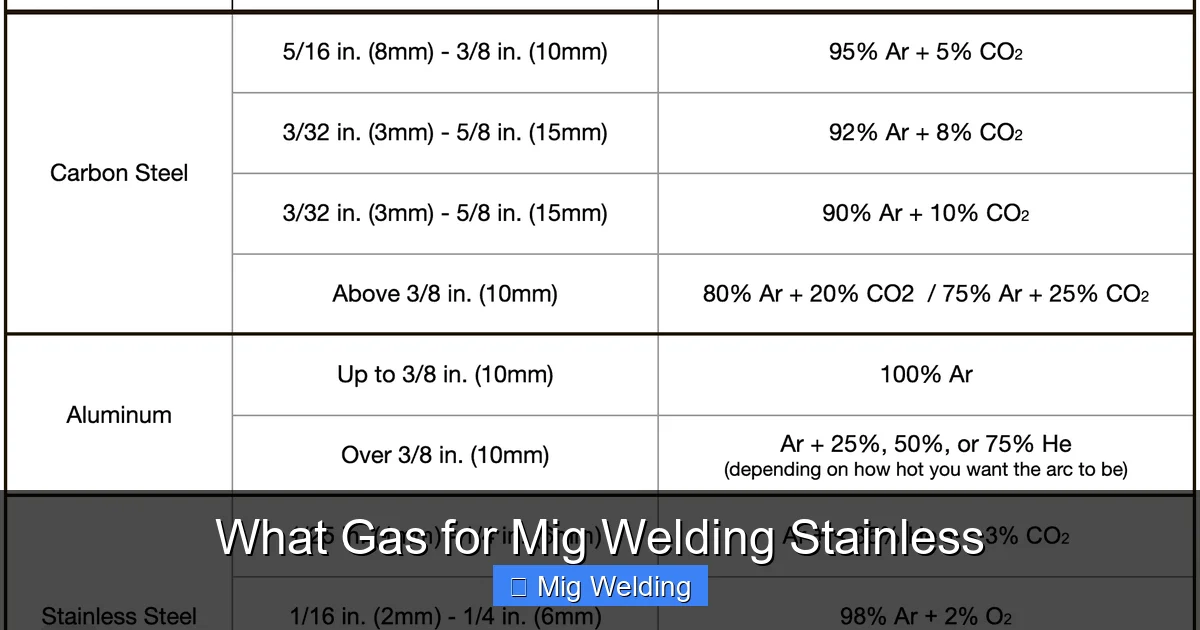
Visual guide about What Gas for Mig Welding Stainless
Image source: weldguru.com
2. Think About Weld Appearance and Quality
If you want a neat, shiny weld with minimal spatter, go for a pure argon or a low CO₂ mix. For more robust welds with deeper penetration, a 90% argon / 10% CO₂ mix is preferable.
3. Budget and Cost Considerations
Pure argon is generally more expensive than argon-CO₂ blends. For large projects or structural work, cost-effective blends like 90/10 are common choices.
4. Equipment Compatibility
Ensure your MIG welder and consumables are compatible with the chosen shielding gas. Some gases may require specific settings or welding tips.
Setting Up Your MIG Welder for Stainless Steel
1. Select the Correct Gas
Based on your project needs, choose the appropriate gas mixture. For most general stainless steel applications, a 98% argon / 2% CO₂ mix is a safe bet.
2. Adjust Your Welding Parameters
- Wire Speed: Increase or decrease based on material thickness and gas used.
- Voltage: Set according to the wire diameter and material type.
- Shielding Gas Flow Rate: Typically between 20-40 CFH (cubic feet per hour). Too high can cause turbulence; too low can lead to contamination.
3. Prepare Your Equipment
- Use a clean, stainless steel-compatible wire.
- Check for leaks in your gas line.
- Use proper personal protective equipment (PPE) like gloves, helmet, and protective clothing.
Practical Tips for MIG Welding Stainless Steel
- Clean your material: Remove rust, oil, and dirt before welding.
- Maintain consistent travel speed: Keep a steady hand to avoid defects.
- Use proper shielding gas flow: Too little leads to porosity; too much causes turbulence.
- Practice on scrap: Experiment with different gases and settings to find what works best.
- Control heat input: Too much heat can cause warping; adjust amperage accordingly.
Troubleshooting Common Issues
1. Porosity in Welds
This can be caused by insufficient gas flow, contamination, or drafts. Ensure proper shielding and clean materials thoroughly.
2. Excess Spatter
Typically linked to incorrect gas mixture or high voltage. Adjust settings and check your gas flow rate.
3. Poor Penetration
Use a higher CO₂ or helium mix and increase heat input if necessary. Also, check your wire feed and voltage.
Conclusion
Choosing the right gas for MIG welding stainless steel is essential for achieving strong, clean, and corrosion-resistant welds. The most common and versatile choice is a mix of argon and CO₂, with ratios tailored to your specific needs. Remember to consider material thickness, weld appearance, and equipment compatibility when selecting your shielding gas. With proper setup, practice, and safety precautions, you’ll produce professional-quality stainless steel welds every time.
Final Tips
- Always follow manufacturer recommendations for your equipment and gases.
- Experiment with different mixes to find what works best for your project.
- Practice safety at all times—use PPE and work in well-ventilated areas.
