

This guide breaks down the best welding techniques for steel, including MIG, TIG, and stick welding, so you can choose the right method for your project. You’ll learn step-by-step instructions, safety tips, and troubleshooting advice to create strong, professional-quality welds with confidence.
Key Takeaways
- Choose the right technique: MIG is great for beginners and speed, TIG offers precision, and stick is ideal for outdoor or rusty steel.
- Prepare your steel properly: Clean, clamp, and bevel joints to ensure strong, defect-free welds.
- Use correct settings: Match voltage, wire speed, and gas flow to your steel thickness and welding method.
- Safety first: Always wear a welding helmet, gloves, and flame-resistant clothing to protect yourself.
- Practice makes perfect: Start with scrap metal to refine your technique before working on real projects.
- Maintain your equipment: Keep your welder, nozzles, and ground clamps clean for consistent performance.
- Troubleshoot common issues: Learn to fix porosity, warping, and weak welds with simple adjustments.
Introduction: Finding the Best Welding Technique for Steel
Welding steel is a fundamental skill in metalworking, construction, and DIY projects. But with so many welding methods available, it can be confusing to know which one is best. Whether you’re repairing a fence, building a trailer, or crafting custom furniture, choosing the right technique makes all the difference in strength, appearance, and ease of use.
In this guide, we’ll explore the best welding techniques for steel—MIG, TIG, and stick welding—and help you pick the right one based on your skill level, tools, and project needs. You’ll learn how to prepare your materials, set up your welder, execute clean welds, and fix common problems. By the end, you’ll have the confidence to tackle steel welding like a pro.
Understanding Steel and Welding Basics
Before diving into techniques, it’s important to understand what makes steel a great candidate for welding. Steel is an alloy of iron and carbon, and it’s strong, durable, and widely available. Mild steel, in particular, is easy to weld and commonly used in automotive, construction, and fabrication work.
Visual guide about Best Welding Technique for Steel
Image source: weldguru.com
Welding joins metals by melting them together with heat. The key to a strong weld is proper fusion—ensuring the base metal and filler material melt and bond completely. Factors like cleanliness, joint design, and heat control all play a role in success.
Types of Steel You’ll Weld
- Mild steel: Low carbon content, easy to weld, ideal for beginners.
- Stainless steel: Contains chromium, requires special techniques and filler rods.
- High-carbon steel: Harder and more brittle, needs preheating to avoid cracking.
For most general projects, mild steel is your best bet. It welds cleanly and responds well to all major techniques.
MIG Welding: The Best All-Around Technique for Steel
MIG (Metal Inert Gas) welding, also known as GMAW (Gas Metal Arc Welding), is one of the most popular methods for welding steel. It’s fast, relatively easy to learn, and produces clean, strong welds with minimal cleanup.
Visual guide about Best Welding Technique for Steel
Image source: kingsofwelding.com
How MIG Welding Works
MIG uses a continuous wire electrode fed through a welding gun. An electric arc melts the wire and the base metal, while a shielding gas (usually a mix of argon and CO₂) protects the weld from contamination.
Step-by-Step MIG Welding for Steel
- Prepare the metal: Clean the steel with a wire brush or grinder to remove rust, paint, or oil. Use a degreaser if needed.
- Set up your welder: Choose the correct wire (ER70S-6 for mild steel), set voltage and wire speed based on thickness (check your welder’s chart).
- Select shielding gas: Use 75% argon / 25% CO₂ for most steel applications.
- Clamp your pieces: Secure the steel in place to prevent movement during welding.
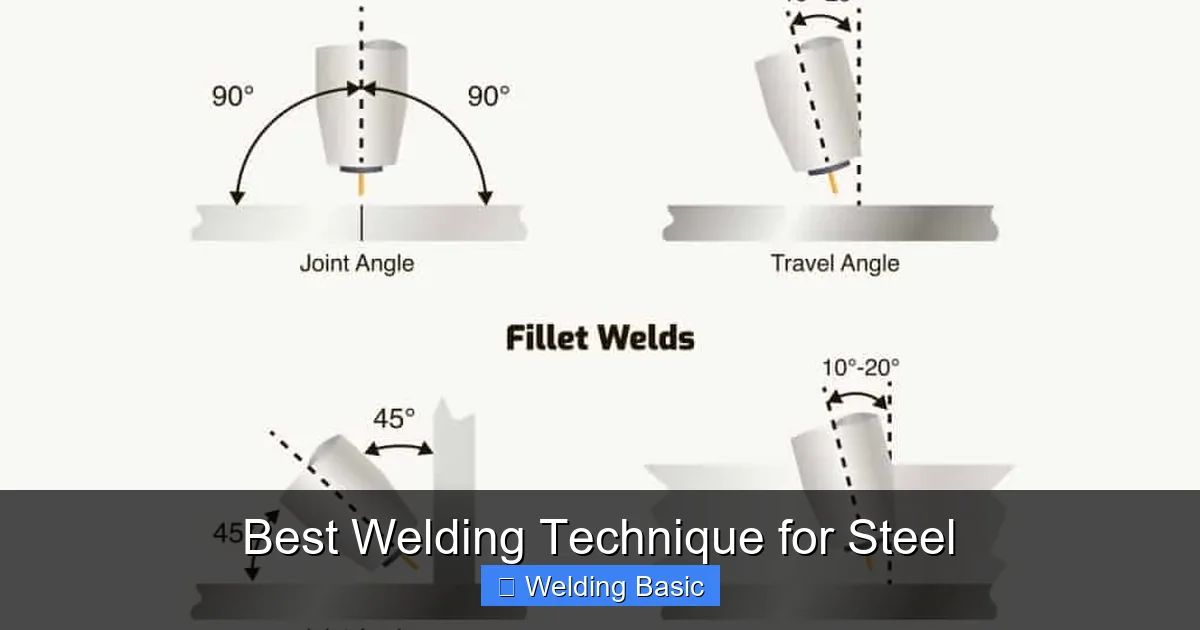
- Weld with a steady hand: Hold the gun at a 10–15 degree angle, push the puddle (not pull), and move at a consistent speed.
- Inspect the weld: Look for even bead shape, good penetration, and no holes or cracks.
Tips for Better MIG Welds
- Use a drag angle of 10–15 degrees for better control.
- Keep the gun nozzle clean to ensure proper gas flow.
- Practice on scrap metal to dial in your settings.
- Avoid weaving unless filling a wide gap—straight beads are stronger.
TIG Welding: Precision and Control for Clean Steel Welds
TIG (Tungsten Inert Gas) welding, or GTAW, is known for its precision and high-quality results. It’s ideal for thin steel, decorative work, or when appearance matters. While it’s harder to master, TIG gives you unmatched control over the weld pool.
How TIG Welding Works
TIG uses a non-consumable tungsten electrode to create the arc. You manually feed a filler rod into the weld pool while the shielding gas (usually pure argon) protects the area. A foot pedal controls heat, allowing fine adjustments.
Step-by-Step TIG Welding for Steel
- Clean the steel thoroughly: TIG is sensitive to contamination—remove all rust, oil, and mill scale.
- Set up your machine: Use DCEN (direct current electrode negative) for steel. Choose a tungsten size based on amperage (2% thoriated or ceriated).
- Select filler rod: Use ER70S-2 for mild steel, matching the base metal thickness.
- Position the torch: Hold the torch at a 15-degree angle, with the tungsten 1/8 inch above the metal.
- Start the arc: Use a lift start or high-frequency start, then slowly add filler rod as the puddle forms.
- Control heat with the pedal: Increase heat to penetrate, reduce to control width and prevent burn-through.
Tips for Better TIG Welds
- Keep your tungsten sharp—dull electrodes cause arc wander.
- Move slowly and steadily for even bead appearance.
- Use both hands: one for the torch, one for the filler rod.
- Practice circular or “walking the cup” techniques for long seams.
Stick Welding: Rugged and Reliable for Tough Conditions
Stick welding (SMAW) uses a consumable electrode coated in flux. It’s a versatile, low-cost method that works well outdoors, on dirty or rusty steel, and with thicker materials. While it produces more spatter and requires cleanup, it’s incredibly durable and portable.
How Stick Welding Works
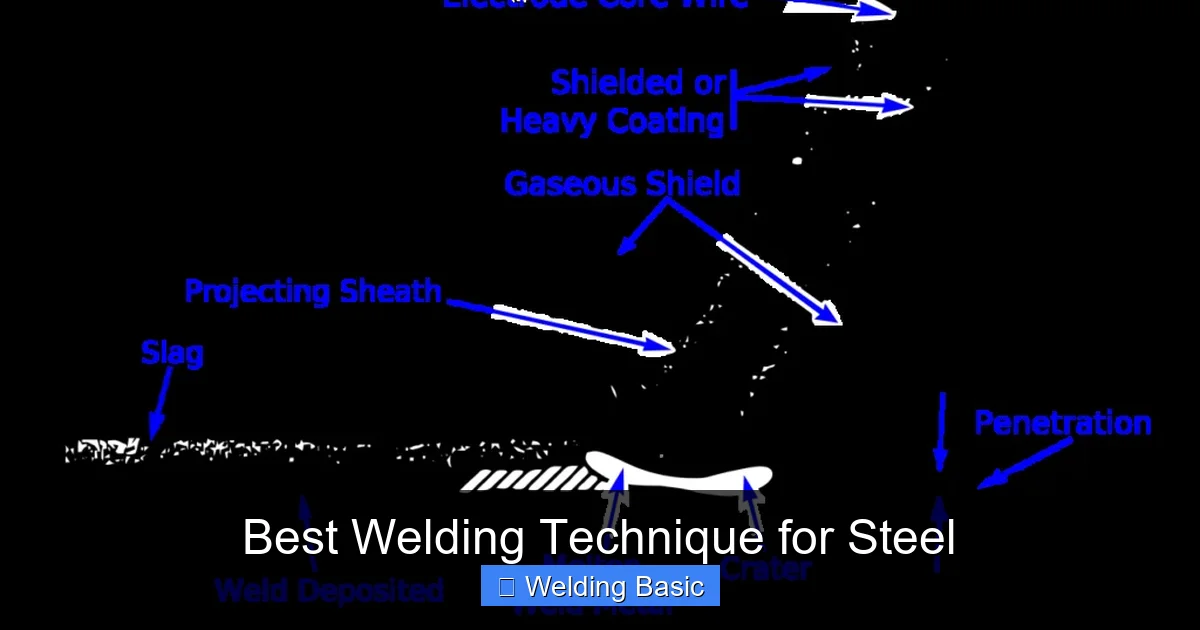
The electrode creates an arc that melts both the rod and the base metal. The flux coating burns off, releasing shielding gas and forming slag that protects the weld as it cools.
Step-by-Step Stick Welding for Steel
- Choose the right electrode: Use 6011 for quick, deep penetration or 7018 for strong, smooth welds.
- Set your amperage: Follow the electrode manufacturer’s recommendations based on diameter and steel thickness.
- Clean the steel: Remove heavy rust or paint, but stick can handle minor surface imperfections.
- Strike the arc: Scratch the electrode like a match or tap it against the metal to start.
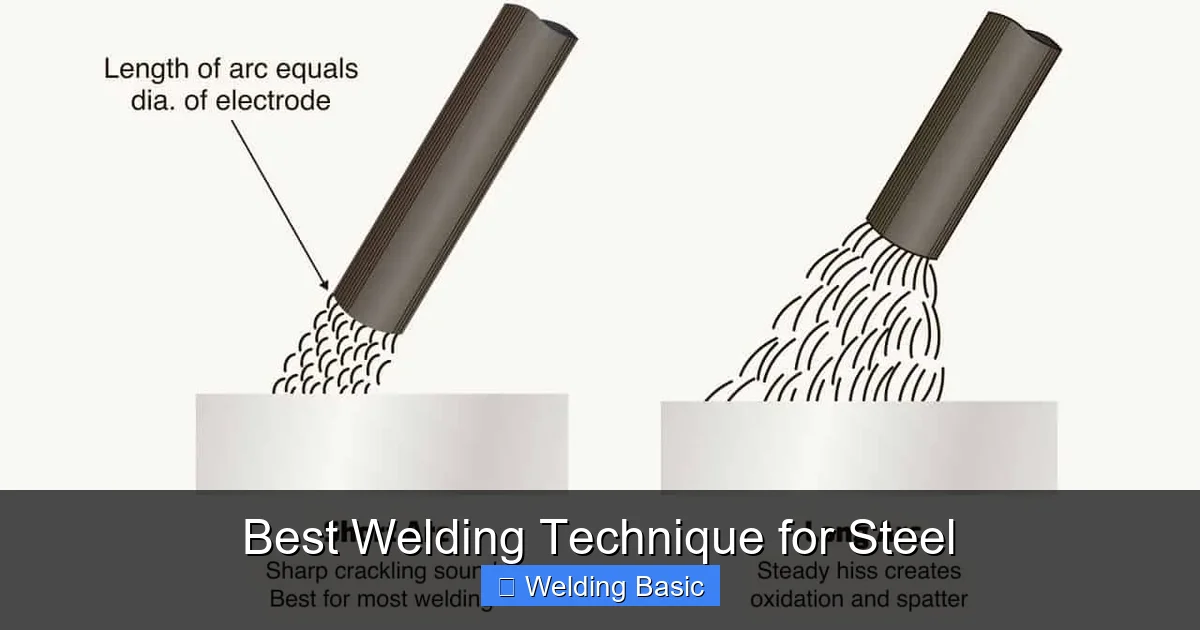
- Weld with a steady motion: Use a drag technique, keeping a short arc length (about 1/8 inch).
- Chip off the slag: Once cooled, remove the brittle slag with a chipping hammer and wire brush.
Tips for Better Stick Welds
- Keep the rod angle between 15–30 degrees.
- Avoid excessive weaving—straight beads are stronger.
- Use a “backstep” technique for long welds to reduce warping.
- Store electrodes in a dry place to prevent moisture absorption.
Choosing the Best Technique for Your Project
So, which is the best welding technique for steel? It depends on your needs:
- MIG: Best for beginners, fast production, and clean indoor work. Great for automotive and home projects.
- TIG: Best for precision, thin materials, and high-appearance welds. Ideal for art, aerospace, or food-grade steel.
- Stick: Best for outdoor use, heavy steel, and field repairs. Perfect for construction and farm equipment.
Many welders use more than one method. For example, you might use MIG for structural frames and TIG for visible joints.
Safety Tips for Welding Steel
Welding involves heat, sparks, UV radiation, and fumes—so safety is non-negotiable.
- Always wear a welding helmet with auto-darkening lens.
- Use flame-resistant clothing, gloves, and boots.
- Work in a well-ventilated area or use a fume extractor.
- Keep a fire extinguisher nearby and remove flammable materials.
- Ground your workpiece properly to prevent electric shock.
Troubleshooting Common Welding Problems
Even experienced welders run into issues. Here’s how to fix the most common problems:
Porosity (holes in the weld)
Cause: Contaminated metal, poor gas coverage, or moisture.
Fix: Clean the steel, check gas flow, and store filler materials dry.
Warping or distortion
Cause: Excessive heat or uneven cooling.
Fix: Use clamps, tack welds, and weld in short segments with cooling time.
Weak or incomplete fusion
Cause: Low heat, wrong angle, or dirty metal.
Fix: Increase amperage, clean the joint, and maintain proper travel speed.
Excessive spatter
Cause: High voltage, long arc length, or wrong gas mix.
Fix: Reduce voltage, shorten arc, and use correct shielding gas.
Conclusion: Master the Best Welding Technique for Steel
Welding steel doesn’t have to be intimidating. By understanding the strengths of MIG, TIG, and stick welding, you can choose the best technique for your project and skill level. Focus on preparation, practice, and safety, and you’ll consistently produce strong, reliable welds.
Start simple—grab some scrap steel and try each method. Over time, you’ll develop a feel for what works best. Whether you’re fixing equipment or building something from scratch, mastering the best welding technique for steel opens up endless possibilities. So fire up your welder, stay safe, and keep improving your craft.
