
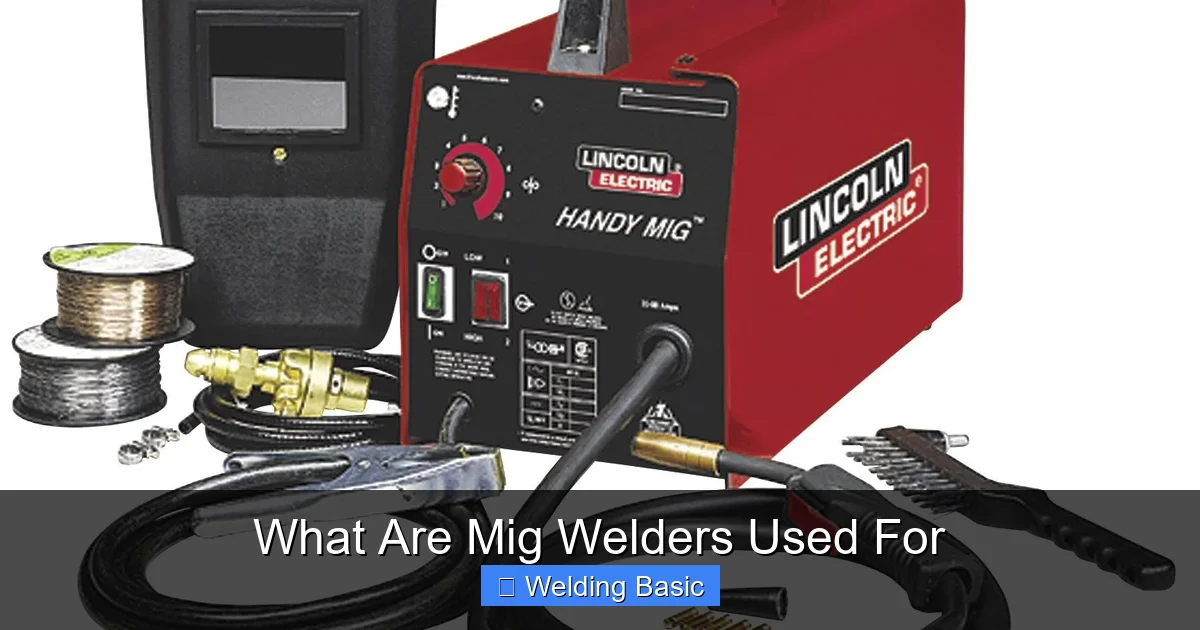
MIG welders are versatile tools used for fast, clean welding on metals like steel, stainless steel, and aluminum. They’re ideal for DIYers, mechanics, and professionals thanks to their ease of use and strong, reliable welds.
Key Takeaways
- Fast and efficient welding: MIG welders use a continuous wire feed, making them much faster than stick or TIG welding for most jobs.
- Great for beginners: With minimal setup and automatic wire feeding, MIG welding is one of the easiest processes to learn.
- Works on multiple metals: MIG welders can handle mild steel, stainless steel, and aluminum with the right wire and gas.
- Clean, strong welds: The shielding gas protects the weld pool, reducing spatter and producing smooth, professional-looking results.
- Perfect for thin materials: MIG welding excels at joining thin sheet metal without burning through, ideal for auto body work and fabrication.
- Common in automotive and fabrication industries: From repairing car frames to building custom metal furniture, MIG welders are workhorses in many trades.
- Requires external gas (in most cases): Unlike flux-cored welding, standard MIG welding needs a shielding gas cylinder, which adds cost and portability concerns.
What Are MIG Welders Used For? A Complete Guide
If you’re new to welding or just curious about the tools in a workshop, you’ve probably heard of MIG welders. But what exactly are they used for? In simple terms, MIG welders are machines that join metal pieces together using a continuous wire electrode and shielding gas. They’re popular because they’re fast, easy to use, and produce strong, clean welds.
In this guide, you’ll learn everything you need to know about MIG welders—what they are, how they work, what materials they can handle, and the most common uses in real-world projects. Whether you’re a hobbyist, a DIY enthusiast, or considering a career in welding, this guide will help you understand why MIG welding is one of the most widely used welding methods today.
How MIG Welding Works
Visual guide about What Are Mig Welders Used For
Image source: sensibledigs.com
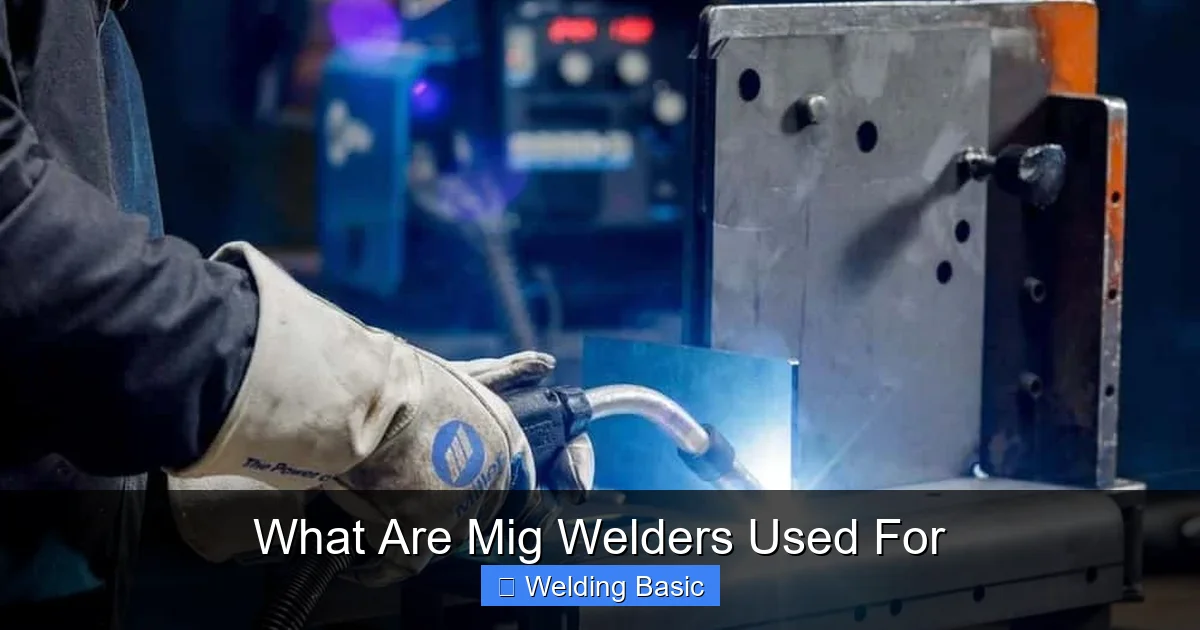
MIG stands for Metal Inert Gas welding, though it’s also known as Gas Metal Arc Welding (GMAW). The process uses a welding gun that feeds a solid wire electrode through the tip at a steady speed. At the same time, an electric arc forms between the wire and the metal workpiece, melting both the wire and the base metal to create a strong joint.
The Role of Shielding Gas
A key part of MIG welding is the shielding gas. This gas—usually a mix of argon and carbon dioxide—flows from the gun and surrounds the weld pool. It protects the molten metal from reacting with oxygen and nitrogen in the air, which could cause porosity, brittleness, or weak welds.
Common gas mixes include:
- 75% argon / 25% CO₂ for mild steel
- 90% argon / 10% CO₂ for cleaner welds with less spatter
- 100% argon for aluminum
Wire Electrode Types
The wire used in MIG welding depends on the metal you’re working with:
- ER70S-6: Standard wire for mild steel
- ER308L: For stainless steel
- ER4043 or ER5356: For aluminum
The wire is fed automatically from a spool inside the welder, making the process smooth and consistent.
Common Uses of MIG Welders
Visual guide about What Are Mig Welders Used For
Image source: wonderfulengineering.com
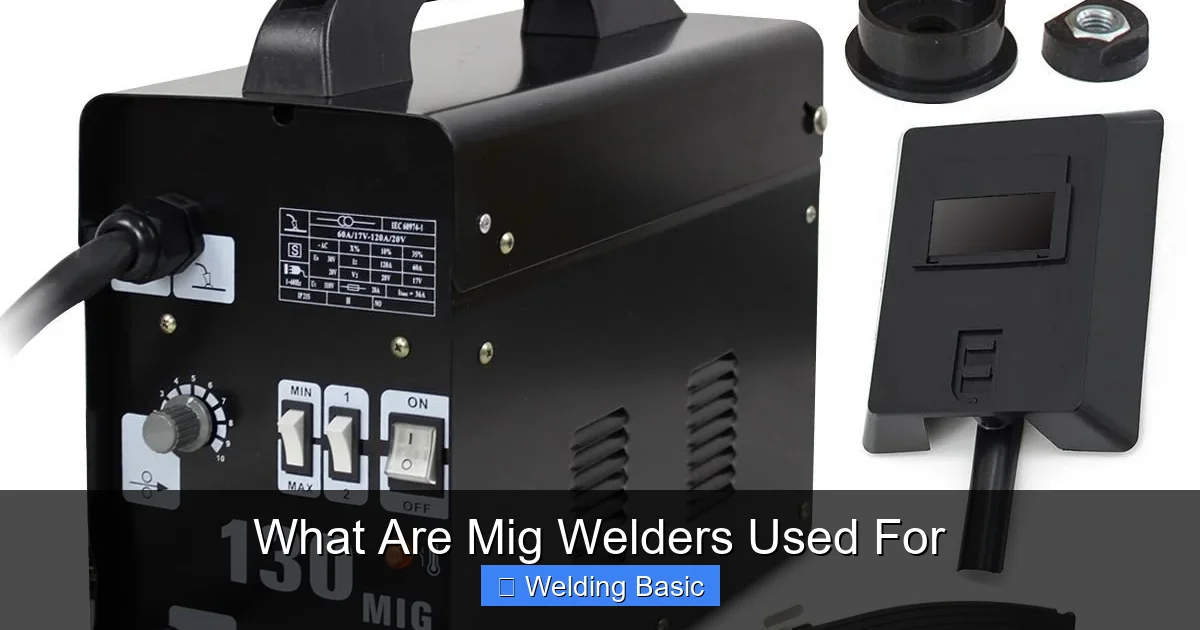
MIG welders are incredibly versatile. Here are some of the most common applications across different fields.
Automotive Repair and Restoration
One of the biggest uses for MIG welders is in the automotive industry. Mechanics and restoration experts use them to:
- Repair rusted car frames and floor pans
- Weld exhaust systems
- Build custom roll cages and chassis reinforcements
- Fix body panels on classic cars
Because MIG welding is fast and works well on thin sheet metal, it’s ideal for auto body work where precision and speed matter.
Metal Fabrication and Construction
From building steel frames to creating custom metal furniture, MIG welders are essential in fabrication shops. They’re used to:
- Construct steel structures like sheds, garages, and fences
- Make gates, railings, and staircases
- Build industrial equipment and machinery parts
The strength and consistency of MIG welds make them perfect for load-bearing projects.
Home and DIY Projects
You don’t need to be a professional to use a MIG welder. Many homeowners and hobbyists use them for:
- Building garden trellises or raised garden beds
- Creating custom bike racks or tool holders
- Repairing lawnmowers, trailers, or ATVs
- Making decorative metal art or furniture
With a small, portable MIG welder, you can tackle a wide range of projects around the house.
Farm and Ranch Equipment Maintenance
Farmers often rely on MIG welders to keep equipment running. They use them to:
- Repair broken tractor parts
- Weld broken plow blades or harrows
- Fix fencing and livestock pens
- Modify or build trailers and feeders
Durability is key in farm work, and MIG welds provide strong, long-lasting repairs.
Art and Sculpture
Believe it or not, MIG welders are also used by artists. Metal sculptors appreciate the speed and control MIG welding offers when joining large pieces of steel. It allows them to work quickly and experiment with form and structure.
Advantages of Using a MIG Welder
Why choose MIG over other welding methods? Here are the main benefits:
Ease of Use
MIG welding is often called “the beginner’s welding process” because it’s straightforward. Once you set the voltage and wire speed, you just pull the trigger and move the gun. There’s no need to strike an arc manually or chip away slag like with stick welding.
High Welding Speed
Since the wire feeds continuously, you can weld long seams quickly. This makes MIG ideal for production work or large projects where time is money.
Clean, Spatter-Free Welds (With Good Settings)
When set up correctly, MIG welders produce smooth, clean beads with minimal spatter. This reduces cleanup time and gives a professional appearance.
Versatility
With the right wire and gas, a MIG welder can handle steel, stainless steel, and aluminum. Some models even support flux-cored welding (no gas needed), adding even more flexibility.
All-Position Welding
While MIG welding is easiest in flat or horizontal positions, skilled welders can use it vertically and overhead with practice and proper technique.
Limitations and Challenges
MIG welding isn’t perfect for every job. Here are some limitations to keep in mind:
Requires Clean Metal
MIG welding works best on clean, rust-free metal. Dirt, paint, or heavy rust can cause porosity or weak welds. Always grind and clean your materials before welding.
Sensitive to Wind and Drafts
Because it uses external shielding gas, MIG welding doesn’t work well outdoors unless you’re using flux-cored wire. Wind can blow the gas away, exposing the weld to contamination.
Higher Initial Cost
MIG welders, especially those with gas capabilities, cost more than basic stick welders. You’ll also need to buy gas cylinders, regulators, and wire spools.
Not Ideal for Very Thick Metals
While MIG can handle thick steel, it’s not as deep-penetrating as stick or TIG welding. For heavy structural work, other methods may be better.
Tips for Getting Great Results with a MIG Welder
Want to improve your MIG welding? Follow these practical tips:
1. Clean Your Metal Thoroughly
Use a wire brush or grinder to remove rust, paint, and grease. Even small contaminants can ruin a weld.
2. Use the Right Settings
Most MIG welders have charts that recommend voltage and wire speed based on material thickness. Start there and adjust as needed.
3. Maintain Proper Gun Angle
Hold the gun at a 10–15 degree angle, pointing in the direction of travel. This helps the gas shield the weld pool effectively.
4. Keep a Consistent Travel Speed
Move too fast, and the weld will be thin and weak. Move too slow, and you’ll burn through thin metal. Practice smooth, steady motion.
5. Use a Quality Ground Clamp
A poor ground connection causes erratic arcs and weak welds. Make sure the clamp is tight and attached to clean metal.
Troubleshooting Common MIG Welding Problems
Even experienced welders run into issues. Here’s how to fix common problems:
Porosity (Holes in the Weld)
Cause: Contaminated metal, wind, or incorrect gas flow.
Fix: Clean the metal, check gas flow (usually 20–25 CFH), and weld in a sheltered area.
Excessive Spatter
Cause: Too high voltage or wire speed.
Fix: Lower the voltage or wire feed speed slightly. Use anti-spatter spray if needed.
Wire Sticking to the Tip
Cause: Too low voltage or gun too close to the metal.
Fix: Increase voltage and maintain a ½-inch distance from the workpiece.
Weak or Incomplete Penetration
Cause: Too fast travel speed or low heat.
Fix: Slow down and increase voltage. Ensure proper joint fit-up.
Conclusion
MIG welders are powerful, user-friendly tools used in a wide range of industries and DIY projects. From fixing cars and building furniture to maintaining farm equipment and creating art, their speed, versatility, and clean results make them a top choice for both beginners and professionals.
While they require some setup and aren’t ideal for every environment, the benefits far outweigh the drawbacks for most users. With proper technique and maintenance, a MIG welder can last for years and help you complete countless projects with strong, reliable welds.
If you’re looking for a welding method that’s easy to learn, fast to use, and capable of handling a variety of materials, MIG welding is an excellent choice. Whether you’re repairing, building, or creating, a MIG welder might just be the tool you’ve been looking for.
