
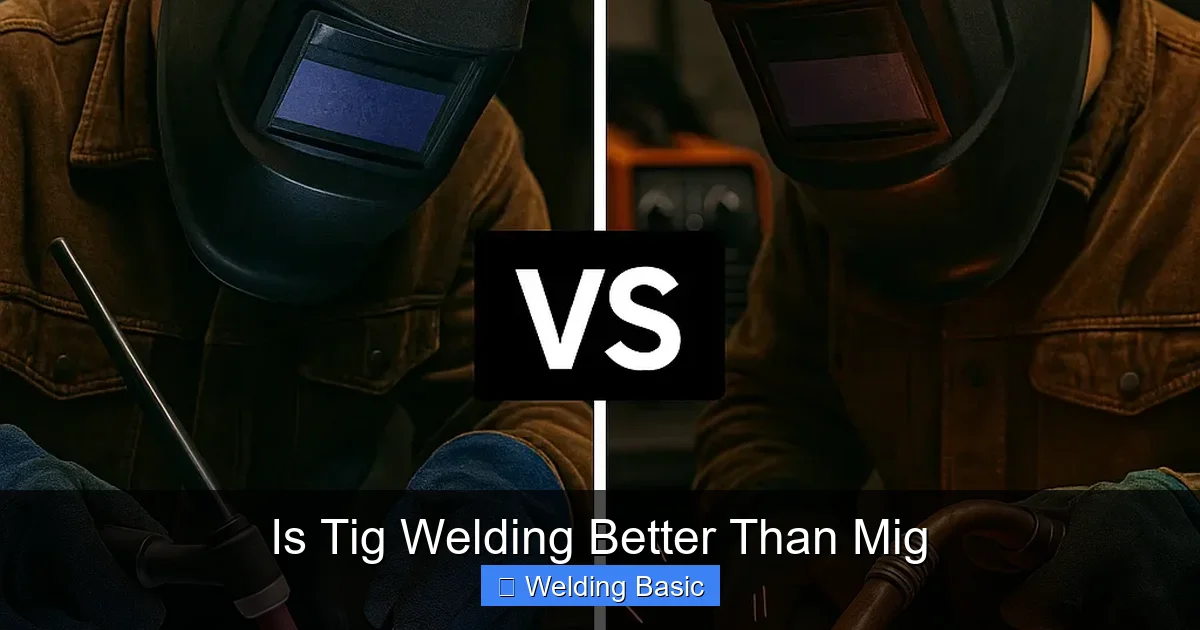
TIG and MIG welding each have unique strengths depending on your project needs. This guide breaks down the differences, helping you decide which method offers better control, speed, and finish for your welding tasks.
Key Takeaways
- TIG welding offers superior precision and cleaner welds – ideal for thin materials and detailed work like automotive or artistic projects.
- MIG welding is faster and easier to learn – perfect for beginners and high-volume tasks like construction or fabrication.
- TIG uses a non-consumable tungsten electrode – allowing for greater control but requiring more skill and time.
- MIG uses a continuous wire feed – making it efficient for long, straight welds and thicker materials.
- TIG produces less spatter and requires minimal cleanup – resulting in a professional, polished finish.
- MIG is more versatile for outdoor use – less affected by wind compared to TIG, which needs a stable environment.
- Choose based on material, skill level, and project goals – neither method is universally “better,” but one will suit your needs more.
Introduction: Choosing the Right Welding Method
When it comes to welding, one of the most common questions beginners and even experienced welders ask is: Is TIG welding better than MIG? The short answer? It depends. Both TIG (Tungsten Inert Gas) and MIG (Metal Inert Gas) welding are widely used techniques, but they serve different purposes and excel in different scenarios.
In this guide, we’ll walk you through a detailed comparison of TIG and MIG welding. You’ll learn how each process works, their advantages and disadvantages, and how to choose the right one for your specific project. Whether you’re working on a delicate aluminum sculpture or building a steel frame for a shed, understanding these methods will help you make smarter, safer, and more efficient welding decisions.
How TIG Welding Works
TIG welding, also known as GTAW (Gas Tungsten Arc Welding), uses a non-consumable tungsten electrode to produce the weld. The welder manually feeds a separate filler rod into the weld pool while controlling the heat with a foot pedal or torch trigger.

Visual guide about Is Tig Welding Better Than Mig
Image source: welderology.com
Step-by-Step TIG Welding Process
- Prepare the materials: Clean the metal thoroughly to remove oil, rust, or paint. TIG welding is very sensitive to contamination.
- Set up the machine: Choose the correct polarity (usually DC for steel, AC for aluminum), set the amperage, and select the right tungsten electrode (e.g., 2% thoriated for steel).
- Shield with inert gas: Use argon or a argon-helium mix to protect the weld area from oxygen and nitrogen.
- Strike the arc: Use a high-frequency start or lift arc to initiate the arc without touching the tungsten to the metal.
- Control heat and filler: Use your dominant hand to guide the torch and your other hand to feed the filler rod into the molten pool. Adjust heat with a foot pedal for precision.
Tip: Practice on scrap metal first. TIG requires coordination between hands and feet—like playing the piano while welding!
How MIG Welding Works
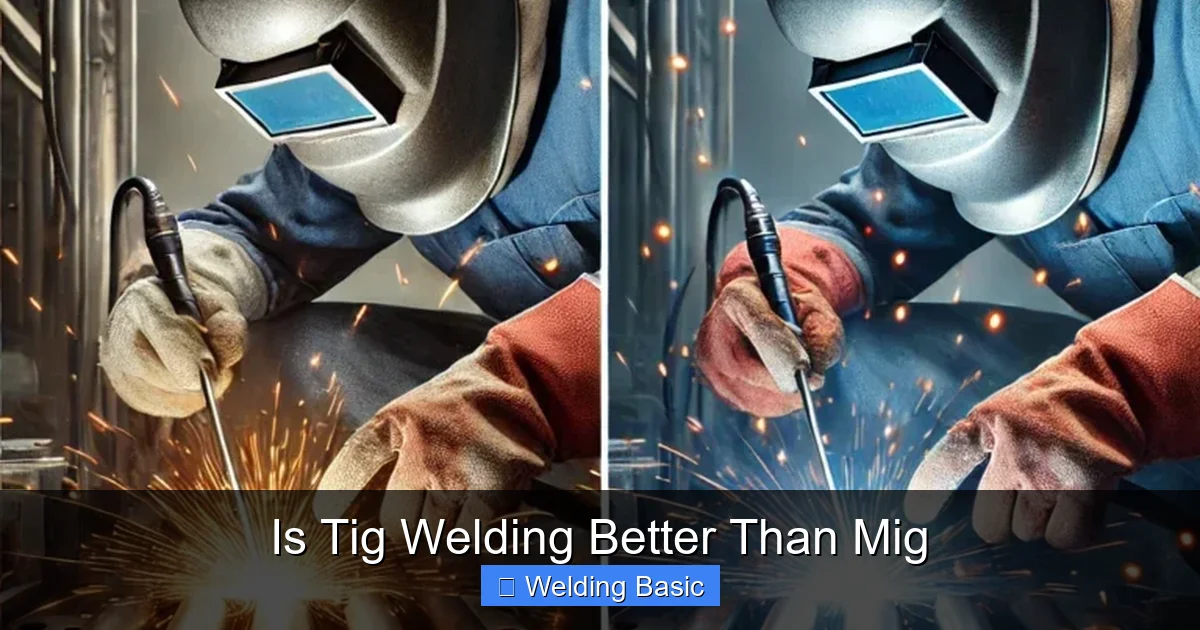
MIG welding, or GMAW (Gas Metal Arc Welding), uses a continuously fed wire electrode through a welding gun. The wire melts and becomes the filler material, while shielding gas (usually a mix of argon and CO2) protects the weld from contamination.
Visual guide about Is Tig Welding Better Than Mig
Image source: welderology.com
Step-by-Step MIG Welding Process
- Prepare the materials: Clean the metal, but MIG is more forgiving than TIG when it comes to surface impurities.
- Load the wire: Insert the correct wire type (e.g., ER70S-6 for mild steel) into the MIG gun and feed it through the liner.
- Set the machine: Adjust voltage and wire feed speed based on material thickness and type. Most machines have preset charts.
- Shield with gas: Use a gas mix appropriate for your material—75% argon / 25% CO2 is common for steel.
- Weld with a steady motion: Hold the gun at a 10–15 degree angle and move it steadily along the joint. The wire feeds automatically as you weld.
Tip: Keep the gun close to the workpiece (about ½ inch) and maintain a consistent travel speed for even beads.
Comparing TIG and MIG: Key Differences
Now that you understand how each process works, let’s compare them side by side across several important factors.
1. Precision and Control
TIG welding wins hands down when it comes to precision. Because you control the heat with a foot pedal and add filler manually, you can make very fine adjustments. This makes TIG ideal for thin materials, tight spaces, and detailed work like bicycle frames or custom exhaust systems.
MIG welding, while still accurate, is less precise. The continuous wire feed means you can’t pause mid-weld, and the heat input is less adjustable in real time. However, modern MIG machines with digital controls are closing the gap.
2. Welding Speed
If speed is your priority, MIG is the clear winner. The automatic wire feed allows for fast, continuous welding—perfect for long seams or production work. A skilled MIG welder can complete a joint in half the time it takes with TIG.
TIG is slower because it requires careful manipulation of both the torch and filler rod. It’s not ideal for large-scale projects where time is money.
3. Ease of Learning
MIG is much easier for beginners to pick up. The process is more automated, and the learning curve is gentler. Many vocational schools start students with MIG for this reason.
TIG demands more skill and practice. Coordinating hand movements, foot pedal control, and filler rod feeding takes time to master. Expect a steeper learning curve.
4. Material Compatibility
Both methods can weld steel, stainless steel, and aluminum, but TIG handles exotic metals (like titanium and magnesium) better due to its precise heat control.
MIG can struggle with very thin materials because the high heat input can cause warping or burn-through. However, with a spool gun, MIG can weld aluminum effectively.
5. Weld Appearance and Cleanup
TIG produces clean, smooth, and aesthetically pleasing welds with minimal spatter. This makes it the go-to choice for visible welds in automotive, aerospace, and art applications.
MIG welds can be strong but often require grinding or finishing to look professional. Spatter is more common, so you’ll need to clean the workpiece after welding.
6. Cost and Equipment
TIG machines are generally more expensive than MIG welders. They also require additional accessories like a foot pedal, different tungsten types, and high-purity gas.
MIG setups are more affordable and simpler. You can get a decent MIG welder for under $500, making it a popular choice for hobbyists and small shops.
7. Environmental Factors
TIG welding is sensitive to wind and drafts because the shielding gas can be easily disrupted. It’s best done indoors in a controlled environment.
MIG is more tolerant of outdoor conditions, especially with proper gas coverage. This makes it a favorite for construction and field repairs.
When to Use TIG Welding
TIG is the better choice when:
- You’re working with thin materials (under 1/8 inch)
- Precision and aesthetics matter (e.g., custom car parts, sculptures)
- You’re welding aluminum, titanium, or other reactive metals
- You need a clean, spatter-free finish with minimal post-weld cleanup
- You have the time and skill to invest in detailed work
Example: A motorcycle builder restoring a vintage bike would use TIG to weld the thin chrome-moly frame tubes, ensuring strength and a seamless appearance.
When to Use MIG Welding
MIG is the better choice when:
- You need to weld quickly and efficiently
- You’re working on thicker materials (over 1/8 inch)
- You’re a beginner or working under time constraints
- You’re doing structural work, fabrication, or repairs
- You’re welding in less-than-ideal conditions (e.g., outdoors)
Example: A farmer repairing a tractor hitch would use MIG for its speed and strength, getting the job done quickly without sacrificing durability.
Troubleshooting Common Issues
Even experienced welders run into problems. Here’s how to fix common TIG and MIG issues.
TIG Welding Problems
- Porosity: Caused by contaminated gas or dirty metal. Fix: Use fresh argon, clean the base metal, and check for gas leaks.
- Tungsten contamination: Happens if the tungsten touches the weld pool. Fix: Keep the tungsten clean and use a larger electrode if needed.
- Arc instability: Often due to incorrect settings or dirty tungsten. Fix: Sharpen the tungsten properly and adjust amperage.
MIG Welding Problems
- Wire feeding issues: Caused by a clogged liner or incorrect tension. Fix: Clean the liner and adjust the drive roll pressure.
- Excessive spatter: Usually from too high voltage or incorrect gas mix. Fix: Lower voltage and ensure proper gas flow (15–25 CFH).
- Poor penetration: Can result from low heat or fast travel speed. Fix: Increase voltage or slow down your travel speed.
Conclusion: Which Is Better?
So, is TIG welding better than MIG? The truth is, neither method is universally superior. TIG excels in precision, control, and finish, making it ideal for high-quality, detailed work. MIG wins in speed, ease of use, and versatility, especially for heavy-duty or outdoor applications.
The best choice depends on your project, skill level, and goals. If you’re building a show car or working with delicate materials, go with TIG. If you’re fabricating a trailer or repairing farm equipment, MIG is likely the better fit.
Many professional welders actually use both methods—switching between them as needed. Investing in both types of equipment can give you the flexibility to tackle any job with confidence.
Remember: the “better” welding method is the one that helps you get the job done safely, efficiently, and to the standard you need. With practice and the right tools, you’ll find your groove—whether it’s with TIG, MIG, or both.
