
This guide covers the different types of welding techniques used in metal fabrication, from beginner-friendly MIG welding to precise TIG methods. You’ll learn how each process works, its best applications, and tips for choosing the right one.
Key Takeaways
- MIG welding is fast and beginner-friendly, ideal for thin to medium-thickness metals like steel and aluminum.
- TIG welding offers high precision and clean welds, perfect for thin materials and detailed work.
- Stick welding (SMAW) is portable and works well outdoors or on rusty surfaces, making it great for repairs.
- Flux-Cored Arc Welding (FCAW) is similar to MIG but uses a special wire, allowing deeper penetration and outdoor use.
- Oxy-fuel welding uses gas flames and is useful for cutting and heating, though less common for structural welding today.
- Choosing the right technique depends on material type, thickness, environment, and skill level.
- Safety gear like gloves, helmets, and ventilation is essential for all welding methods.
Introduction: Understanding the Basics of Welding Techniques
Welding is the process of joining metals by melting them together using heat. It’s used in everything from building cars and bridges to crafting art and repairing tools. But not all welding is the same—there are several different types of welding techniques, each with its own tools, benefits, and best uses.
In this guide, you’ll learn about the most common welding methods, how they work, and when to use each one. Whether you’re a beginner looking to start welding or a hobbyist wanting to expand your skills, understanding these techniques will help you choose the right one for your project. We’ll cover MIG, TIG, stick, flux-cored, and oxy-fuel welding in simple, easy-to-follow steps.
1. MIG Welding (Metal Inert Gas)
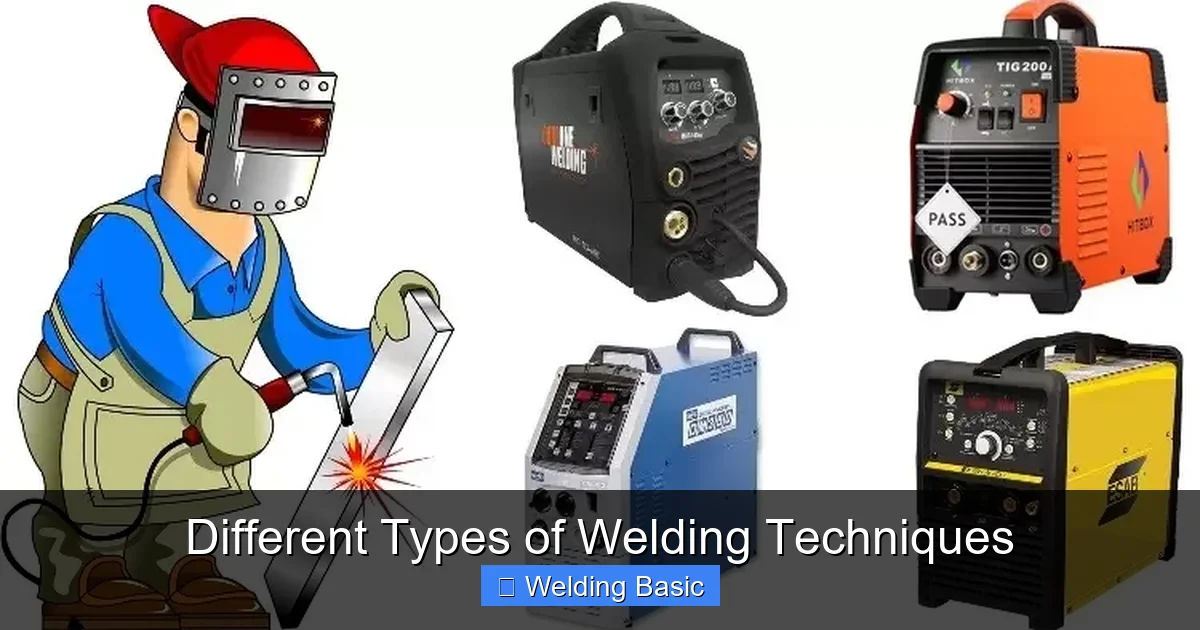
MIG welding, also known as Gas Metal Arc Welding (GMAW), is one of the most popular methods, especially for beginners. It uses a continuous wire electrode fed through a welding gun, along with a shielding gas to protect the weld from contamination.
Visual guide about Different Types of Welding Techniques
Image source: inboxq.com
How MIG Welding Works
The welder pulls a trigger on the gun, which feeds the wire and starts an electric arc. The arc melts the wire and the base metal, fusing them together. A shielding gas (usually argon or a mix) flows around the weld to prevent oxygen and moisture from ruining it.
Best Uses for MIG Welding
- Automotive repairs and fabrication
- Home DIY projects
- Welding thin to medium-thickness steel and aluminum
Tips for Success
- Keep the gun at a 10–15 degree angle for smooth welds.
- Use a steady hand and consistent travel speed.
- Clean the metal surface before welding to avoid weak joints.
Example: If you’re building a metal shelf for your garage, MIG welding is a great choice because it’s fast and produces strong, clean welds on steel tubing.
2. TIG Welding (Tungsten Inert Gas)
TIG welding, or Gas Tungsten Arc Welding (GTAW), is known for its precision and high-quality results. It uses a non-consumable tungsten electrode and requires the welder to feed a separate filler rod by hand.
Visual guide about Different Types of Welding Techniques
Image source: cdn.thepipingmart.com
How TIG Welding Works
An electric arc forms between the tungsten electrode and the metal. The welder controls the heat with a foot pedal and adds filler metal manually. A shielding gas (usually argon) protects the weld pool.
Best Uses for TIG Welding
- Aerospace and motorcycle parts
- Thin materials like stainless steel and aluminum
- Artistic welding and detailed joints
Tips for Success
- Practice hand coordination—controlling the torch and filler rod takes skill.
- Use a lower amperage for thin metals to avoid burning through.
- Keep the tungsten electrode sharp for a stable arc.
Example: If you’re welding a custom aluminum bike frame, TIG welding gives you the control needed for strong, clean, and visually appealing joints.
3. Stick Welding (Shielded Metal Arc Welding)
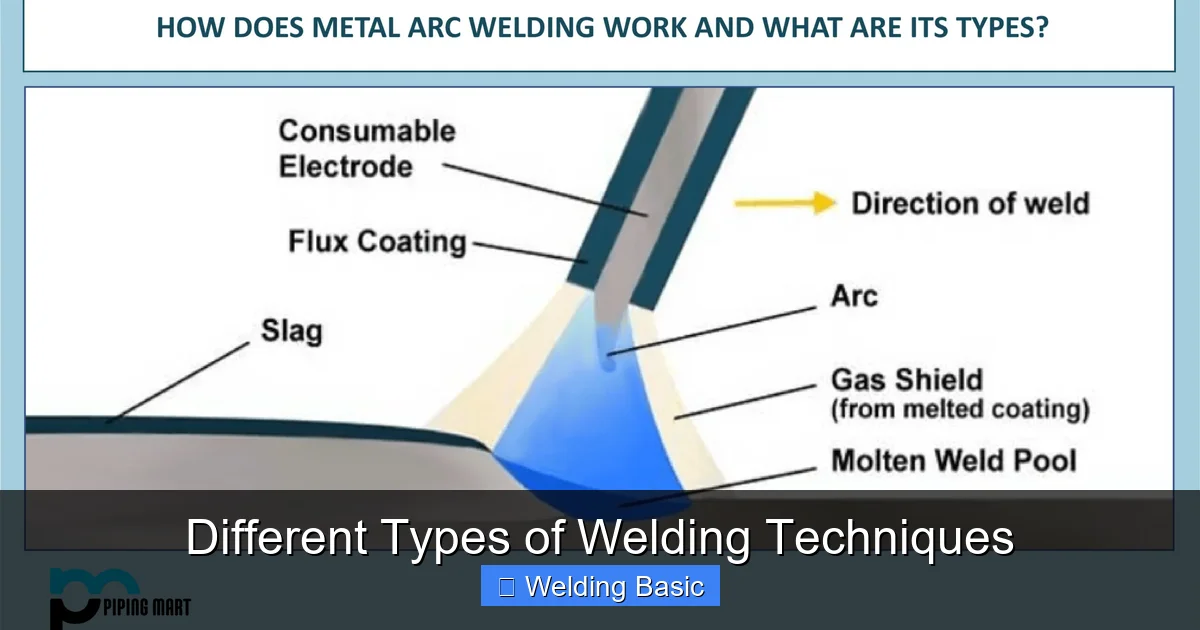
Stick welding, or SMAW, is one of the oldest and most versatile techniques. It uses a consumable electrode (the “stick”) coated in flux, which creates a gas shield as it burns.
How Stick Welding Works
The welder strikes an arc between the electrode and the metal. The heat melts both the electrode and the base metal, forming a weld pool. The flux coating burns off, creating a protective gas and slag that covers the weld.
Best Uses for Stick Welding
- Outdoor welding (wind doesn’t affect it as much)
- Heavy-duty construction and repairs
- Rusty or dirty metals
Tips for Success
- Use a “drag” technique—pull the electrode toward you for better control.
- Choose the right electrode for your metal (e.g., 6011 for thin steel, 7018 for strong structural welds).
- Remove slag with a chipping hammer and wire brush after welding.
Example: If you’re fixing a broken tractor hitch in your backyard, stick welding works well because it doesn’t need clean metal or a gas supply.
4. Flux-Cored Arc Welding (FCAW)
Flux-cored welding is similar to MIG but uses a special tubular wire filled with flux. It doesn’t always require external shielding gas, making it great for outdoor use.
How FCAW Works
The wire feeds through the gun, and an electric arc melts it and the base metal. The flux inside the wire creates gas and slag to protect the weld. Some setups use additional shielding gas (dual-shield), while others rely only on flux (self-shielded).
Best Uses for FCAW
- Heavy fabrication and shipbuilding
- Welding thick materials quickly
- Outdoor projects where wind blows away gas
Tips for Success
- Use a push technique for better penetration.
- Adjust voltage and wire speed for smooth bead appearance.
- Clean slag thoroughly between passes.
Example: If you’re building a metal fence post in windy conditions, self-shielded FCAW lets you weld without worrying about gas being blown away.
5. Oxy-Fuel Welding (Oxyacetylene)
Oxy-fuel welding uses a flame produced by burning a mix of oxygen and acetylene gas. It’s less common for modern structural welding but still useful for cutting, heating, and brazing.
How Oxy-Fuel Welding Works
A torch mixes oxygen and acetylene, creating a hot flame (up to 6,000°F). The flame heats the metal until it melts, and a filler rod is added to form the weld.
Best Uses for Oxy-Fuel Welding
- Cutting thick steel plates
- Brazing copper pipes
- Heating metal for bending or shaping
Tips for Success
- Adjust the flame to a neutral setting (equal oxygen and acetylene).
- Move the torch in small circles for even heating.
- Store gas cylinders upright and away from heat.
Example: If you’re repairing a cast iron engine block, oxy-fuel welding can heat the area evenly to prevent cracking during repair.
Choosing the Right Welding Technique
With so many different types of welding techniques, how do you pick the right one? Here’s a simple guide:
- Material type: Aluminum? Use TIG or MIG. Steel? Most methods work. Cast iron? Try oxy-fuel or stick.
- Thickness: Thin sheets? TIG or MIG. Thick plates? Stick or FCAW.
- Environment: Indoors? MIG or TIG. Outdoors? Stick or FCAW.
- Skill level: Beginner? Start with MIG. Advanced? Try TIG for precision.
- Portability: Need to move around? Stick and FCAW don’t need gas tanks.
For most home projects, MIG is the best all-around choice. For professional or artistic work, TIG offers unmatched control.
Troubleshooting Common Welding Problems
Even experienced welders run into issues. Here are some common problems and how to fix them:
Porosity (holes in the weld)
Cause: Contamination, moisture, or poor gas coverage.
Solution: Clean the metal, check gas flow, and store electrodes properly.
Cracking
Cause: Rapid cooling, wrong filler metal, or dirty base metal.
Solution: Preheat thick metals, use the right rod, and clean surfaces.
Undercut (groove along the weld edge)
Cause: Too high amperage or fast travel speed.
Solution: Reduce heat and slow down your movement.
Spatter (small metal droplets)
Cause: Incorrect voltage or dirty metal.
Solution: Adjust settings and clean the surface before welding.
Safety Tips for All Welding Techniques
Safety should always come first. Here’s what you need:
- Welding helmet: Protects your eyes from UV rays and sparks.
- Fire-resistant clothing: Wear leather gloves, long sleeves, and pants.
- Ventilation: Weld in a well-ventilated area or use a fume extractor.
- Fire safety: Keep a fire extinguisher nearby and remove flammable materials.
- Ear protection: Some welding machines are loud.
Never weld without proper gear—burns, eye damage, and fumes can be serious.
Conclusion: Mastering the Art of Welding
Understanding the different types of welding techniques opens up a world of possibilities, from fixing a broken tool to building a custom metal sculpture. Each method has its strengths, and the best one for you depends on your project, skill level, and environment.
Start with MIG if you’re new—it’s forgiving and versatile. Move to TIG for precision, or stick with stick welding for rugged outdoor jobs. Practice regularly, follow safety rules, and don’t be afraid to experiment.
With time and experience, you’ll find the technique that fits your style and needs. Happy welding!
