
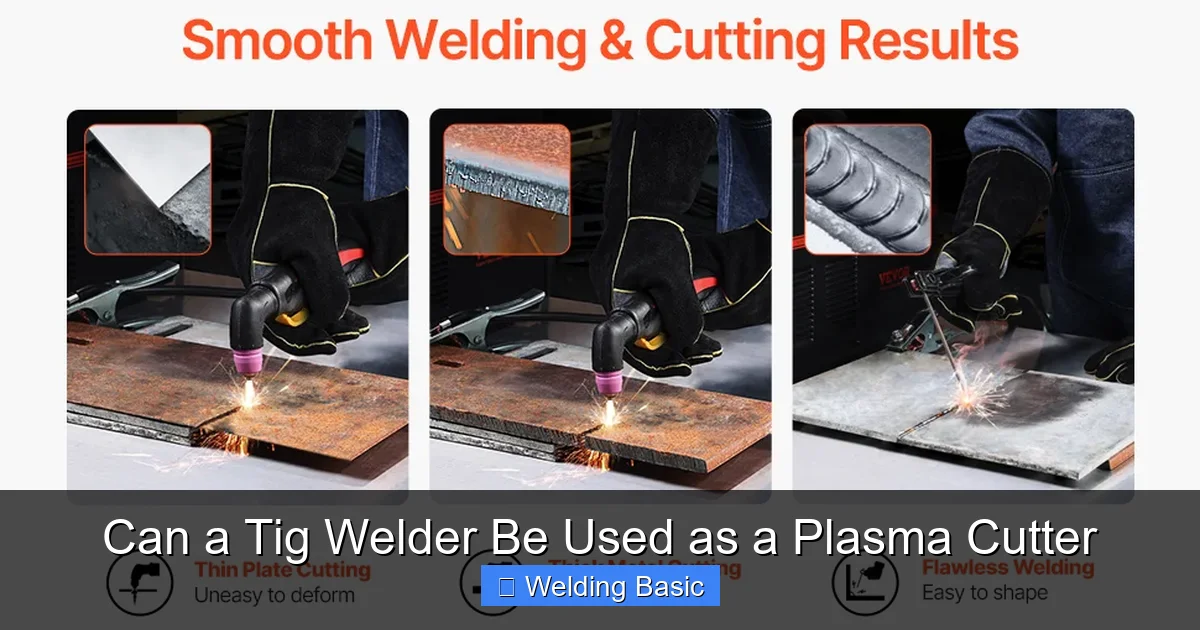
No, a TIG welder cannot be used as a plasma cutter. While both use electric arcs, they require different equipment, gases, and processes. This guide explains why they’re not interchangeable and offers safe alternatives.
Key Takeaways
- TIG welders and plasma cutters use different technologies: TIG welding joins metals with heat, while plasma cutting slices through metal using a high-velocity ionized gas jet.
- You cannot convert a TIG welder into a plasma cutter: The internal components, power requirements, and torch designs are incompatible.
- Plasma cutters need compressed air or gas: TIG welders typically use argon for shielding, not the high-pressure gas needed for cutting.
- Attempting to modify a TIG welder is dangerous: It can cause equipment damage, fire hazards, or personal injury due to improper voltage and gas flow.
- Buy or rent a dedicated plasma cutter: For clean, efficient cuts, invest in the right tool designed for the job.
- Some multi-process machines combine both: Look for combo units that offer TIG welding and plasma cutting in one system.
- Always follow safety guidelines: Whether welding or cutting, wear proper PPE and work in a well-ventilated area.
Can a TIG Welder Be Used as a Plasma Cutter?
If you’re new to welding or metal fabrication, you might wonder: *Can I use my TIG welder to cut metal like a plasma cutter?* It’s a smart question—after all, both tools use electric arcs and work with metals. But the short answer is no, a TIG welder cannot be used as a plasma cutter.
In this guide, you’ll learn why these two tools are fundamentally different, what each one is designed to do, and why trying to turn a TIG welder into a plasma cutter is both ineffective and unsafe. We’ll also explore practical alternatives, including multi-function machines that can handle both tasks. Whether you’re a DIY enthusiast or a professional fabricator, understanding these differences will help you choose the right tool for the job—and stay safe while doing it.
Understanding TIG Welding
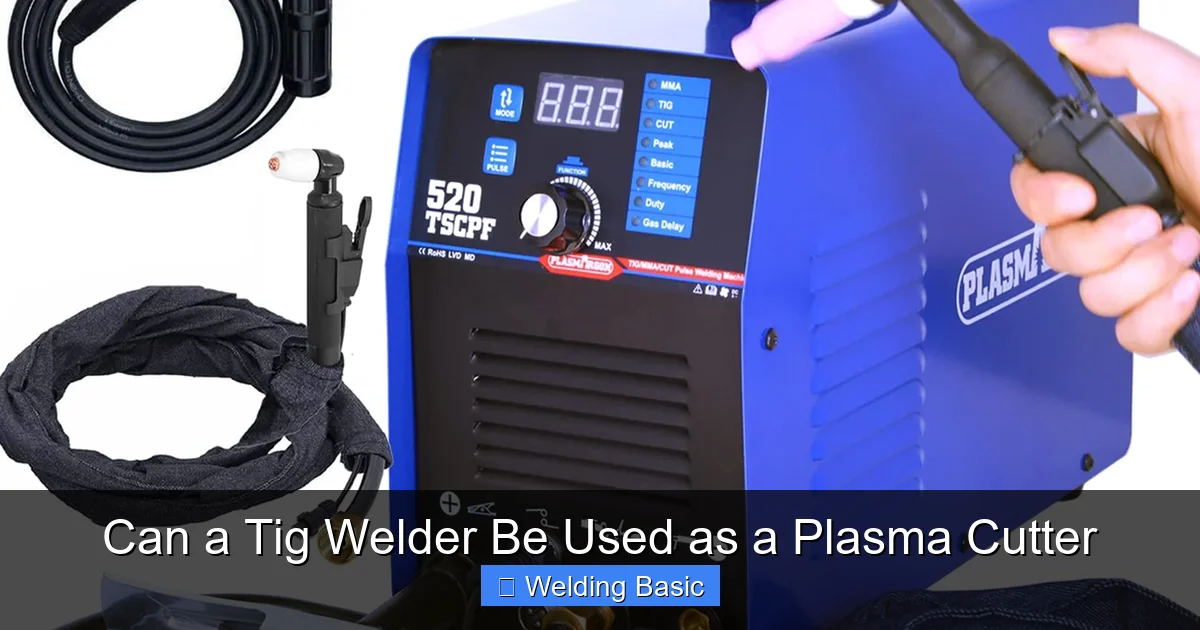
Visual guide about Can a Tig Welder Be Used as a Plasma Cutter
Image source: m.media-amazon.com
Before we dive into why TIG welders can’t cut metal, let’s quickly review what they’re built for.
TIG stands for Tungsten Inert Gas welding. It’s a precise welding method that uses a non-consumable tungsten electrode to create an electric arc. This arc heats the metal, and a filler rod is often added to join two pieces together. The weld area is protected from contamination by an inert gas—usually argon—that flows around the torch.
How TIG Welding Works
- The tungsten electrode doesn’t melt, so it stays sharp and focused.
- Heat is concentrated in a small area, allowing for clean, detailed welds.
- Commonly used for thin materials like aluminum, stainless steel, and copper.
- Requires a steady hand and good control—ideal for high-quality, aesthetic welds.
Because TIG welding is all about joining metal with precision, it’s not designed to remove or cut through material. The arc is gentle and controlled, not violent or fast enough to slice metal apart.
Understanding Plasma Cutting
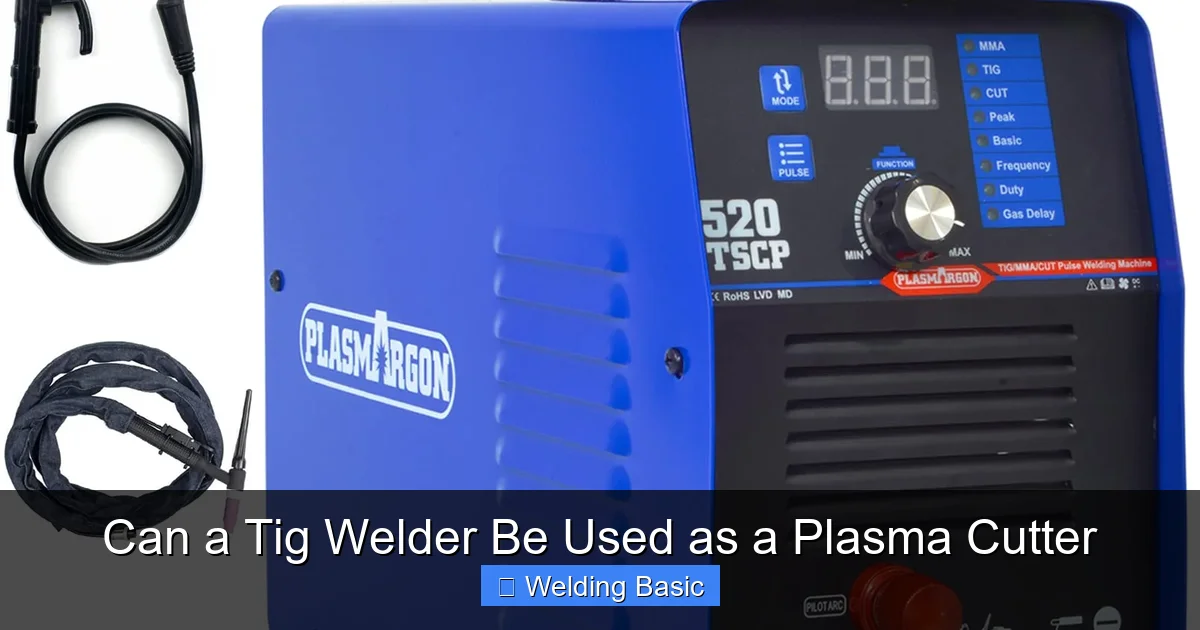
Visual guide about Can a Tig Welder Be Used as a Plasma Cutter
Image source: m.media-amazon.com
Now, let’s look at plasma cutting—the opposite of welding in many ways.
Plasma cutting uses a high-velocity jet of ionized gas (plasma) to melt and blow away metal. The process starts with an electric arc that passes through a narrow nozzle. Compressed air or another gas (like nitrogen or oxygen) is forced through the nozzle, creating a superheated plasma stream that can reach temperatures over 20,000°F—hot enough to cut through steel, stainless steel, aluminum, and more.
How Plasma Cutting Works
- A pilot arc ignites inside the torch, creating a conductive path.
- High-pressure gas is forced through a constricted nozzle, forming a focused plasma jet.
- The jet melts the metal and blows the molten material away, creating a clean cut.
- Works best on conductive metals and requires a stable power source and gas supply.
Unlike TIG welding, plasma cutting is all about destruction—quickly and efficiently removing material. It’s fast, powerful, and used in industries like automotive repair, construction, and metal art.
Why You Can’t Use a TIG Welder as a Plasma Cutter
Now that we understand both processes, it’s clear why they don’t mix. Here are the main reasons a TIG welder can’t double as a plasma cutter:
1. Different Power Requirements
TIG welders typically operate at lower amperages and use a constant current (CC) power source. Plasma cutters, on the other hand, need high-frequency, high-voltage starts and often use a constant voltage (CV) system. The power delivery is fundamentally different—trying to force a TIG machine to deliver the burst of energy needed for plasma cutting could damage the inverter or transformer.
2. Torch Design and Components
A TIG torch is built to hold a tungsten electrode and direct shielding gas gently over the weld pool. A plasma torch has a much more complex design: it includes a swirl ring, constricting nozzle, and high-pressure gas channels. The TIG torch simply doesn’t have the parts needed to create or control a plasma arc.
3. Gas Type and Pressure
TIG welding uses low-flow argon for shielding—usually around 10–20 cubic feet per hour (CFH). Plasma cutting requires high-pressure compressed air or gas (often 60–100 PSI) to create the plasma jet. A TIG welder’s gas system isn’t built to handle that kind of pressure, and connecting a high-pressure line could rupture hoses or damage regulators.
4. No High-Frequency Start
Most plasma cutters use a high-frequency (HF) start to ignite the arc without touching the metal. TIG welders may use HF starts too, but only for initiating the weld arc—not for the sustained, high-energy burst needed in plasma cutting. Even if you could trigger an arc, it wouldn’t be strong or focused enough to cut.
5. Safety Risks
Attempting to modify a TIG welder to act like a plasma cutter is extremely dangerous. You could:
- Overheat and destroy the welder’s internal components.
- Cause gas leaks or explosions due to improper pressure handling.
- Expose yourself to electric shock from unauthorized modifications.
- Create toxic fumes or fire hazards from uncontrolled arcing.
In short: Don’t try it. The risks far outweigh any potential benefit.
What You Can Do Instead
So, if you need to cut metal but only have a TIG welder, what are your options? Here are safe and effective alternatives:
Option 1: Buy or Rent a Dedicated Plasma Cutter
If you frequently need to cut metal, investing in a plasma cutter is the best choice. Entry-level models start around $300 and can handle ¼-inch steel with ease. Brands like Hypertherm, Miller, and Hobart offer reliable, user-friendly units.
Option 2: Use a Multi-Process Welder
Many modern welding machines combine TIG welding, stick welding, and plasma cutting in one unit. These multi-process machines are perfect for workshops that need versatility. For example, the Miller Multimatic 220 or Lincoln Electric Power MIG 210MP can switch between processes with the right attachments.
Option 3: Use Alternative Cutting Methods
If you don’t want to buy new equipment, consider these alternatives:
- Angle grinder with a cutoff wheel: Great for straight cuts on steel. Affordable and widely available.
- Oxy-acetylene torch: Can cut thick steel but requires fuel gases and more skill.
- Bandsaw or reciprocating saw: Ideal for thicker materials and repetitive cuts.
Each method has pros and cons, but all are safer and more effective than trying to hack a TIG welder.
Troubleshooting Common Misconceptions
Let’s clear up a few myths you might have heard:
“I saw someone use a TIG torch to cut metal—why can’t I?”
Some people claim to “cut” with a TIG welder by cranking up the amperage and using a carbon electrode. This is actually gouging, not cutting. It removes small amounts of metal but leaves a rough, uneven surface. It’s slow, inefficient, and can damage the torch.
“Can I add a plasma nozzle to my TIG torch?”
No. The internal design, cooling system, and electrical connections aren’t compatible. Even if you could attach a nozzle, the gas flow and arc stability wouldn’t support plasma formation.
“My TIG welder has high frequency—doesn’t that mean it can cut?”
High frequency helps start the arc in TIG welding, but it doesn’t generate the sustained, high-energy plasma jet needed for cutting. It’s like comparing a flashlight to a laser—both produce light, but for very different purposes.
Safety First: Best Practices
Whether you’re welding or cutting, safety should always come first. Here are some essential tips:
- Always wear a welding helmet with the proper shade lens.
- Use flame-resistant clothing, gloves, and closed-toe shoes.
- Work in a well-ventilated area or use a fume extractor.
- Keep a fire extinguisher nearby—especially when cutting.
- Never modify equipment unless you’re a certified technician.
- Read the manufacturer’s manual before using any tool.
Conclusion
While it’s tempting to think one tool can do it all, TIG welders and plasma cutters serve very different purposes. A TIG welder is designed for precise, high-quality welding—not cutting. Trying to use it as a plasma cutter won’t work and could be dangerous.
Instead, invest in the right tool for the job. Whether that’s a dedicated plasma cutter, a multi-process machine, or a simple angle grinder, using proper equipment ensures better results, longer tool life, and—most importantly—your safety.
Remember: Great fabrication starts with the right tools. Don’t cut corners—choose wisely, work safely, and let your projects shine.
