

Laser beam welding uses a focused laser to join metals with precision and speed. This guide explains the process, equipment, and best practices for effective laser welding.
Key Takeaways
- High Precision: Laser beam welding offers extremely accurate welds, ideal for thin materials and delicate components.
- Minimal Heat Affected Zone: The concentrated heat source reduces warping and damage to surrounding material.
- Fast Welding Speed: Lasers can complete welds quickly, increasing production efficiency in industrial settings.
- Automation Friendly: Easily integrated into robotic systems for consistent, repeatable results.
- Versatile Applications: Used in automotive, aerospace, medical devices, and electronics manufacturing.
- Requires Proper Safety Measures: High-powered lasers demand protective gear and controlled environments.
- Initial Cost vs. Long-Term Savings: Higher upfront investment is often offset by reduced material waste and labor costs.
Introduction: What Is Laser Beam Welding and Why It Matters
If you’re involved in metal fabrication, manufacturing, or engineering, you’ve likely heard of laser beam welding (LBW). But how does it actually work? Unlike traditional welding methods that use electric arcs or gas flames, laser beam welding relies on a highly concentrated beam of light to melt and fuse materials together. This advanced technique is transforming industries by offering cleaner, faster, and more precise welds.
In this guide, you’ll learn exactly how laser beam welding works—from the science behind the laser to the step-by-step process of setting up and performing a weld. Whether you’re a beginner exploring welding technologies or a professional looking to upgrade your skills, this guide will give you a clear, practical understanding of LBW. We’ll cover the equipment needed, the welding process, safety tips, troubleshooting, and real-world applications.
How Laser Beam Welding Works: The Science Behind the Beam
Visual guide about How Does Laser Beam Welding Work
Image source: weldingproperty.com
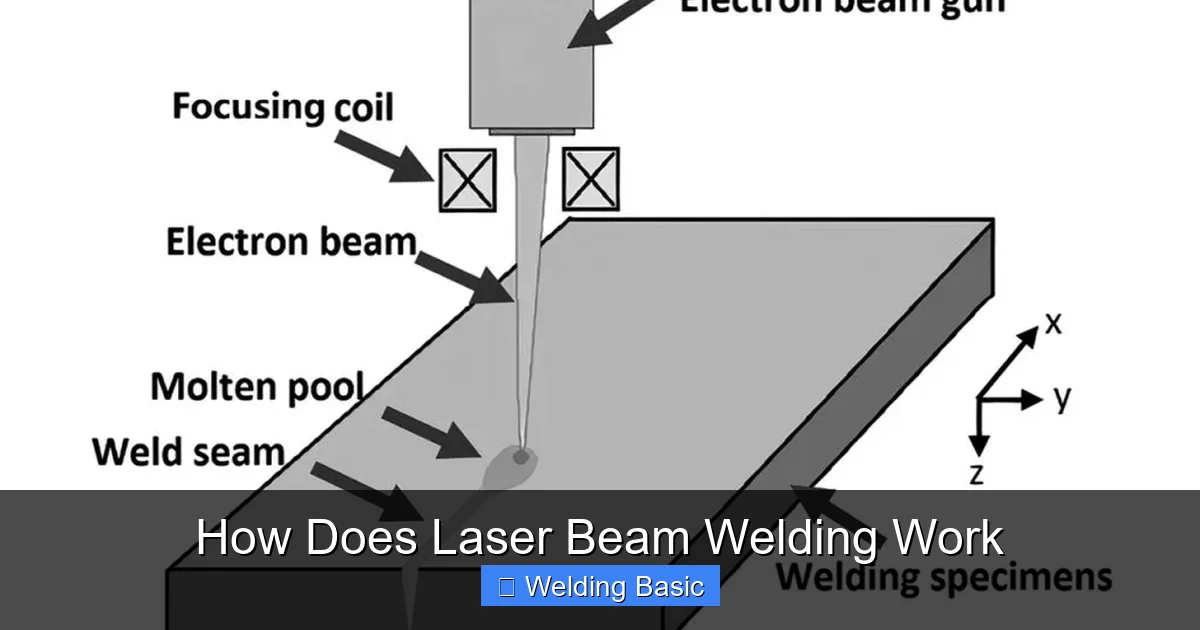
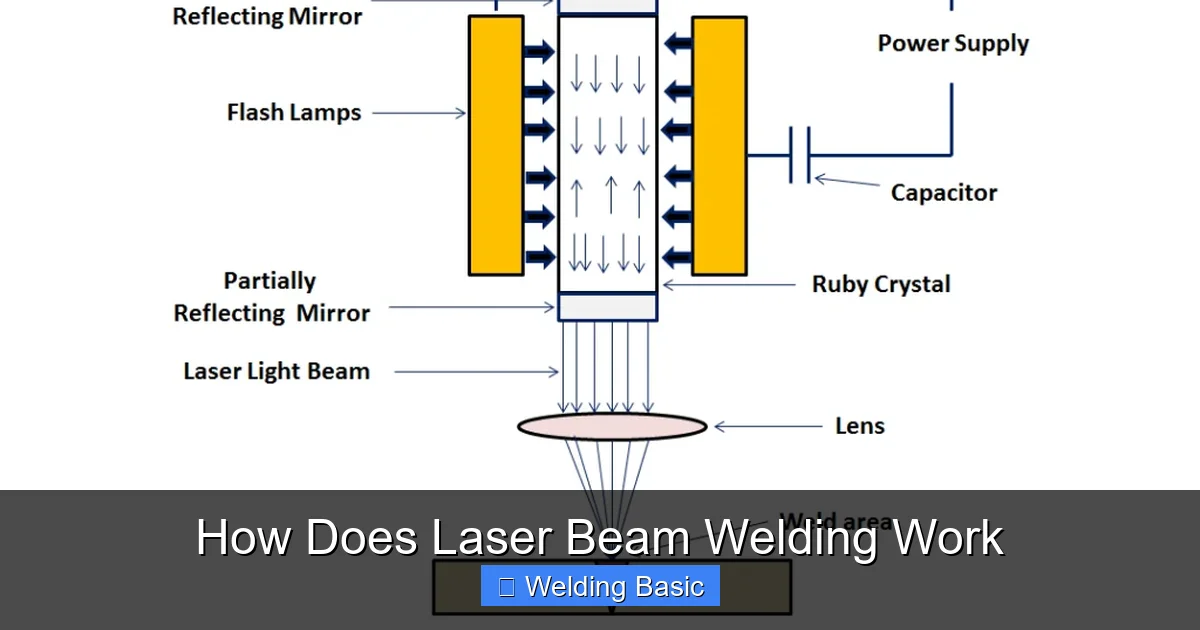
At its core, laser beam welding uses a laser—Light Amplification by Stimulated Emission of Radiation—to generate an intense, focused beam of light. This beam is directed at the joint between two metal parts, where it heats the material to its melting point, creating a molten pool. As the laser moves along the joint, the molten metal cools and solidifies, forming a strong, seamless bond.
The key to LBW’s precision lies in the laser’s ability to concentrate energy into a tiny spot—sometimes as small as 0.2 millimeters in diameter. This allows for deep penetration with minimal heat spread, reducing distortion and preserving the integrity of the surrounding material.
Types of Lasers Used in Welding
Not all lasers are the same. The most common types used in welding include:
- Fiber Lasers: Highly efficient and reliable, fiber lasers use optical fibers doped with rare-earth elements to generate the beam. They’re ideal for high-speed welding of thin to medium-thickness metals.
- CO2 Lasers: These gas lasers produce infrared light and are often used for welding thicker materials. They require mirrors to direct the beam, making them less flexible than fiber systems.
- Nd:YAG Lasers: Solid-state lasers that can operate in pulsed or continuous modes. They’re great for precision welding and can be transmitted through optical fibers, offering flexibility in robotic setups.
Each type has its strengths, and the choice depends on the material, thickness, and production requirements.
Step-by-Step Guide to Laser Beam Welding
Visual guide about How Does Laser Beam Welding Work
Image source: theweldingmaster.com
Now that you understand the basics, let’s walk through the actual process of laser beam welding. While specific steps may vary depending on the machine and application, the general workflow remains consistent.
Step 1: Prepare the Workpieces
Before welding, the metal parts must be clean and properly aligned. Any dirt, oil, or oxidation can interfere with the weld quality.
- Clean the surfaces using a solvent or wire brush.
- Ensure tight fit-up—gaps larger than 10% of the material thickness can cause poor fusion.
- Use clamps or fixtures to hold parts in place.
Tip: For best results, use precision-machined edges or laser-cut parts to ensure consistent joint geometry.
Step 2: Set Up the Laser Welding System
This step involves configuring the laser machine and aligning the beam.
- Choose the appropriate laser type and power setting based on material and thickness.
- Adjust the focal length so the beam is focused precisely on the joint.
- Set the welding speed—too fast can cause incomplete penetration; too slow may overheat the material.
- Select shielding gas (usually argon or nitrogen) to protect the weld pool from oxidation.
Example: For welding 1mm stainless steel, a fiber laser at 1.5 kW with a speed of 3 meters per minute and argon shielding is often effective.
Step 3: Perform the Weld
With everything set up, it’s time to weld.
- Activate the laser and guide it along the joint using a robotic arm, CNC table, or manual control.
- Maintain consistent speed and distance to ensure even heating.
- Monitor the process through a camera or sensor system if available.
Pro Tip: Use a pilot arc or low-power preheat to stabilize the beam at the start of the weld.
Step 4: Inspect and Finish the Weld
After welding, inspect the joint for defects like cracks, porosity, or undercutting.
- Use visual inspection, dye penetrant testing, or X-ray for critical applications.
- Grind or polish the surface if needed for aesthetics or stress reduction.
- Document weld parameters for quality control and repeatability.
Advantages of Laser Beam Welding
Laser beam welding offers several compelling benefits over traditional methods:
- Precision: Ideal for micro-welding and intricate components like medical implants or circuit boards.
- Speed: Can weld up to 10 times faster than TIG welding in some applications.
- Low Distortion: Minimal heat input reduces warping, especially important for thin sheets.
- Automation Ready: Easily integrated into production lines with robots and sensors.
- Clean Process: No filler material needed in many cases, reducing contamination and cleanup.
Common Challenges and Troubleshooting
Despite its advantages, laser welding isn’t without challenges. Here’s how to handle common issues:
Porosity in the Weld
Tiny gas pockets can form if the shielding gas isn’t effective or if the material is contaminated.
- Ensure proper gas flow and coverage.
- Clean materials thoroughly before welding.
- Adjust laser parameters to reduce turbulence in the melt pool.
Incomplete Penetration
This happens when the laser doesn’t reach the full depth of the joint.
- Increase laser power or reduce welding speed.
- Check focal point alignment—misalignment can scatter the beam.
- Verify joint fit-up; gaps can prevent full fusion.
Cracking
Thermal stress or material incompatibility can cause cracks.
- Preheat high-carbon or alloy steels to reduce thermal shock.
- Use compatible materials or adjust welding sequence.
- Post-weld heat treatment may be necessary for critical parts.
Safety Considerations
Laser beam welding involves high-powered equipment and invisible light, so safety is paramount.
- Always wear laser-safe goggles rated for the specific wavelength.
- Enclose the welding area to prevent accidental exposure.
- Use interlocks and warning lights to alert personnel.
- Ensure proper ventilation to remove fumes and particulates.
- Train operators on emergency procedures and equipment handling.
Remember: Even reflected laser light can cause eye damage. Never look directly at the beam or its reflections.
Real-World Applications of Laser Beam Welding
Laser welding isn’t just for labs—it’s used daily in high-stakes industries.
- Automotive: Joining body panels, battery packs for electric vehicles, and exhaust systems.
- Aerospace: Welding turbine blades, fuel nozzles, and lightweight structural components.
- Medical Devices: Creating hermetic seals for pacemakers, surgical tools, and implants.
- Electronics: Micro-welding connectors, sensors, and circuit boards.
- Jewelry: Repairing delicate pieces without damaging gemstones.
These applications highlight LBW’s versatility and precision.
Conclusion: Is Laser Beam Welding Right for You?
Laser beam welding is a powerful, modern technique that delivers high-quality welds with speed and accuracy. While the initial investment in equipment can be high, the long-term benefits—reduced waste, faster production, and superior weld quality—often justify the cost.
Whether you’re upgrading a manufacturing line or exploring advanced welding for a specialized project, understanding how laser beam welding works gives you a competitive edge. With proper setup, safety practices, and troubleshooting know-how, you can harness this technology to create strong, reliable, and precise welds.
As industries continue to demand higher performance and tighter tolerances, laser welding will only grow in importance. By mastering this process, you’re not just learning a skill—you’re preparing for the future of fabrication.
