

Yes, a MIG welder can weld aluminum, but it requires specific equipment, settings, and techniques. This guide covers everything you need to know to get strong, clean aluminum welds using MIG welding.
Key Takeaways
- MIG welding aluminum is possible but demands a spool gun or push-pull system to feed soft aluminum wire smoothly.
- Use 100% argon shielding gas for clean, spatter-free welds and proper arc stability on aluminum.
- Aluminum wire is softer than steel, so standard MIG rollers can crush it—use U-groove drive rolls.
- Cleanliness is critical—aluminum oxidizes quickly, so always clean the metal with a stainless steel brush and acetone before welding.
- Higher travel speeds and heat input are needed due to aluminum’s high thermal conductivity.
- Not all MIG welders can handle aluminum—check your machine’s specs for aluminum compatibility and sufficient amperage.
- Practice on scrap metal first to dial in settings and avoid costly mistakes on real projects.
Will a MIG Welder Weld Aluminum? The Complete How-To Guide
If you’re wondering, “Will a MIG welder weld aluminum?” the short answer is yes—but with caveats. Unlike welding steel, MIG welding aluminum requires special equipment, techniques, and attention to detail. Aluminum behaves very differently under heat and during the welding process, so simply swapping out your steel wire for aluminum won’t cut it.
In this guide, you’ll learn exactly what it takes to MIG weld aluminum successfully. We’ll walk you through the right equipment, setup steps, welding techniques, and troubleshooting tips. Whether you’re a DIY enthusiast or a professional looking to expand your skills, this guide will help you get strong, clean aluminum welds every time.
Why Aluminum Is Tricky to MIG Weld
Aluminum has unique properties that make it challenging to weld compared to steel. First, it conducts heat up to five times faster than steel, meaning the heat spreads quickly and can lead to burn-through if you’re not careful. Second, aluminum oxidizes rapidly when exposed to air, forming a layer of aluminum oxide that melts at a much higher temperature than the base metal. If not removed, this oxide layer can cause poor fusion and weak welds.
Additionally, aluminum welding wire is much softer than steel wire. This softness makes it prone to birdnesting (tangling in the feeder) if your machine isn’t set up correctly. Finally, aluminum requires a clean, stable arc, which means your shielding gas and wire feed system must be optimized.
Can Your MIG Welder Handle Aluminum?
Before you start, check if your MIG welder is capable of welding aluminum. Not all MIG machines are built for it. Here’s what to look for:
Minimum Amperage Requirements
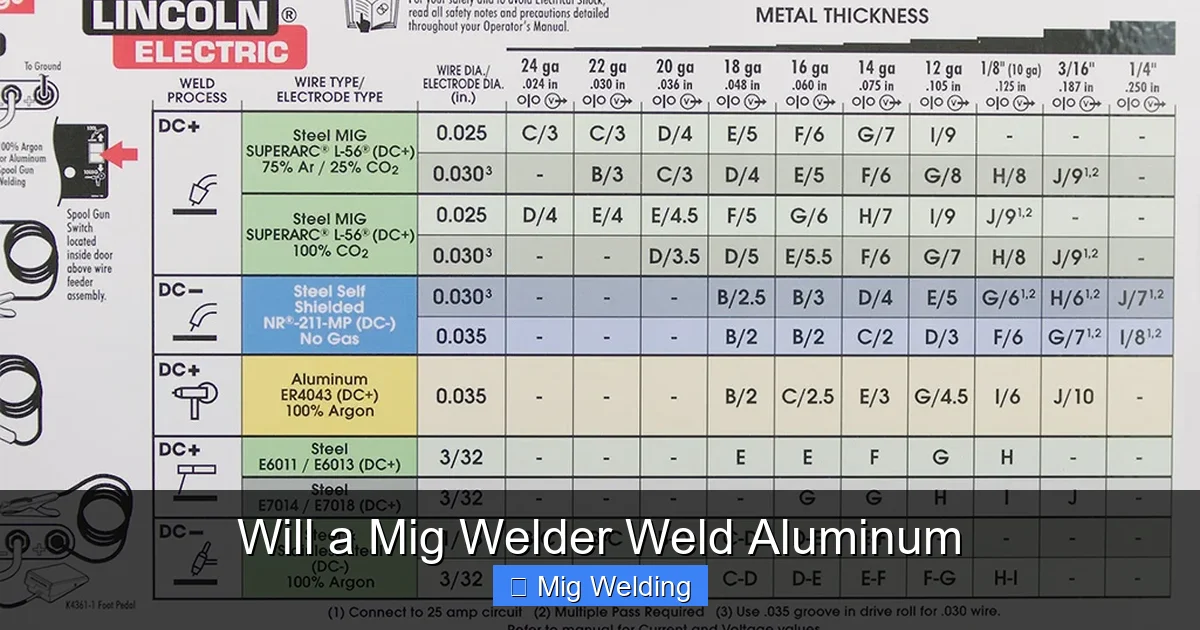
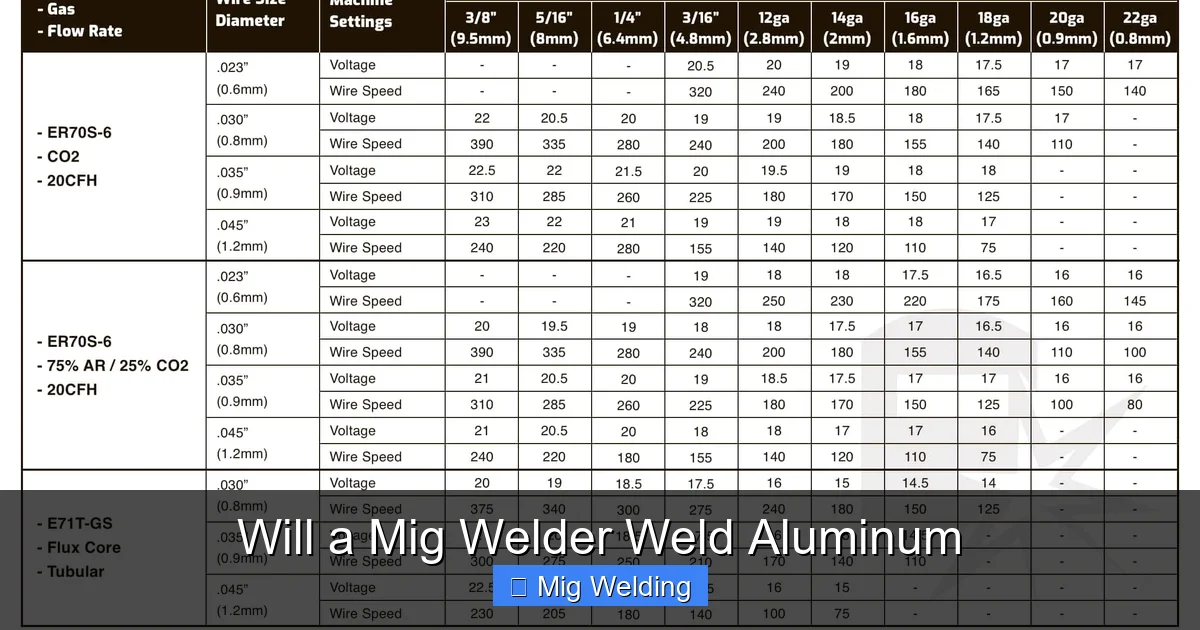
Aluminum requires higher heat input due to its thermal conductivity. Most aluminum welding jobs need at least 150–200 amps, depending on thickness. If your MIG welder maxes out at 130 amps, it may struggle with anything thicker than 1/8 inch (3 mm).
Visual guide about Will a Mig Welder Weld Aluminum
Image source: weldguru.com
Visual guide about Will a Mig Welder Weld Aluminum
Image source: yeswelder.com
Spool Gun or Push-Pull System
Because aluminum wire is soft and prone to tangling, it can’t be reliably fed through a standard MIG gun. You’ll need either a spool gun or a push-pull system. A spool gun holds a small spool of aluminum wire right at the gun, reducing the distance the wire travels and preventing birdnesting. Push-pull systems use dual motors—one in the feeder and one in the gun—to gently guide the wire without crushing it.
Wire Feeder Compatibility
Even with a spool gun, your wire feeder must support aluminum wire. Standard V-groove drive rolls will deform aluminum wire. You need U-groove or knurled drive rolls designed for soft wires. Check your welder’s manual or upgrade your feeder if needed.
Essential Equipment for MIG Welding Aluminum
To MIG weld aluminum successfully, you’ll need the right tools. Here’s a checklist:
- MIG welder with sufficient amperage (150+ amps recommended)
- Spool gun or push-pull welding gun
- Aluminum welding wire (typically ER4043 or ER5356)
- 100% argon shielding gas (use a flow rate of 20–30 CFH)
- U-groove drive rolls for the wire feeder
- Stainless steel wire brush (dedicated to aluminum only)
- Acetone or aluminum cleaner for surface prep
- Clean gloves and safety gear (welding helmet, jacket, gloves)
Choosing the Right Aluminum Wire
Two common aluminum welding wires are used in MIG welding:
ER4043
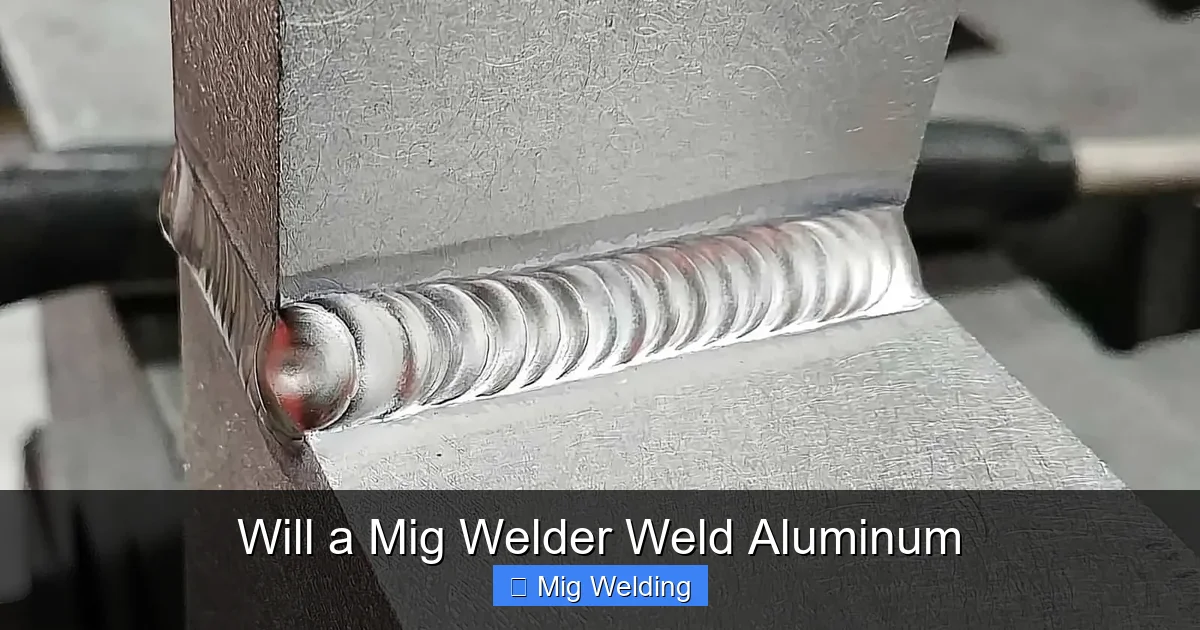
This is a silicon-based aluminum wire (5% silicon). It has a lower melting point, flows well, and produces smooth welds with minimal cracking. It’s ideal for general-purpose welding and works well on cast aluminum. However, it’s not as strong as ER5356 and can be more prone to porosity.
Visual guide about Will a Mig Welder Weld Aluminum
Image source: tooliom.com
ER5356
This magnesium-based wire offers higher tensile strength and better corrosion resistance. It’s great for structural applications and welding 5000-series aluminum alloys. It requires slightly higher heat input but produces stronger, more ductile welds.
Choose based on your project. For most DIY and automotive work, ER5356 is a solid choice.
Step-by-Step: How to MIG Weld Aluminum
Now that you have the right setup, let’s walk through the process.
Step 1: Clean the Aluminum Thoroughly
Aluminum must be spotless before welding. Use a stainless steel wire brush (never used on steel) to scrub the surface and remove the oxide layer. Then wipe the area with acetone or a dedicated aluminum cleaner. Avoid using rags that leave lint—use a clean paper towel. Any oil, dirt, or oxide will ruin your weld.
Step 2: Set Up Your Welder
Install the spool gun or push-pull system. Load the aluminum wire and ensure the drive rolls are U-groove type. Set your welder to DCEN (direct current electrode negative), which is standard for MIG welding aluminum. Use 100% argon gas and set the flow rate to 20–30 CFH.
Step 3: Dial in the Settings
Start with these general guidelines (adjust based on thickness):
- 1/8 inch (3 mm): 180–220 amps, wire speed 300–400 IPM
- 1/4 inch (6 mm): 220–280 amps, wire speed 400–500 IPM
Use a push technique (gun angled 10–15 degrees in the direction of travel) to improve gas coverage and penetration.
Step 4: Practice on Scrap Metal
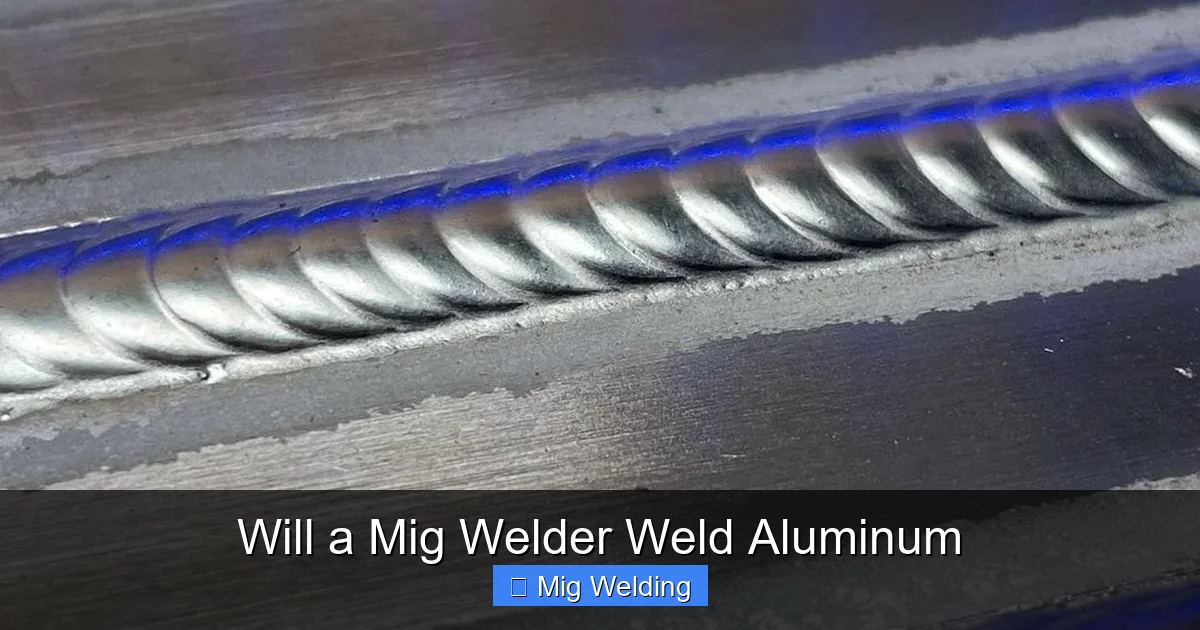
Before welding your actual project, practice on scrap aluminum of the same thickness. This helps you fine-tune voltage, wire speed, and travel speed. Look for a smooth, consistent bead with good fusion and minimal spatter.
Step 5: Weld with Confidence
Keep a steady travel speed—too slow causes burn-through, too fast leads to lack of fusion. Maintain a short arc length and consistent gun angle. Overlap your weld starts and stops slightly to avoid crater cracks.
Troubleshooting Common Aluminum Welding Problems
Even with the right setup, issues can arise. Here’s how to fix them:
Porosity (Air Pockets in the Weld)
This is usually caused by contamination or poor gas coverage. Ensure the base metal is clean, the gas flow is adequate, and there’s no wind disrupting the shielding gas. Also, check for leaks in your gas line or connections.
Burn-Through
Aluminum’s high thermal conductivity makes it prone to burning through, especially on thin material. Reduce amperage, increase travel speed, or use a heat sink (like copper backing bar) to draw away excess heat.
Birdnesting (Wire Tangles in the Feeder)
This happens when the wire jams in the liner. Make sure you’re using a spool gun or push-pull system, and that the drive rolls aren’t too tight. Also, avoid excessive tension on the wire spool.
Poor Fusion or Lack of Penetration
This can result from low heat input or incorrect technique. Increase voltage or wire speed slightly, and ensure you’re using the push technique with proper gun angle. Also, double-check that the joint is clean and properly fit-up.
Safety Tips for MIG Welding Aluminum
Welding aluminum is safe when done correctly, but keep these tips in mind:
- Always wear a welding helmet with proper shade (at least shade 10–13).
- Use flame-resistant clothing and gloves.
- Work in a well-ventilated area—aluminum welding can produce fumes.
- Never use a wire brush that’s been used on steel—it can contaminate the aluminum.
- Store aluminum wire in a dry place to prevent moisture absorption.
Conclusion
So, will a MIG welder weld aluminum? Absolutely—if you have the right equipment and know-how. While it’s more challenging than welding steel, MIG welding aluminum is entirely achievable with a spool gun, proper wire, clean materials, and correct settings. The key is preparation: clean the metal, set up your machine correctly, and practice before tackling important projects.
With patience and attention to detail, you can produce strong, professional-looking aluminum welds. Whether you’re repairing a boat, building a custom frame, or working on automotive parts, mastering MIG welding on aluminum opens up a world of possibilities. Start small, learn from each weld, and soon you’ll be welding aluminum like a pro.
