


Welding stainless steel with MIG is possible and practical when done correctly. This guide walks you through the essential equipment, settings, and techniques to achieve strong, clean welds without distortion or corrosion.
Key Takeaways
- Use stainless steel MIG wire: ER308L or ER316L wires are ideal for most stainless steels and prevent cracking.
- Shielding gas matters: A tri-mix gas (90% helium, 7.5% argon, 2.5% CO₂) or argon-CO₂ blends protect the weld from oxidation.
- Cleanliness is critical: Grease, oil, or rust can cause porosity and weaken the weld—always clean the metal first.
- Adjust voltage and wire speed: Stainless steel needs lower heat input; fine-tune your MIG welder to avoid burn-through.
- Use a push technique: Pushing the gun (not pulling) improves gas coverage and reduces spatter on stainless.
- Post-weld cleanup: Remove heat tint with a stainless wire brush or pickling paste to maintain corrosion resistance.
- Practice on scrap metal: Stainless behaves differently than mild steel—test settings before welding your final piece.
Can I Weld Stainless Steel with MIG?
Yes, you absolutely can weld stainless steel with a MIG welder—and it’s a popular choice for both hobbyists and professionals. While TIG welding is often praised for its precision on stainless, MIG welding offers faster travel speeds and easier learning curves, making it a great option for many applications like automotive exhausts, kitchen equipment, or custom fabrication.
However, welding stainless steel with MIG isn’t as simple as swapping out the wire and hitting the trigger. Stainless steel has unique properties—like lower thermal conductivity and higher resistance to heat—that require specific techniques and materials. In this guide, we’ll walk you through everything you need to know to weld stainless steel successfully with MIG, from choosing the right equipment to troubleshooting common issues.
Why Choose MIG for Stainless Steel?
MIG welding (Metal Inert Gas) uses a continuously fed wire electrode and shielding gas to create strong, clean welds. It’s known for its speed, ease of use, and ability to weld thin to medium-thickness materials—perfect for many stainless steel projects.
Compared to TIG, MIG is faster and more forgiving for beginners. You don’t need to coordinate a foot pedal and filler rod simultaneously. And with the right setup, MIG can produce high-quality stainless welds with minimal distortion.
That said, stainless steel is more finicky than mild steel. It’s prone to warping, carbide precipitation (which reduces corrosion resistance), and porosity if not handled correctly. But with the right approach, MIG welding stainless steel is not only possible—it’s highly effective.
Essential Equipment for MIG Welding Stainless Steel
Before you start, make sure you have the right tools. Using the wrong wire or gas can ruin your weld.
1. MIG Welder
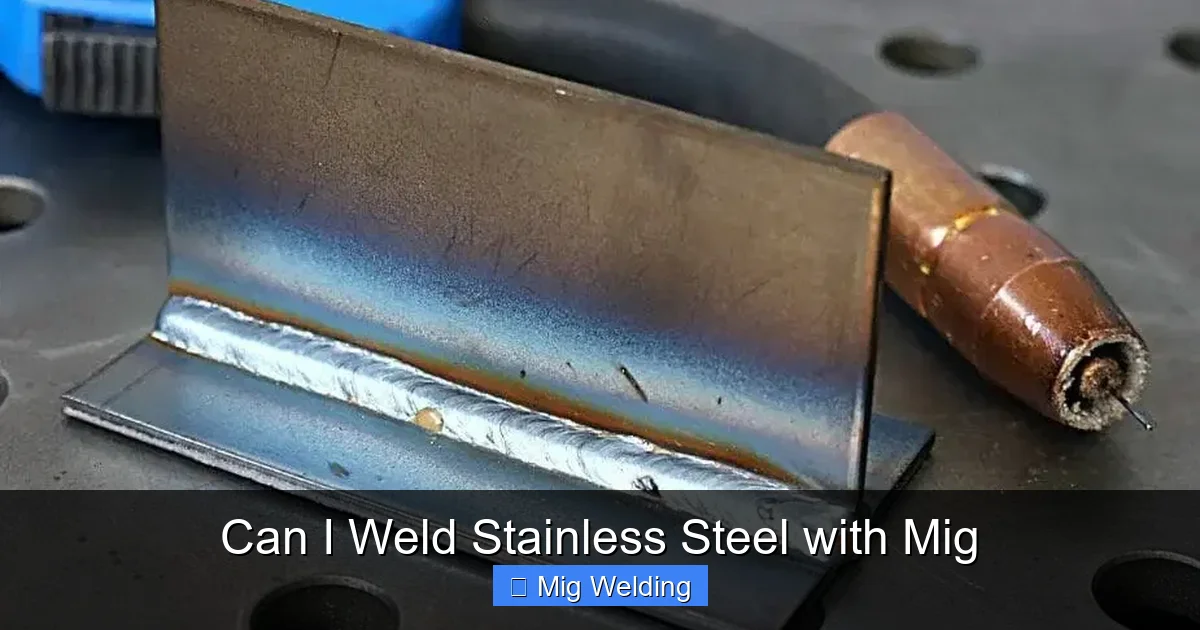
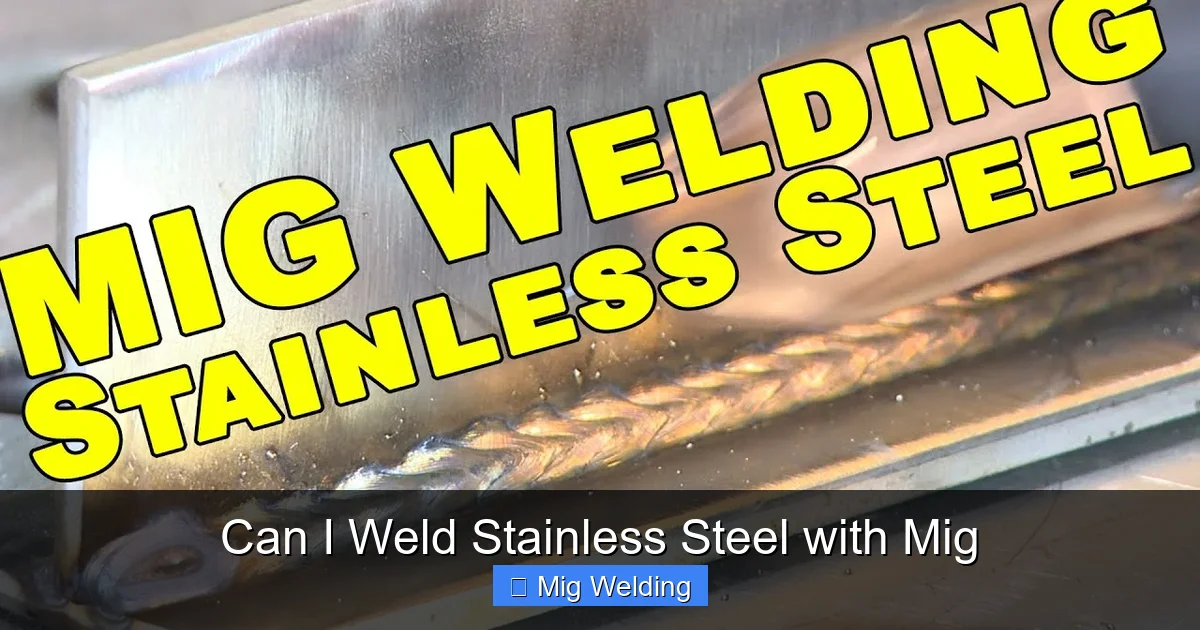
Most modern MIG welders can handle stainless steel, but check your machine’s specs. You’ll need a welder capable of running on DC (direct current) with electrode positive (DCEP). A 110V or 220V machine with adjustable voltage and wire feed speed works best.
Visual guide about Can I Weld Stainless Steel with Mig
Image source: cdn.sheetstainlesssteel.com
Visual guide about Can I Weld Stainless Steel with Mig
Image source: i.ytimg.com
2. Stainless Steel MIG Wire
Never use mild steel wire on stainless. Instead, choose a stainless-specific wire like:
- ER308L: Best for 304 and 304L stainless steel—common in kitchen appliances and food equipment.
- ER316L: Used for 316 and 316L stainless, which resist corrosion in harsh environments like marine or chemical settings.
- ER309L: Ideal for welding stainless to mild steel or dissimilar metals.
These wires have added alloys (like chromium and nickel) that match the base metal and prevent cracking.
3. Shielding Gas
This is where many beginners go wrong. You can’t use pure CO₂ or standard C25 (75% argon, 25% CO₂) gas for stainless steel—it causes excessive spatter and oxidation.
Instead, use one of these gas blends:
- Tri-mix (90% helium, 7.5% argon, 2.5% CO₂): Excellent penetration and arc stability. Great for thicker stainless.
- Argon + 2-5% CO₂: A simpler option for thinner materials. Cleaner than C25 but still effective.
- Argon + 1-2% oxygen: Less common but used in some industrial settings for smoother arcs.
Helium improves heat input, while argon stabilizes the arc. The small amount of CO₂ or oxygen helps with arc initiation without sacrificing corrosion resistance.
4. Liner and Contact Tips
Stainless wire is softer than mild steel and can fray or birdnest in the liner. Use a high-quality, non-metallic (plastic or Teflon) liner designed for stainless wire. Also, replace your contact tips regularly—worn tips cause poor electrical contact and erratic arcs.
Step-by-Step Guide to MIG Welding Stainless Steel
Now that you’ve got the right gear, let’s walk through the welding process.
Step 1: Clean the Metal
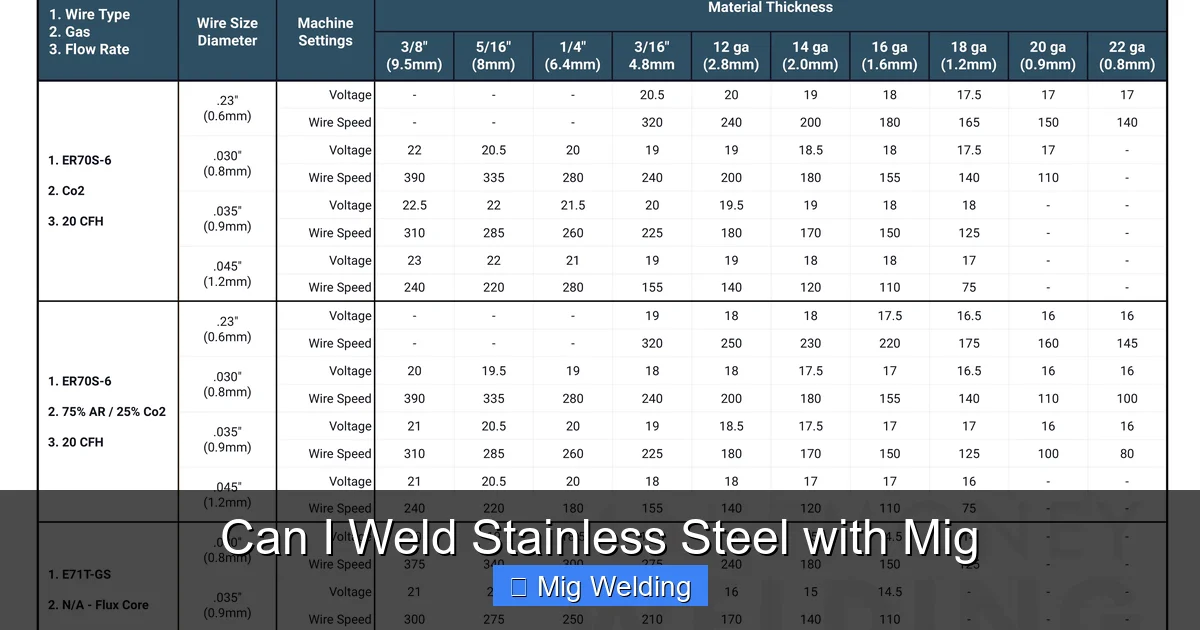
Stainless steel must be spotless. Any oil, grease, paint, or rust will contaminate the weld and cause porosity or cracking.
Visual guide about Can I Weld Stainless Steel with Mig
Image source: makemoneywelding.com
- Use a dedicated stainless steel wire brush (never used on mild steel) to scrub the joint area.
- Wipe the surface with acetone or a degreaser.
- Handle the metal with clean gloves to avoid transferring oils from your skin.
Step 2: Set Up Your Welder
Stainless steel requires lower heat input than mild steel to avoid warping and carbide precipitation.
- Start with a voltage setting 1–2 volts lower than you’d use for mild steel of the same thickness.
- Adjust wire feed speed to match—typically 200–350 inches per minute (IPM) for 0.035″ wire.
- Use a short contact-to-work distance (CTWD)—about ½ inch—for better control.
Example: For 1/8″ (3mm) stainless steel, try 18–20 volts and 250 IPM. Always test on scrap first.
Step 3: Choose the Right Technique
Use a push technique (pushing the gun away from the weld pool) instead of pulling. This improves shielding gas coverage and reduces spatter.
- Hold the gun at a 10–15 degree angle.
- Maintain a steady travel speed—too slow causes burn-through; too fast leads to lack of fusion.
- Use a stringer bead (straight line) for most joints. Avoid weaving unless filling a large gap.
Step 4: Weld in Short Passes
Stainless steel conducts heat poorly, so heat builds up quickly. To prevent warping:
- Weld in short segments (2–3 inches), then skip ahead.
- Let each pass cool slightly before continuing.
- Use clamps or fixtures to hold parts in place and reduce distortion.
Step 5: Post-Weld Cleanup
After welding, you’ll likely see a heat tint (a rainbow-colored oxide layer) on the surface. This reduces corrosion resistance.
- Use a stainless steel wire brush to remove surface oxides.
- For deeper tints, apply pickling paste (available at welding supply stores) and rinse thoroughly.
- Avoid grinding unless necessary—grinding can embed contaminants.
Troubleshooting Common Problems
Even with the best setup, issues can arise. Here’s how to fix them:
Porosity (Holes in the Weld)
Caused by contamination or poor gas coverage.
- Solution: Clean the metal thoroughly. Check gas flow (20–25 CFH). Ensure no drafts are blowing away the gas.
Burn-Through
Too much heat melts through thin stainless.
- Solution: Reduce voltage and wire speed. Use a backing bar or copper heat sink. Weld in shorter passes.
Excessive Spatter
Often due to incorrect voltage or dirty wire.
- Solution: Fine-tune voltage (slightly lower). Replace the liner and contact tip. Ensure gas mix is correct.
Lack of Fusion
The weld doesn’t bond properly to the base metal.
- Solution: Increase voltage slightly. Clean the joint better. Slow down travel speed.
Warping or Distortion
Stainless expands and contracts more than mild steel.
- Solution: Use tack welds and clamps. Weld in a skip sequence. Allow cooling between passes.
Safety Tips
Welding stainless steel produces fumes that can contain chromium and nickel—some of which are hazardous.
- Always weld in a well-ventilated area or use a fume extractor.
- Wear a respirator rated for welding fumes (like a PAPR).
- Use proper PPE: welding helmet, gloves, and flame-resistant clothing.
- Never weld stainless in confined spaces without ventilation.
Conclusion
So, can you weld stainless steel with MIG? Absolutely—and with the right preparation, it’s a reliable and efficient method. The key is using stainless-specific wire, the correct shielding gas, and clean, controlled techniques. Avoid common pitfalls like contamination and excessive heat, and always prioritize safety.
While MIG welding stainless steel takes a bit more care than mild steel, the results are well worth it. Whether you’re fixing a sink, building a custom exhaust, or crafting furniture, MIG gives you speed and strength without sacrificing quality. Just remember: practice on scrap metal, keep your gear clean, and respect the unique properties of stainless steel.
With this guide, you’re ready to tackle your next stainless steel project with confidence.
