

In this guide, you’ll learn the main differences between MIG and TIG welding, including their uses, processes, and advantages. Whether you’re a beginner or experienced welder, understanding these methods helps you choose the right technique for your projects and achieve professional results.
What’s the Difference Between MIG and TIG Welding
If you’re new to welding or looking to expand your skills, understanding the differences between MIG and TIG welding is essential. Both methods are popular and have unique advantages, but they serve different purposes. In this guide, you’ll learn what each welding process involves, how they compare, and which one might be best for your projects.
Key Takeaways
- MIG welding: Uses a continuous wire feed and is faster, making it ideal for quick, large-scale projects.
- TIG welding: Employs a tungsten electrode with a separate filler rod, offering greater precision and cleaner welds.
- Ease of use: MIG welding is easier for beginners, while TIG requires more skill and control.
- Material compatibility: MIG is versatile for various metals, whereas TIG excels at welding thin materials and delicate metals.
- Cost and equipment: MIG welders are generally less expensive and more portable; TIG setups are more complex and costly.
- Safety considerations: Both methods require proper safety gear, but TIG’s higher heat and precision demand extra caution.
Introduction
Welding is a skill that joins metal parts together, creating strong and durable bonds. Among the many welding techniques, MIG (Metal Inert Gas) and TIG (Tungsten Inert Gas) are two of the most common. While they share some similarities, they have distinct differences in process, equipment, and application.
Knowing these differences helps you pick the right method, improve your skills, and produce high-quality welds. Let’s dive into each method and explore what sets them apart.
What is MIG Welding?
How MIG Welding Works
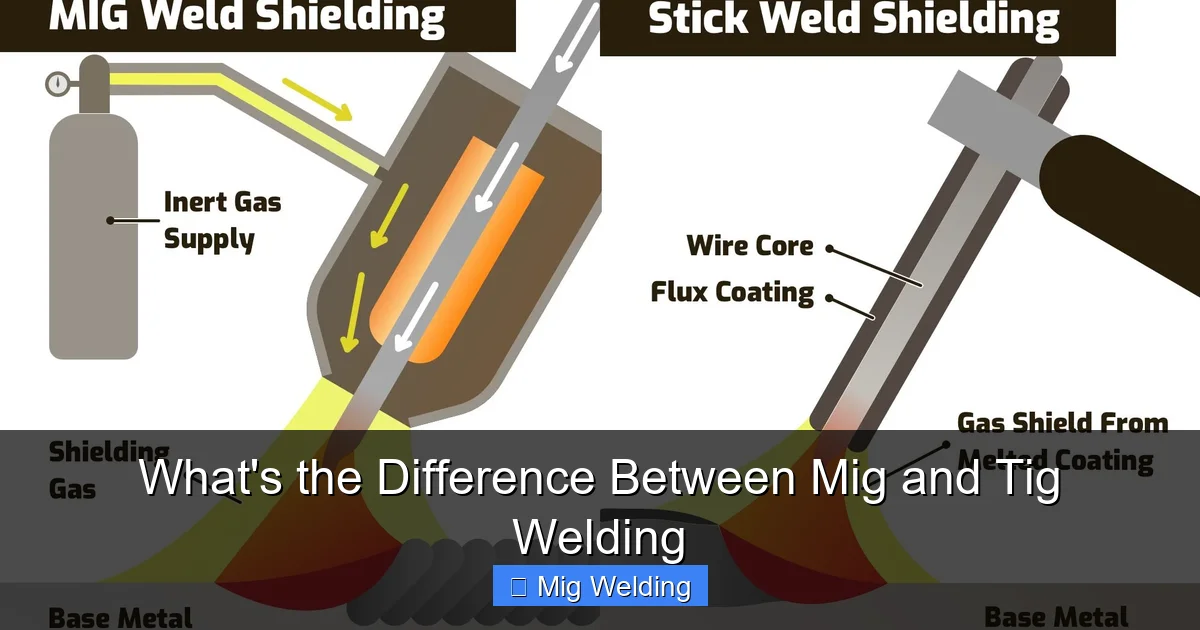
MIG welding, also called Gas Metal Arc Welding (GMAW), uses a continuously fed wire electrode to create the weld. An inert gas, usually argon or a mix of gases, shields the weld pool from contamination. The welder holds a gun that feeds the wire and releases shielding gas simultaneously.

Visual guide about What’s the Difference Between Mig and Tig Welding
Image source: mechdaily.com
This process melts the wire, which fuses with the base metal, forming a strong weld. MIG welding is known for its speed and ease of use, making it popular for various projects.
Advantages of MIG Welding
- Fast and efficient: Ideal for large projects and high productivity.
- Easy to learn: Suitable for beginners due to straightforward controls.
- Versatile: Works well on a variety of metals like steel, stainless steel, and aluminum.
- Less cleanup: Produces neat welds with minimal spatter.
Common Uses for MIG Welding
- Automotive repairs
- Fabrication of metal structures
- Home DIY projects
- Industrial manufacturing
What is TIG Welding?
How TIG Welding Works
TIG welding, or Gas Tungsten Arc Welding (GTAW), uses a non-consumable tungsten electrode to produce the weld. The welder manually feeds a filler rod into the weld puddle if needed. An inert gas, usually argon, shields the tungsten and weld area from contamination.

Visual guide about What’s the Difference Between Mig and Tig Welding
Image source: howtousewelding.com
This method offers precise control of heat and filler material, resulting in clean, high-quality welds.
Advantages of TIG Welding
- High precision: Produces smooth, detailed welds suitable for delicate applications.
- Versatility: Excellent for thin materials and difficult metals like aluminum and titanium.
- Control: Allows for better control over heat and weld bead appearance.
- Cleaner welds: Minimal spatter and post-weld cleanup.
Common Uses for TIG Welding
- Artistic metalwork
- Aircraft and aerospace components
- Jewelry making
- Maintenance of thin or delicate metals
Key Differences Between MIG and TIG Welding
1. Ease of Use
MIG welding is generally easier for beginners because it involves feeding a wire and pulling the trigger. TIG welding requires more skill, precise control of the torch, and manual feeding of the filler rod.

Visual guide about What’s the Difference Between Mig and Tig Welding
Image source: 021208.com
2. Speed and Productivity
MIG welding is faster and better suited for large-scale projects. TIG welding takes longer but offers more control and precision, making it ideal for detailed work.
3. Quality of Welds
TIG produces cleaner, more detailed, and aesthetically pleasing welds. MIG welds are strong but may require additional cleanup.
4. Material Compatibility
MIG welding is versatile and works well on thicker materials and various metals. TIG excels at welding thin metals and specialized materials like aluminum, titanium, and stainless steel.
5. Equipment and Cost
MIG welders are usually less expensive and more portable. TIG equipment is more complex, with higher initial costs and maintenance needs.
6. Safety Considerations
Both methods require proper safety gear, including gloves, masks, and protective clothing. TIG welding’s higher heat and precision demand extra caution to prevent burns and eye injuries.
Step-by-Step Guide: How to Choose Between MIG and TIG
Step 1: Assess Your Project Needs
Determine the type of metal, thickness, and finish you want. For quick, large projects, MIG is often best. For detailed, high-quality work, choose TIG.
Step 2: Consider Your Skill Level
If you’re a beginner, start with MIG welding to build confidence. TIG requires more practice and control.
Step 3: Evaluate Your Equipment and Budget
MIG welders are generally more affordable and portable. TIG setups are more expensive but offer higher precision.
Step 4: Gather Safety Gear
Always wear appropriate safety equipment, including welding helmet, gloves, protective clothing, and proper ventilation.
Practical Tips for Successful Welding
- Preparation: Clean your metal surfaces thoroughly before welding.
- Practice: Start with scrap pieces to get comfortable with the process.
- Settings: Adjust your welding machine’s voltage and wire feed speed according to the metal thickness.
- Technique: Maintain steady hand movement and proper torch angle.
- Cooling: Allow your welds to cool properly to prevent warping or cracking.
Troubleshooting Common Problems
- Porosity in weld: Check shielding gas flow and ensure there are no leaks or drafts.
- Spatter: Adjust voltage or wire feed; keep the tip clean.
- Incomplete fusion: Increase heat or improve technique.
- Cracks or warping: Use proper cooling techniques and avoid overheating.
Conclusion
Understanding the differences between MIG and TIG welding helps you choose the right method for your project. MIG is perfect for quick, large-scale work and beginners, while TIG offers precision and quality for detailed tasks. Both methods require practice and safety precautions, but mastering either can open up a world of creative and functional possibilities in metalworking.
Start with small projects, practice regularly, and always prioritize safety. With time, you’ll develop the skills to produce professional-quality welds using either technique.
