

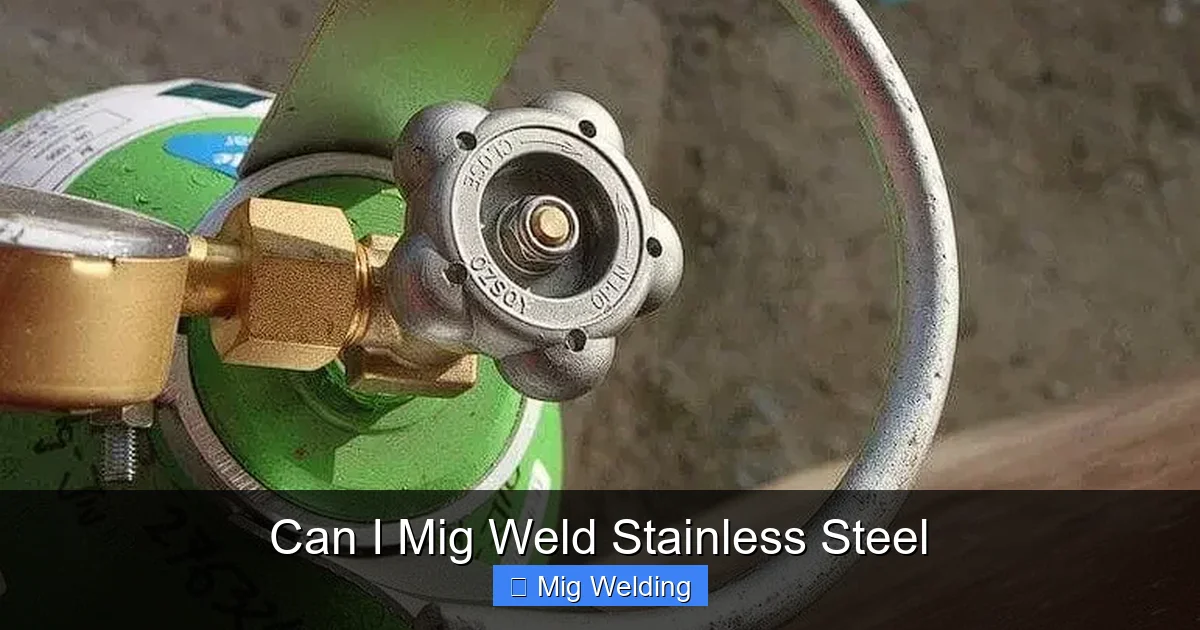
Yes, you can MIG weld stainless steel, but it requires specific techniques and materials to ensure strong, clean welds. This guide will walk you through the process, from choosing the right equipment to troubleshooting common issues.
Can I MIG Weld Stainless Steel?
If you’re wondering whether MIG welding is suitable for stainless steel, the answer is a resounding yes. MIG welding, or Gas Metal Arc Welding (GMAW), is a popular choice for welding stainless steel because it’s fast, versatile, and produces clean welds. However, to get the best results, you must use the right materials, settings, and techniques. This guide will teach you everything you need to know to MIG weld stainless steel successfully, whether you’re a beginner or an experienced welder looking to expand your skills.
Key Takeaways
- Use the right wire: ER308 or ER308L stainless steel MIG wire is ideal for welding stainless steel.
- Choose the correct shielding gas: 98% Argon with 2% Oxygen or CO2 provides good weld quality.
- Optimize welding settings: Use a lower voltage and wire feed speed for stainless steel to prevent burn-through.
- Prep your materials: Clean the stainless steel thoroughly to remove dirt, oil, and oxidation before welding.
- Practice proper technique: Maintain a steady travel speed and correct torch angle for smooth, consistent welds.
- Address common issues: Troubleshoot problems like porosity and cracking by adjusting gas flow and cleaning materials.
Understanding MIG Welding and Stainless Steel
MIG welding involves feeding a wire electrode through a welding gun, which melts and joins metals with the help of an inert shielding gas. Stainless steel is a corrosion-resistant alloy, usually containing chromium, nickel, and other elements. Welding stainless steel requires special considerations because it’s more sensitive to contamination and heat than mild steel.
Using the right wire, shielding gas, and technique ensures strong, clean welds without compromising the stainless steel’s corrosion resistance. Let’s dive into the step-by-step process to MIG weld stainless steel effectively.
Equipment and Materials Needed
- MIG welding machine: Capable of fine-tuning voltage and wire feed speed.
- Stainless steel MIG wire: ER308, ER308L, or ER316L depending on your project.
- Shielding gas: 98% Argon / 2% Oxygen or 100% Argon—avoid CO2 alone, as it can cause contamination.
- Welding helmet and protective gear: To protect against sparks and UV rays.
- Cleaning supplies: Wire brush, stainless steel cleaner, and degreaser.
- Clamps and fixtures: To hold materials securely.
Step-by-Step Guide to MIG Welding Stainless Steel
1. Prepare Your Workspace and Materials
Start by setting up a clean, well-ventilated workspace. Stainless steel is sensitive to contamination, so proper cleaning is essential.
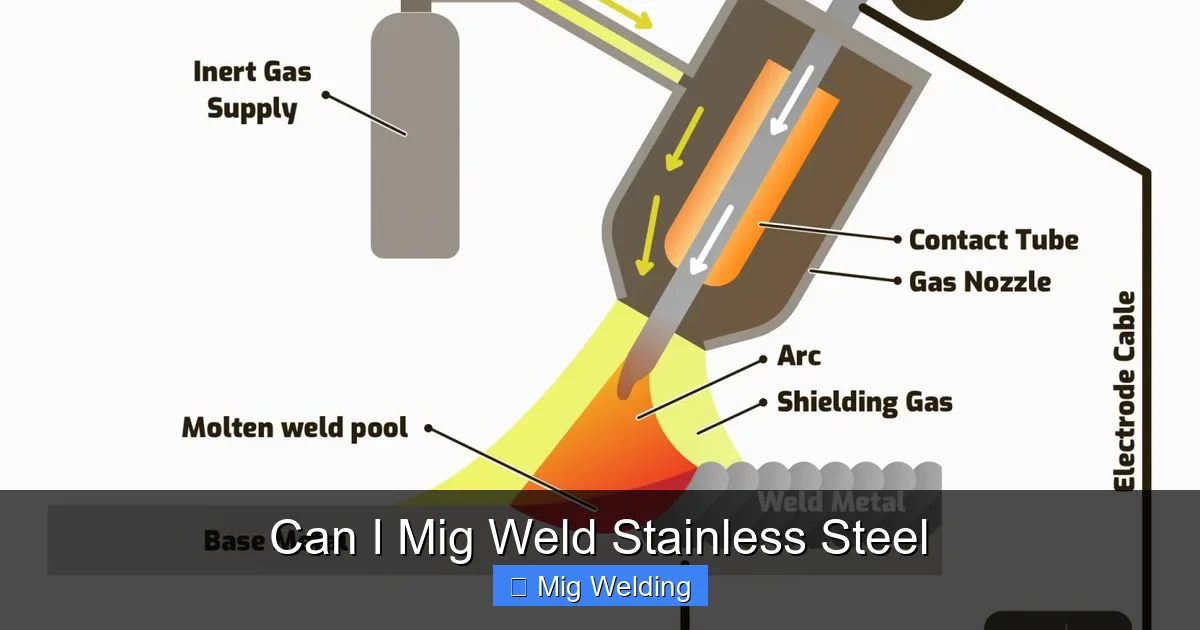
Visual guide about Can I Mig Weld Stainless Steel
Image source: weldguru.com
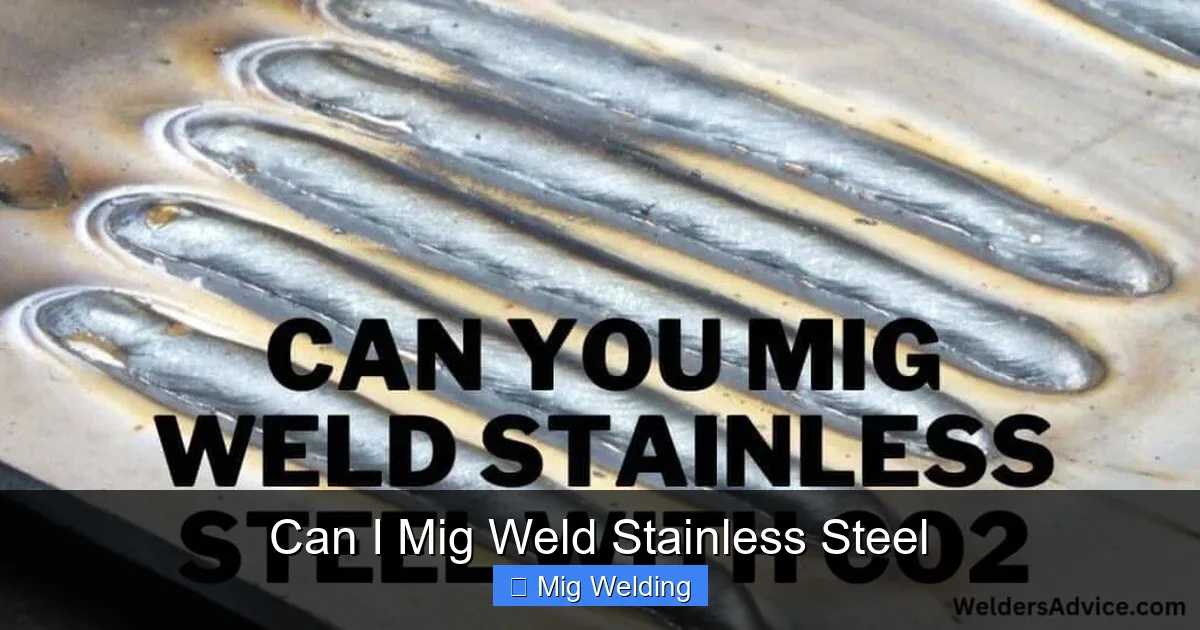
Visual guide about Can I Mig Weld Stainless Steel
Image source: weldersadvice.com
- Clean the metal: Use a stainless steel wire brush or grinder to remove oxidation, dirt, and oil.
- Cut and fit: Ensure the pieces fit tightly together with no gaps.
- Clamp securely: Fix the pieces in place to prevent movement during welding.
2. Select and Setup Your Equipment
Choosing the right wire and gas is crucial.
- Wire selection: Use ER308 or ER308L wire for most stainless steel welding projects.
- Gas setup: Attach your gas cylinder and set the flow rate to about 20-30 CFH (cubic feet per hour).
- Machine settings: Start with a voltage around 16-18V and a wire feed speed of 200-300 inches per minute. Adjust as needed for your specific setup.
3. Adjust Your Welding Parameters
Proper settings help prevent defects like porosity or cracking.
- Voltage: Keep it low to prevent burn-through.
- Wire feed speed: Set to ensure a smooth arc without spattering.
- Travel speed: Maintain a steady, consistent speed to produce even welds.
Experiment on scrap pieces first to dial in your settings.
4. Start Welding
Follow these tips for a successful weld:
- Position the gun: Hold at a 15-20 degree angle from vertical, pointing in the direction of travel.
- Maintain a steady arc: Keep a consistent distance of about 1/4 inch from the workpiece.
- Move smoothly: Use steady, even motions to produce a uniform weld bead.
Start at one end and work your way along the joint. Overlap each pass slightly if welding in multiple passes.
5. Post-Welding Cleaning and Inspection
After welding:
- Clean the weld: Use a stainless steel wire brush to remove any slag or spatter.
- Inspect: Check for porosity, cracking, or incomplete fusion.
- Passivate if necessary: Apply a passivation solution to restore corrosion resistance.
Practical Tips for Better MIG Welds on Stainless Steel
- Use the right shielding gas: Pure Argon or Argon with a small percentage of Oxygen improves weld quality.
- Maintain cleanliness: Contaminants cause porosity and weak welds.
- Control heat input: Too much heat can cause warping or burn-through; too little causes poor penetration.
- Practice on scrap: Perfect your technique before working on your main project.
Troubleshooting Common Problems
Porosity in the Weld
This happens when gases get trapped in the weld metal. It’s often caused by contaminated materials or insufficient shielding gas flow. Ensure your materials are clean and your gas flow rate is adequate.
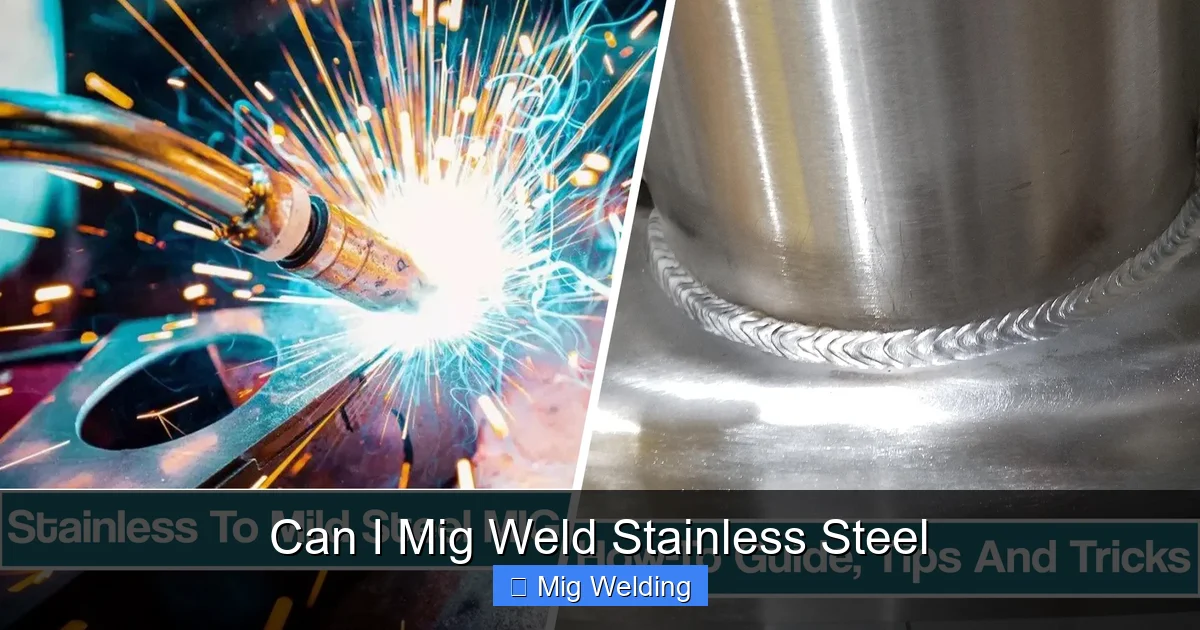
Visual guide about Can I Mig Weld Stainless Steel
Image source: weldingpros.net
Cracks or Warping
Excessive heat causes these issues. Use lower heat settings and avoid prolonged welding in one spot. Use proper clamps to minimize distortion.
Poor Fusion
If the weld doesn’t fuse well, check your voltage and wire feed speed. Increase voltage slightly and ensure your travel speed isn’t too fast.
Conclusion
MIG welding stainless steel is definitely possible and can produce excellent results when done correctly. The key factors are choosing the right materials, maintaining a clean work environment, and adjusting your equipment settings. With practice and patience, you can weld stainless steel confidently and produce professional-quality joints. Remember, proper preparation, technique, and troubleshooting are your best tools for success.
Final Tips
- Always wear appropriate safety gear.
- Practice on scrap before starting your main project.
- Take your time to set up your equipment correctly.
- Clean the stainless steel thoroughly before welding.
