

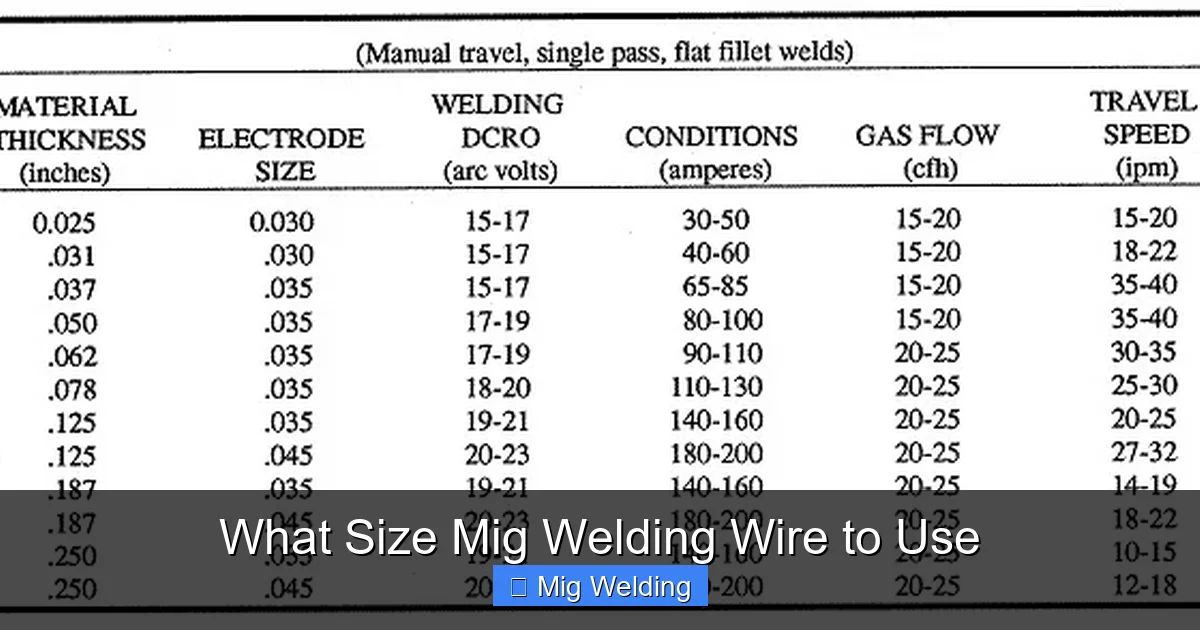
Choosing the correct MIG welding wire size is crucial for strong, clean welds. In this guide, you’ll learn how to select the right wire diameter based on your project and material. Whether you’re welding thin sheet metal or thick steel, knowing the right wire size makes all the difference.
What Size MIG Welding Wire to Use
Choosing the right MIG welding wire size is essential for creating strong, clean welds. Whether you’re welding thin sheet metal or thick steel, the correct wire diameter affects everything from weld quality to efficiency. In this comprehensive guide, we’ll walk you through how to select the perfect wire size for your project. You’ll learn about common wire sizes, how to match them to materials, and practical tips to improve your welding results.
Key Takeaways
- Understand wire sizes: MIG welding wires typically range from 0.023″ to 0.045″ in diameter, each suited for specific applications.
- Match wire size to material thickness: Thinner wires are best for light materials; thicker wires work better for heavy-duty welding.
- Consider wire type: Solid wires are common, but flux-cored wires may require different sizes depending on the application.
- Review your welding machine’s capacity: Ensure your welder can handle the chosen wire size safely and effectively.
- Follow manufacturer recommendations: Always check the welding wire and machine manuals for suggested wire sizes.
- Adjust settings accordingly: Use proper voltage and wire feed speeds for the selected wire size for optimal results.
- Practice safety: Use appropriate protective gear and work in a well-ventilated area when welding.
Understanding MIG Welding Wire Sizes
Common Sizes and Their Uses
MIG welding wires come in various diameters, typically ranging from 0.023 inches to 0.045 inches. Here’s a quick overview:
- 0.023″ (0.6 mm): Ideal for thin materials, such as automotive sheet metal or detailed work.
- 0.030″ (0.8 mm): Versatile for medium-thickness materials, common in general repairs and fabrication.
- 0.035″ (0.9 mm): The most common size for everyday welding of thicker steel or structural work.
- 0.045″ (1.1 mm): Suitable for heavy-duty welding, thick materials, or structural applications.
Why Wire Diameter Matters
The wire diameter influences heat input, weld penetration, and bead appearance. Using the right size ensures efficient welding, reduces spatter, and prevents weld defects. For example, a wire that’s too thin for a thick material may not provide enough weld strength, while a wire that’s too thick for thin material can burn through or cause warping.
Matching Wire Size to Material Thickness
Welding Thin Materials (less than 1/8 inch)
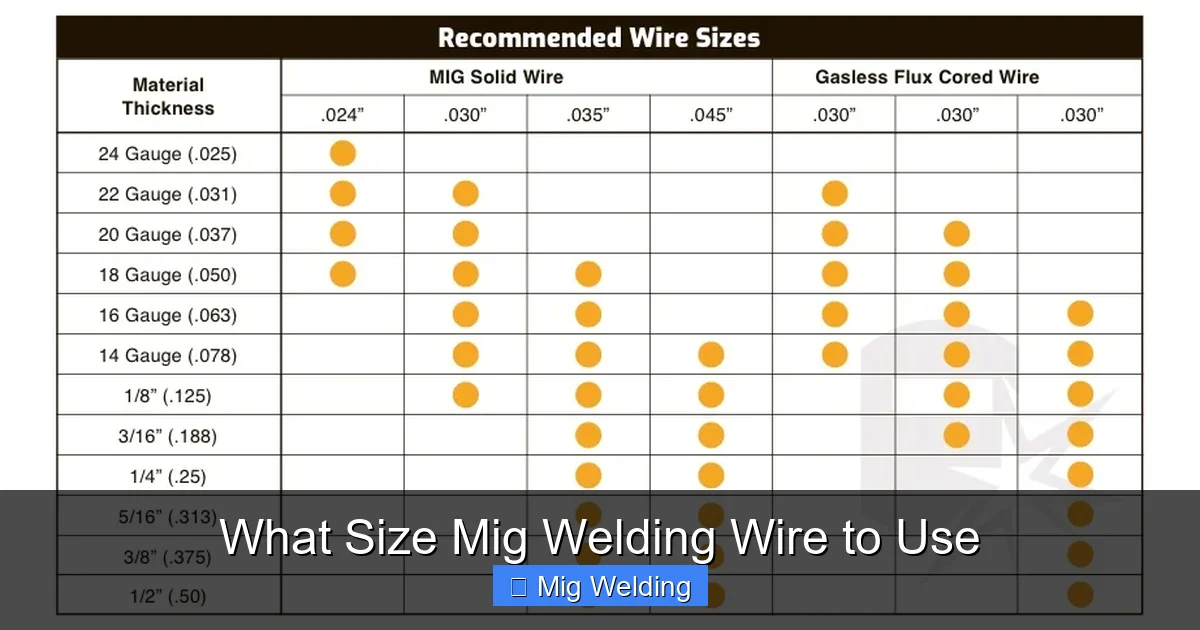
For thin sheet metal or delicate parts, use a 0.023″ or 0.030″ wire. These smaller diameters reduce heat input, helping prevent warping or burn-through.
Visual guide about What Size Mig Welding Wire to Use
Image source: weldguru.com
Example: Welding automotive panels or thin steel fences.
Welding Medium-Thickness Materials (1/8 to 1/4 inch)
For moderate thickness steel, a 0.035″ wire provides good penetration without excessive heat. It’s a versatile choice for most general welding tasks.
Example: Structural repairs or fabricating frames.
Welding Thick Materials (over 1/4 inch)
For thicker steel or heavy-duty applications, a 0.045″ wire offers deeper penetration and faster welds. It’s suitable for structural welding, heavy equipment, or pipeline work.
Example: Building beams or large steel structures.
Considering Your Welding Machine
Check Your Welder’s Capacity
Always verify your welder’s specifications to ensure it can handle the chosen wire size. Most machines specify the maximum wire diameter they support.
Visual guide about What Size Mig Welding Wire to Use
Image source: makemoneywelding.com
Tip: Using a wire size larger than your machine’s capacity can cause feed problems or damage.
Adjusting Settings for Different Wire Sizes
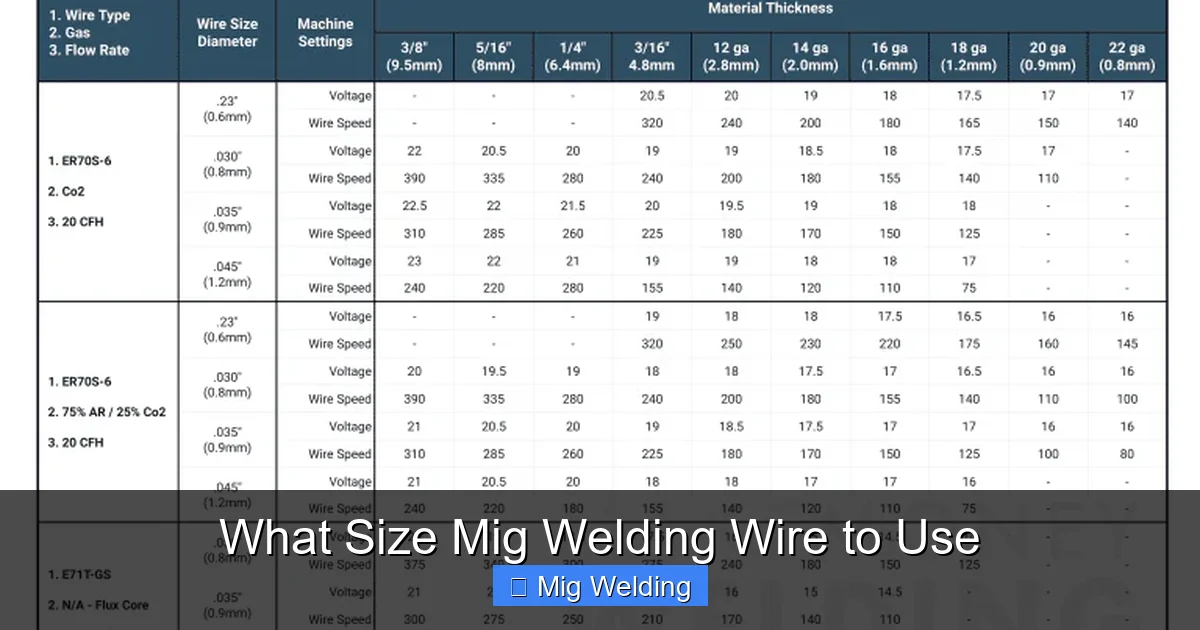
As wire diameter increases, you’ll need to adjust voltage and wire feed speed. Smaller wires require lower voltage; larger wires need higher settings for proper fusion.
Example: When switching from 0.030″ to 0.045″, increase voltage and wire feed speed accordingly.
Practical Tips for Selecting the Right Wire Size
- Follow manufacturer guidelines: Always check the welding wire and machine manuals for recommended sizes.
- Experiment in scrap metal: Test different wire sizes on scrap pieces to see which provides the best weld quality.
- Think about your project: For thin materials, prioritize small diameters; for heavy materials, opt for larger diameters.
- Use the right shielding gas: Generally, 75% Argon / 25% CO2 works well for mild steel with standard wire sizes.
- Maintain consistent wire feed: Proper feeding prevents weld defects like undercut or porosity.
Common Troubleshooting Tips
- Porosity or poor weld quality: Check for incompatible wire size or incorrect settings.
- Burn-through on thin material: Use a smaller wire and reduce voltage.
- Excess spatter: Ensure correct wire feed speed and proper shielding gas.
- Inconsistent welds: Inspect wire feed system for jams or uneven feeding.
Conclusion
Choosing the right MIG welding wire size is a key step in achieving strong, clean welds. Remember to match the wire diameter to your material thickness, consider your machine’s capacity, and adjust settings accordingly. With practice and attention to detail, you’ll improve your welding results and make your projects safer and more professional-looking.
Visual guide about What Size Mig Welding Wire to Use
Image source: makemoneywelding.com
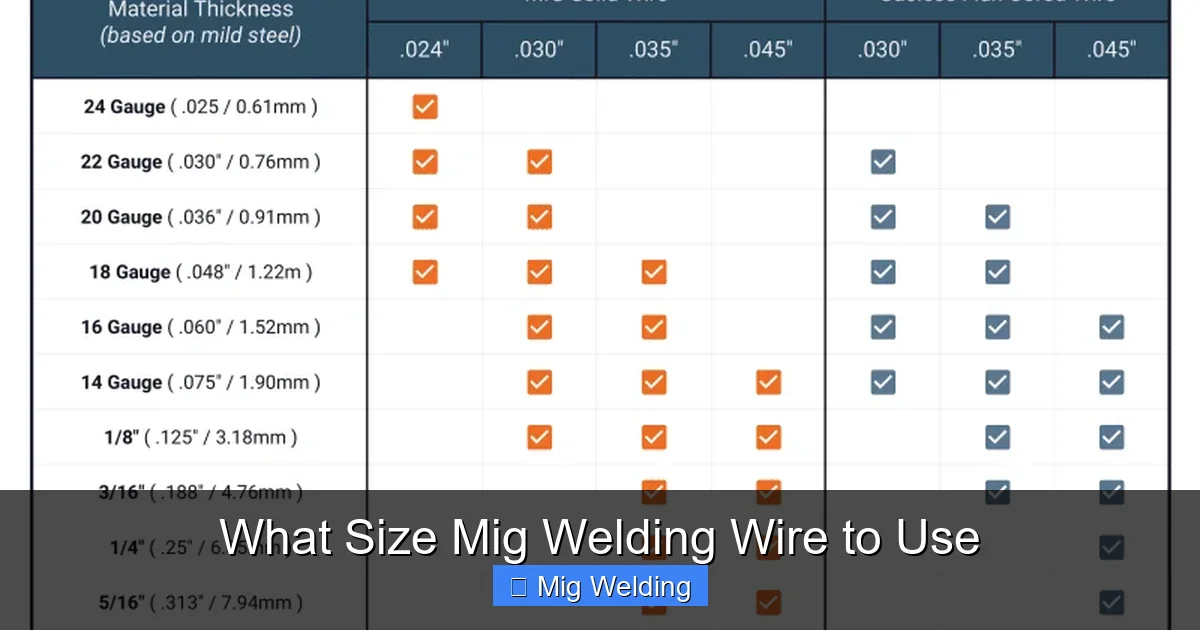
Start with the recommended wire sizes, experiment on scrap, and always prioritize safety. Happy welding!
