

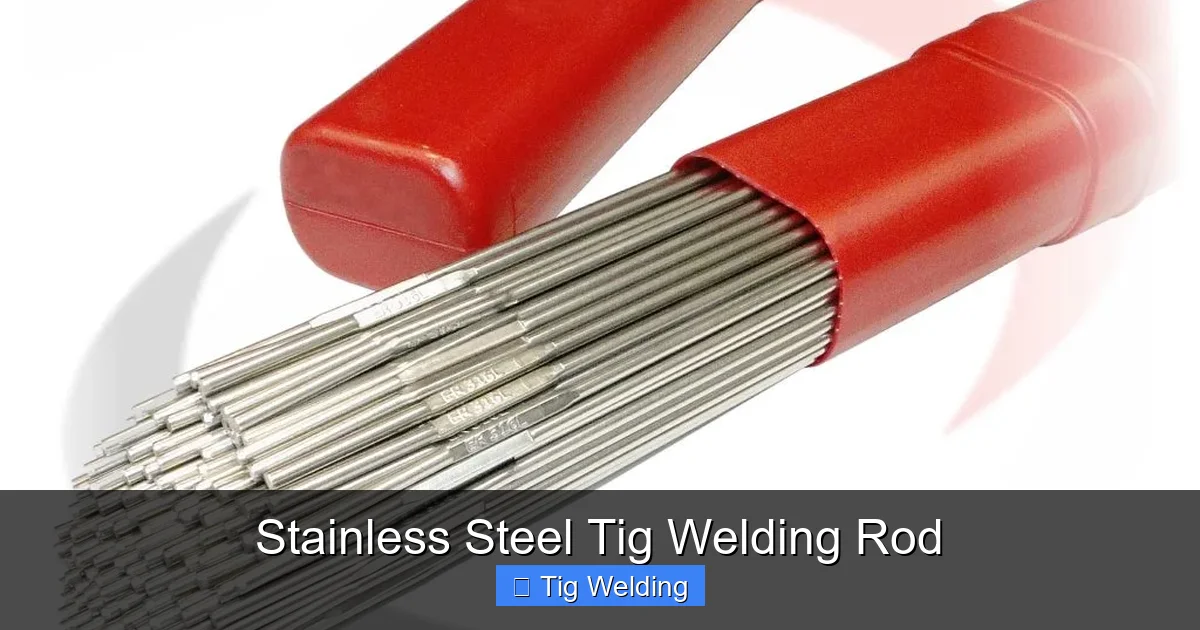
Stainless steel TIG welding rods are essential for creating durable, high-quality welds on stainless steel surfaces. They come in various types tailored for different applications, ensuring strong and corrosion-resistant joints. Whether you’re a beginner or a pro, understanding these rods helps achieve better welding results.
Key Takeaways
- Versatility: Stainless steel TIG welding rods are suitable for a wide range of stainless steel alloys and thicknesses.
- Types: Different rods, such as 308L, 309L, 316L, cater to specific welding needs and corrosion resistance.
- Material Compatibility: These rods are designed to match or complement the base stainless steel, ensuring strong welds.
- Welding Tips: Proper technique, shielding gas, and settings are crucial for optimal results.
- Applications: Used in industries like automotive, construction, and food processing for corrosion-resistant joints.
- Choosing the Right Rod: Factors include base metal type, thickness, and environmental conditions.
Quick Answers to Common Questions
Question 1?
What is the main purpose of stainless steel TIG welding rods?
They serve as filler material to join stainless steel pieces, ensuring strong, corrosion-resistant welds.
Question 2?
Which stainless steel TIG rod is best for marine applications?
316L is ideal due to its high corrosion resistance in marine environments.
Question 3?
Can I weld stainless steel to other metals with TIG rods?
Yes, with the appropriate rods like 309L, you can weld stainless steel to carbon steel or other dissimilar metals.
Question 4?
How do I prevent porosity when welding stainless steel?
Ensure proper cleaning of the base metal, use high-quality shielding gas, and check for leaks to prevent contamination.
Question 5?
What factors affect the choice of a stainless steel TIG welding rod?
Base metal type, environment, thickness, and specific project requirements influence the selection.
📑 Table of Contents
- Introduction to Stainless Steel TIG Welding Rods
- What Are Stainless Steel TIG Welding Rods?
- Types of Stainless Steel TIG Welding Rods
- Factors to Consider When Choosing a TIG Welding Rod
- Practical Tips for Welding Stainless Steel with TIG Rods
- Common Challenges and How to Overcome Them
- Conclusion: Mastering Stainless Steel TIG Welding Rods
Introduction to Stainless Steel TIG Welding Rods
When it comes to welding stainless steel, the choice of filler material can make or break your project. Stainless steel TIG welding rods are a popular choice because they produce clean, precise, and corrosion-resistant welds. TIG welding, or Gas Tungsten Arc Welding (GTAW), is known for its control and quality, making it ideal for stainless steel applications.
If you’re new to welding or looking to improve your skills, understanding the types of stainless steel TIG rods available and how to use them properly is essential. From automotive parts to food processing equipment, these rods help create joints that last and resist rust. So, let’s dive into the world of stainless steel TIG welding rods and see how they can elevate your welding game.
What Are Stainless Steel TIG Welding Rods?
Definition and Purpose
Stainless steel TIG welding rods are consumable filler materials used in TIG welding to join stainless steel pieces. They melt during welding, filling the gap and forming a strong, durable joint. These rods are specifically designed to match the properties of stainless steel, ensuring corrosion resistance and structural integrity.
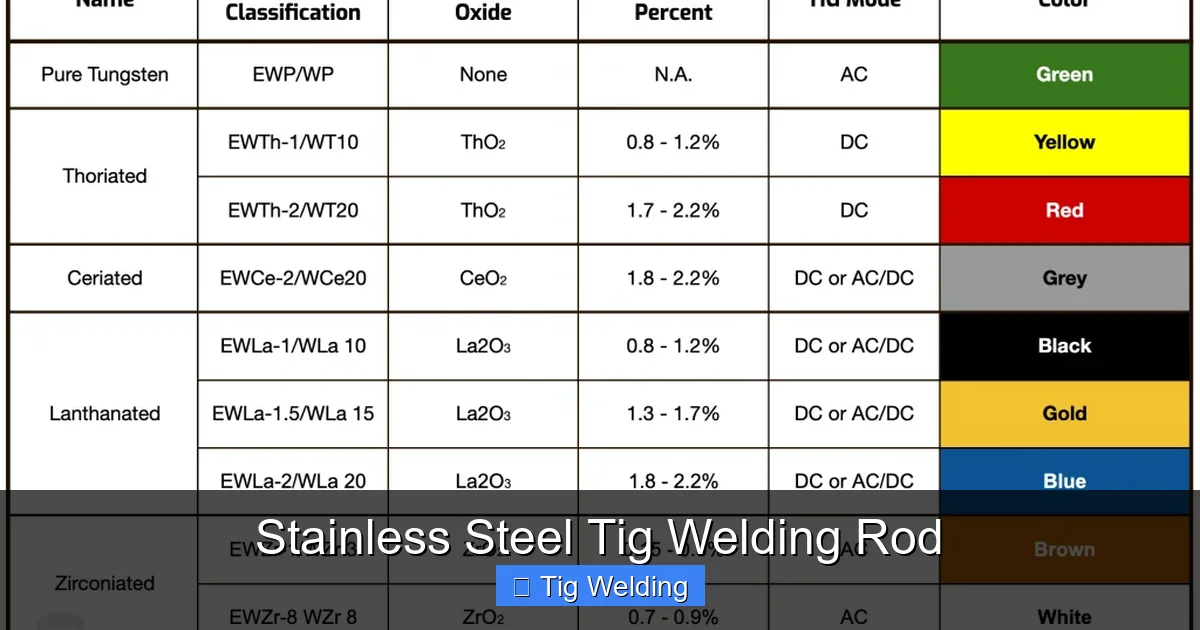
Visual guide about Stainless Steel Tig Welding Rod
Image source: weldguru.com
Why Choose Stainless Steel Rods for TIG Welding?
- Corrosion Resistance: Stainless steel rods maintain the corrosion-resistant qualities of the base metal.
- High-Quality Finish: TIG welding produces clean, smooth welds with minimal spatter, which these rods facilitate.
- Versatility: Suitable for thin sheets, pipes, and complex shapes.
- Strength: Creates strong joints suitable for structural and aesthetic applications.
Types of Stainless Steel TIG Welding Rods
Common Grades and Their Uses
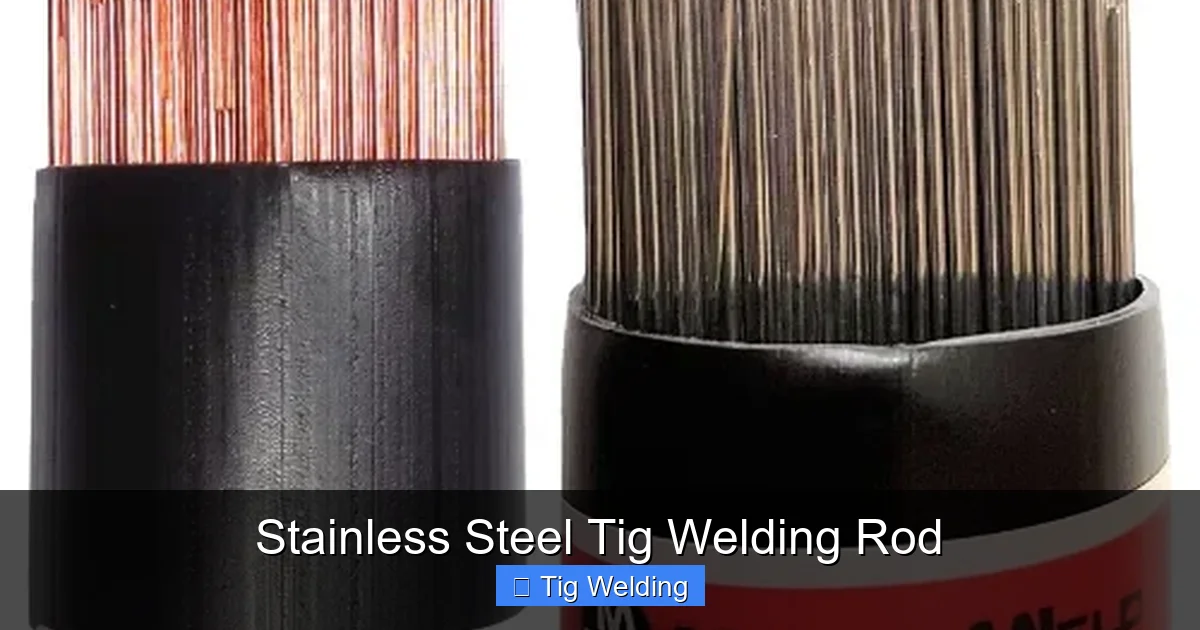
There are several types of stainless steel TIG rods, each designed for specific applications. The most common are 308L, 309L, 316L, 317L, and 321. Choosing the right one depends on your base metal and environmental conditions.
Visual guide about Stainless Steel Tig Welding Rod
Image source: aesis-aes-sales-gob2b.b-cdn.net
308L Stainless Steel TIG Rod
This is the most widely used filler rod for general stainless steel welding. It’s suitable for 304 and 308 stainless steels. The “L” indicates low carbon content, which reduces carbide precipitation and enhances corrosion resistance.
309L Stainless Steel TIG Rod
Best for joining stainless steel to carbon steel. It offers excellent high-temperature strength and oxidation resistance, making it suitable for dissimilar metal welding.
316L Stainless Steel TIG Rod
Ideal for marine environments and applications requiring high corrosion resistance. It’s commonly used with 316 stainless steel base metals, which contain molybdenum for added corrosion protection.
Other Types
- 317L: For welding high-alloy stainless steels with high corrosion resistance.
- 321: Contains titanium to prevent carbide precipitation, suitable for high-temperature environments.
Factors to Consider When Choosing a TIG Welding Rod
Base Metal Composition
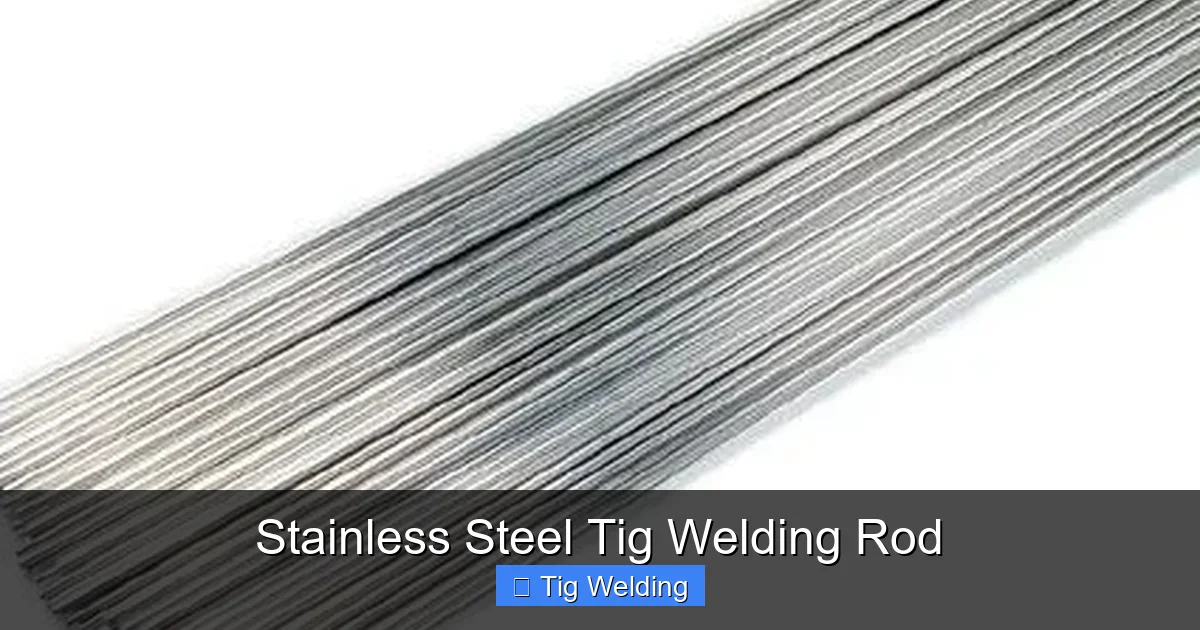
The filler rod should match or be compatible with the base metal. For example, use 316L for 316 stainless steel to ensure corrosion resistance.
Visual guide about Stainless Steel Tig Welding Rod
Image source: deltawelding.com.my
Project Environment
If welding in harsh environments, opt for rods with higher corrosion resistance like 316L or 317L.
Welding Thickness
Thicker materials may require different rod diameters and settings to ensure proper fusion.
Post-Weld Requirements
If post-weld heat treatment is needed, select rods that are compatible with such processes, like 321 or 347.
Practical Tips for Welding Stainless Steel with TIG Rods
Preparation
- Clean the base metal thoroughly to remove oils, dirt, and oxidation.
- Use a stainless steel wire brush or grinder dedicated to stainless steel.
- Ensure proper fit-up to avoid gaps and misalignments.
Welding Technique
- Maintain a consistent arc length for stable welding.
- Use a high-frequency start to prevent contamination.
- Control heat input to avoid warping or carbide precipitation.
- Keep the filler rod in the shielding gas zone for better protection.
Shielding Gas and Settings
- Use pure argon or argon with a small percentage of helium for better heat and penetration.
- Set the correct amperage based on rod size and material thickness.
- Maintain steady travel speed for uniform welds.
Common Challenges and How to Overcome Them
Porosity
Porosity often results from contamination or improper shielding. Ensure your shielding gas is pure and free of leaks, and clean the base metal thoroughly.
Cracking
Cracking can occur due to high heat input or improper filler selection. Use appropriate heat controls and select the correct rod type for your base metal.
Inconsistent Welds
Practice steady hand movements, maintain a consistent arc length, and ensure proper equipment settings to achieve uniform welds.
Conclusion: Mastering Stainless Steel TIG Welding Rods
Choosing the right stainless steel TIG welding rod is crucial for achieving high-quality, durable welds. Understanding the different types, their applications, and proper techniques empowers you to handle various projects confidently. Whether you’re working on industrial structures, automotive parts, or culinary equipment, mastering these rods helps ensure your welds are strong, corrosion-resistant, and visually appealing. Practice, patience, and attention to detail will make you a pro in stainless steel TIG welding. Happy welding!
Frequently Asked Questions
What is a stainless steel TIG welding rod?
A stainless steel TIG welding rod is a consumable filler wire used in TIG welding to join stainless steel components. It matches the properties of the base metal, providing corrosion resistance and strength.
Which stainless steel TIG rod should I use for 304 stainless steel?
Typically, 308L stainless steel TIG rods are used for welding 304 stainless steel, as they are compatible and produce high-quality welds.
Can stainless steel TIG rods be used for thin materials?
Yes, TIG welding is ideal for thin stainless steel sheets, and selecting a smaller diameter rod can help achieve precise, clean welds.
Do I need to preheat stainless steel before TIG welding?
Preheating is generally not necessary for thin stainless steel, but thicker or high-alloy materials may benefit from controlled preheating to prevent cracking.
How do I choose the right TIG welding rod diameter?
Use a rod diameter roughly half or less than the thickness of the material. For example, 1/16 inch rods are suitable for thin sheets, while 3/16 inch rods suit thicker materials.
Is post-weld heat treatment needed for stainless steel welds?
It depends on the application. Some stainless steels, especially those prone to carbide precipitation, benefit from post-weld heat treatment to restore corrosion resistance.
