

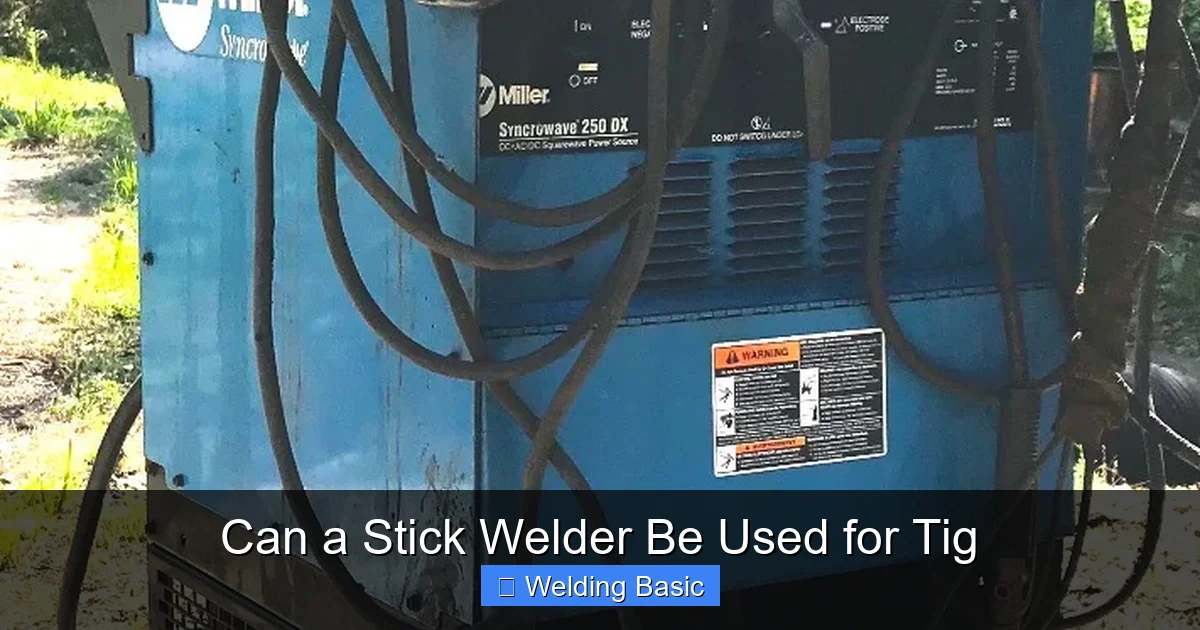
Most stick welders cannot perform true TIG welding because they lack high-frequency start and AC output. However, some advanced multi-process welders offer both stick and TIG functions, allowing limited TIG-like results with modifications.
Key Takeaways
- Standard stick welders are not designed for TIG welding: They typically only provide DC output and lack the high-frequency start needed for TIG.
- Multi-process welders can do both stick and TIG: If your machine is labeled as “stick/TIG” or “multi-process,” it likely supports basic TIG welding.
- You can adapt a DC stick welder for scratch-start TIG: With a TIG torch and argon gas, you can attempt TIG welding using the scratch-start method, though it’s less precise.
- AC output is essential for aluminum TIG welding: Since most stick welders only run on DC, they cannot weld aluminum effectively with TIG.
- Safety and setup are critical: Always use proper PPE, ensure correct gas flow, and ground your workpiece when attempting any welding adaptation.
- Results will be limited compared to a true TIG welder: Expect rougher starts, less control, and more cleanup when using a stick welder for TIG-like work.
- Consider upgrading for serious TIG work: For consistent, high-quality TIG welds, investing in a dedicated TIG or multi-process welder is recommended.
Can a Stick Welder Be Used for TIG? A Complete How-To Guide
If you’re a DIY welder or a professional on a budget, you might be wondering: Can a stick welder be used for TIG welding? It’s a common question, especially when you already own a stick welder and want to expand your welding capabilities without buying new equipment.
The short answer? Most standard stick welders cannot perform true TIG welding—but there are exceptions and workarounds. In this guide, we’ll explore what TIG welding requires, why most stick welders fall short, and how you might adapt your current machine to get close. We’ll also walk you through step-by-step instructions, safety tips, and when it’s time to upgrade.
By the end of this guide, you’ll know exactly what’s possible, what’s practical, and how to make the most of your existing gear.
Understanding the Basics: Stick vs. TIG Welding
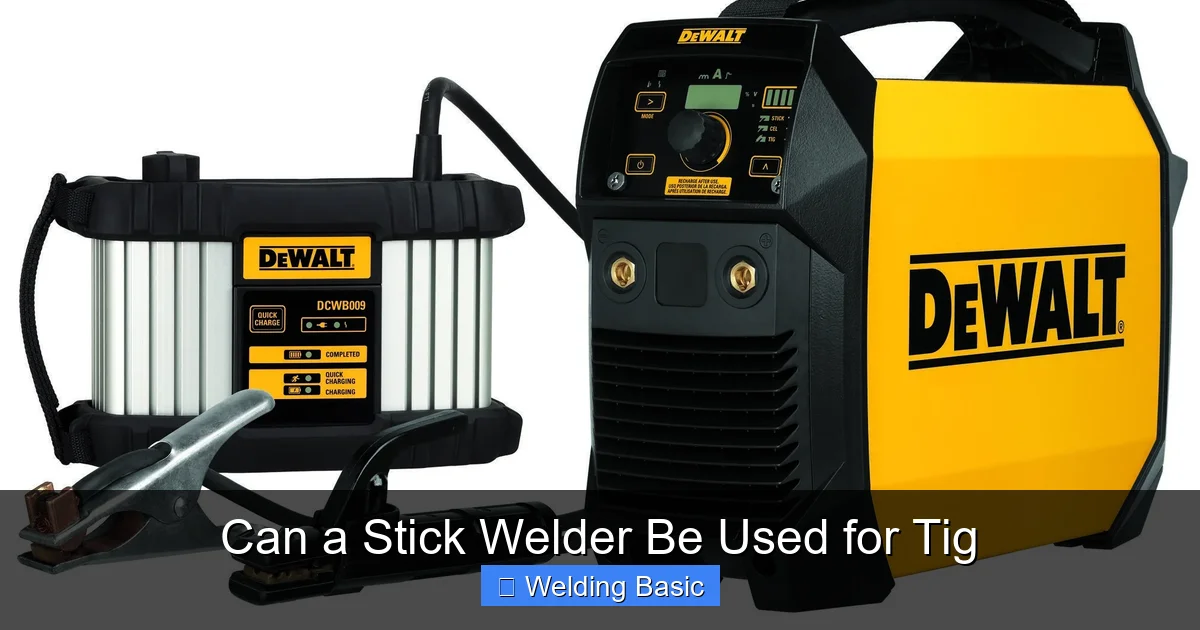
Visual guide about Can a Stick Welder Be Used for Tig
Image source: i.pinimg.com
Before we dive into whether a stick welder can do TIG work, let’s quickly compare the two processes.
Stick welding (SMAW) uses a consumable electrode coated in flux. The electrode creates an arc when it touches the workpiece, melting both the electrode and the metal to form a weld. It’s rugged, works well outdoors, and is great for thick materials.
TIG welding (GTAW), on the other hand, uses a non-consumable tungsten electrode, inert gas (usually argon), and often a separate filler rod. It offers precise control, clean welds, and is ideal for thin materials, aluminum, and stainless steel.
The key differences lie in:
- Electrode type: Consumable (stick) vs. non-consumable (TIG)
- Gas shielding: Flux (stick) vs. external gas (TIG)
- Power source requirements: DC-only (most stick) vs. AC/DC with high-frequency start (TIG)
These differences mean that while both use electric arcs, they require very different machine capabilities.
Why Most Stick Welders Can’t Do True TIG Welding
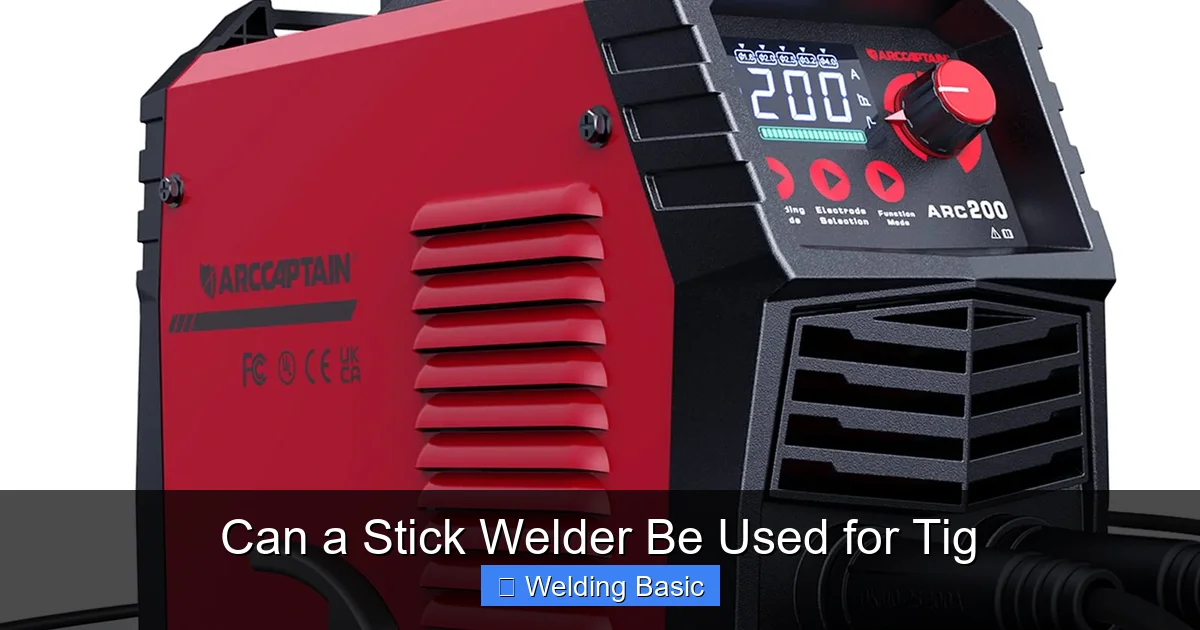
Visual guide about Can a Stick Welder Be Used for Tig
Image source: m.media-amazon.com
Here’s the core issue: standard stick welders lack the features needed for proper TIG welding.
1. No High-Frequency Start
TIG welding requires a high-frequency (HF) start to initiate the arc without touching the tungsten to the metal. This prevents contamination and gives you clean, controlled starts. Most stick welders don’t have HF—they rely on scratch-starting, which is fine for stick but messy for TIG.
2. Limited to DC Output
The majority of stick welders operate on direct current (DC), which is great for steel but useless for aluminum. TIG welding aluminum requires alternating current (AC) to break up the oxide layer. Without AC, you simply can’t weld aluminum properly.
3. No Gas Valve Control
TIG welding needs precise control over shielding gas flow. Stick welders don’t have built-in gas solenoids or flow meters. You’d need to manually control gas with an external regulator, which is inconvenient and less reliable.
4. Lack of Amperage Control
TIG welding often requires fine-tuned amperage control, especially for thin materials. Many basic stick welders have limited or stepped amperage settings, making delicate work difficult.
So, while your stick welder is powerful and reliable for its intended use, it’s not built for the precision and control that TIG demands.
When It Might Work: Multi-Process Welders
Now for the good news: some welders are designed to do both stick and TIG.
These are called multi-process welders or stick/TIG combo machines. They include:
- High-frequency start
- AC and DC output
- Built-in gas control
- Foot pedal or torch switch compatibility
If your machine is labeled as a “TIG/stick welder” or “multi-process inverter,” there’s a good chance it can handle basic TIG welding—especially on steel.
Check your user manual or look for TIG-specific ports (like a 7-pin connector for a TIG torch). If it’s there, you’re in luck.
How to Adapt a DC Stick Welder for Scratch-Start TIG
If you have a standard DC stick welder and want to try TIG-like welding, you can attempt a method called scratch-start TIG. It’s not ideal, but it can work for small repairs or practice.
Note: This method only works on steel (DC), not aluminum. And expect rougher starts and less control.
Step 1: Gather the Right Equipment
You’ll need:
- A TIG torch compatible with your welder’s connector
- Tungsten electrode (2% thoriated or ceriated, 1/16″ or 3/32″)
- Argon gas cylinder with regulator and flow meter
- Filler rods (matching your base metal)
- Ground clamp and clean workpiece
Step 2: Set Up the Welder
- Turn off the welder and unplug it.
- Connect the TIG torch to the electrode holder port (usually the same as the stick electrode holder).
- Attach the ground clamp to the workpiece or welding table.
- Set the welder to DC electrode negative (DCEN), which is standard for TIG on steel.
- Adjust amperage based on material thickness (start low—around 80–120 amps for 1/8″ steel).
Step 3: Prepare the Tungsten
- Grind the tungsten to a sharp point (for DC welding).
- Insert it into the TIG torch collet.
- Make sure it extends about 1/4″ beyond the gas cup.
Step 4: Set Up Gas Flow
- Connect the argon hose from the regulator to the TIG torch.
- Set gas flow to 15–20 CFH (cubic feet per hour).
- Open the valve and let gas flow for a few seconds before welding to purge air.
Step 5: Practice Scratch-Starting
- Hold the torch at a 15–20 degree angle.
- Use a scratching motion—like striking a match—to touch the tungsten to the metal and quickly lift off.
- The arc should start. If not, try again with a firmer scratch.
- Once the arc is on, maintain a short arc length (1/8″ or less).
Step 6: Weld with Filler Rod
- Use your other hand to feed the filler rod into the weld puddle.
- Move steadily along the joint.
- Keep the tungsten from touching the puddle—it will contaminate the weld.
Step 7: Post-Weld Care
- Let the weld cool naturally.
- Inspect for porosity, cracks, or contamination.
- Clean the tungsten if it gets dirty (re-grind if needed).
Practical Tips for Better Results
Even with limitations, you can improve your scratch-start TIG experience:
- Use a lift-arc TIG torch if available: Some torches have a lift-start feature that reduces contamination.
- Keep the tungsten sharp: A dull tip makes starting harder and increases the chance of touching the puddle.
- Practice on scrap metal: Scratch-start TIG takes practice—don’t expect perfection on your first try.
- Use a welding table with a ground: Ensures consistent electrical contact.
- Wear proper PPE: TIG produces intense UV light—use a helmet with auto-darkening lens, gloves, and long sleeves.
Troubleshooting Common Issues
Arc Won’t Start
- Check connections—loose cables prevent current flow.
- Ensure the tungsten is sharp and clean.
- Try increasing amperage slightly.
Tungsten Contaminates
- You’re likely touching the puddle or filler rod.
- Keep the tungsten clean and avoid contact.
- Re-grind if contaminated.
Poor Weld Quality
- Check gas flow—too low causes porosity.
- Ensure base metal is clean (no oil, rust, or paint).
- Adjust travel speed—too fast = weak weld; too slow = burn-through.
Excessive Sparking or Spatter
- Arc length is too long—keep it short.
- Amperage may be too high for the material.
- Tungsten may be too long or dull.
When to Upgrade to a Real TIG Welder
While adapting a stick welder can work in a pinch, it’s not a long-term solution. If you plan to do regular TIG welding—especially on aluminum or thin materials—it’s worth investing in a dedicated TIG or multi-process welder.
Look for features like:
- High-frequency or lift-arc start
- AC/DC output
- Foot pedal control
- Pulse welding capability
- Built-in gas solenoid
Brands like Miller, Lincoln, ESAB, and Hobart offer affordable entry-level TIG machines that are well worth the upgrade for serious welders.
Final Thoughts
So, can a stick welder be used for TIG? The answer is: sometimes, with major limitations.
Standard stick welders lack the high-frequency start, AC output, and gas control needed for true TIG welding. However, if you have a multi-process machine, you may already have TIG capability. And if you’re using a DC stick welder, you can attempt scratch-start TIG on steel—just know the results won’t match a real TIG setup.
For occasional use or practice, the adaptation method can be a useful hack. But for consistent, high-quality TIG welds—especially on aluminum—investing in the right tool is the best move.
Remember: welding is as much about safety and precision as it is about power. Always follow safety guidelines, use proper equipment, and know your machine’s limits.
With the right knowledge and a little creativity, you can stretch your current welder’s capabilities. But when it comes to TIG, sometimes the best weld starts with the right tool.
