

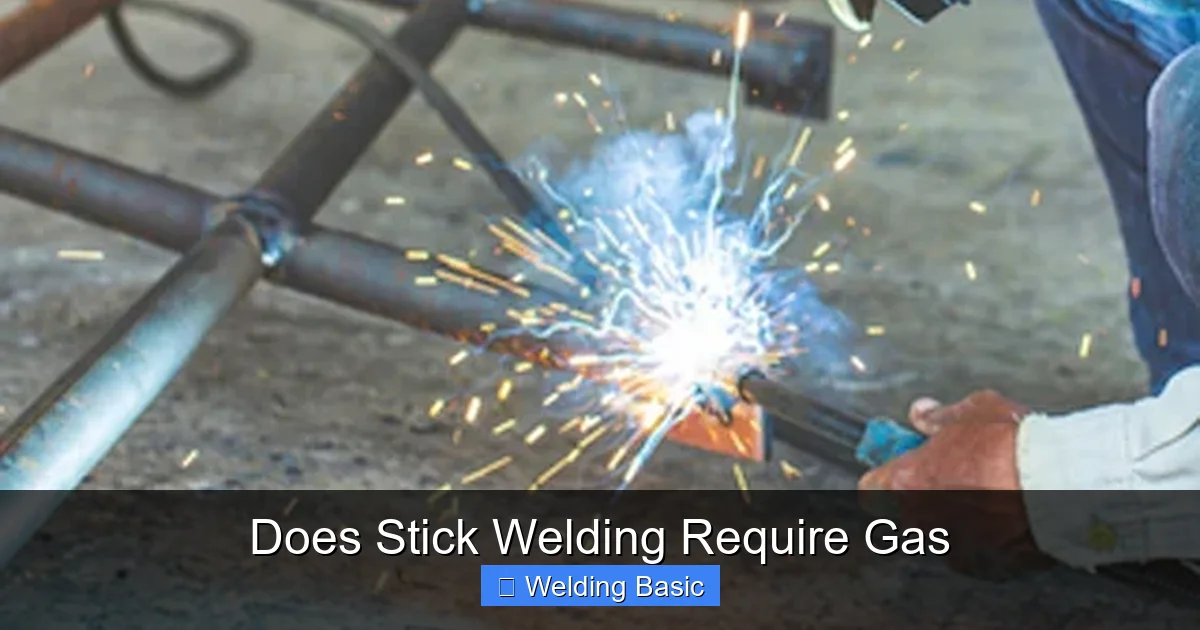
Stick welding typically does not require external gas because the electrode’s flux coating creates its own shielding. However, certain advanced techniques or environments may benefit from supplemental gas. This guide explains how stick welding works, when gas is optional, and how to choose the right setup for your project.
Key Takeaways
- Stick welding usually doesn’t need external gas: The flux coating on the electrode generates shielding gas when burned, protecting the weld pool.
- Flux does the work: As the electrode melts, the flux decomposes and releases gases that prevent contamination from air.
- Gas may help in windy or drafty areas: Outdoor welding can blow away natural shielding, so some welders use windshields or add gas for stability.
- Not all stick electrodes are the same: Some low-hydrogen rods (like E7018) perform better with slight gas assistance in critical applications.
- Stick welding is portable and versatile: No gas cylinders mean easier setup in remote locations or on job sites without power or gas lines.
- Cleanliness matters more than gas: Proper joint prep and dry electrodes are key to strong welds—more so than adding gas unnecessarily.
- Gas-shielded stick welding exists but is rare: Known as “open arc with gas assist,” it’s used in specialized industrial settings, not typical DIY or field work.
Does Stick Welding Require Gas? A Complete How-To Guide
If you’re new to welding or considering stick welding for your next project, you’ve probably asked: *Does stick welding require gas?* It’s a common question—and a great one. The short answer is: **usually, no.** But there’s more to the story. Stick welding, also known as Shielded Metal Arc Welding (SMAW), is one of the oldest and most reliable welding methods. Its biggest advantage? Simplicity. You don’t need a gas tank, hoses, or regulators like you do with MIG or TIG welding. But how does it work without gas? And are there times when gas might still help? Let’s break it all down.
In this guide, you’ll learn exactly how stick welding creates its own shielding, when external gas might be useful, how to choose the right electrodes, and tips for getting clean, strong welds—even without a gas cylinder. Whether you’re welding in your garage, on a farm, or at a construction site, this guide will help you understand when gas is necessary… and when it’s just extra weight in your toolbox.
How Stick Welding Works Without Gas
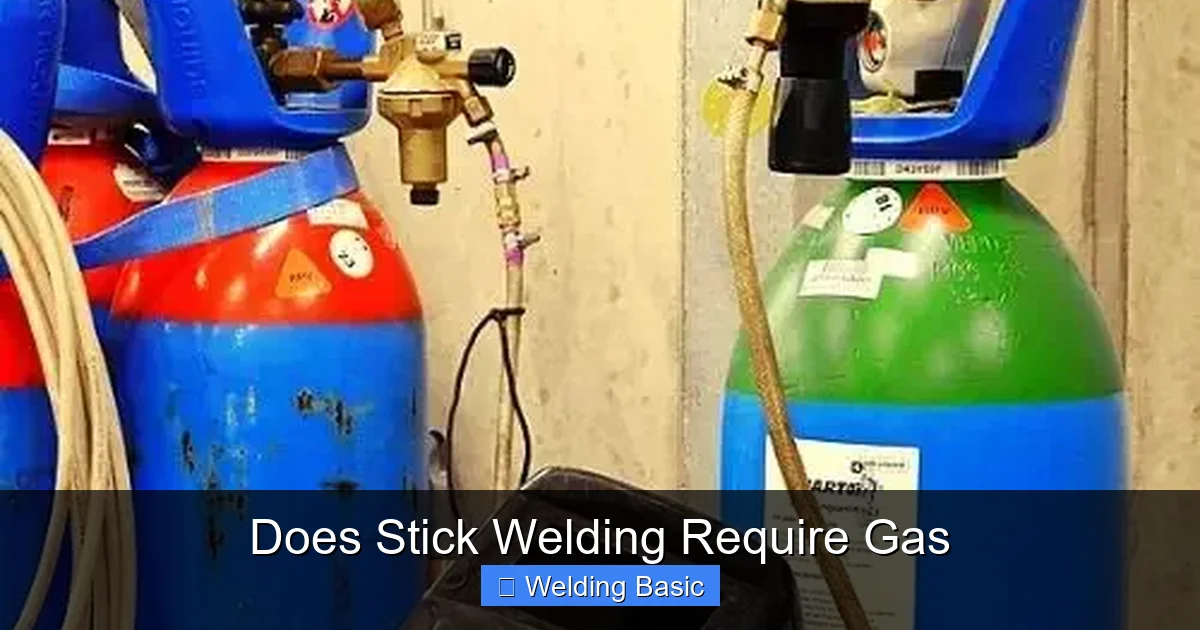
Visual guide about Does Stick Welding Require Gas
Image source: weldingmania.com
Stick welding doesn’t rely on external gas because the electrode itself provides protection. Here’s how it works:
The Role of the Flux Coating
Every stick electrode has a metal core surrounded by a flux coating. When you strike an arc, the heat melts both the core and the flux. As the flux burns, it does two important things:
– It releases shielding gases (like carbon dioxide and hydrogen) that form a protective bubble around the molten weld pool.
– It creates a layer of slag that covers the cooling weld, preventing oxygen and nitrogen from contaminating the metal.
This built-in shielding is why stick welding is so popular for outdoor work—wind doesn’t blow away the protection as easily as it does with MIG welding.
No Gas Cylinder Needed
Because the flux generates its own shielding, you don’t need a gas tank, regulator, or hose. This makes stick welding extremely portable. You just need:
– A welding machine (AC or DC)
– Electrodes (sticks)
– Ground clamp
– Safety gear (helmet, gloves, jacket)
That’s it. No gas = fewer parts to carry, maintain, or run out of mid-job.
When Might Gas Be Useful in Stick Welding?
Visual guide about Does Stick Welding Require Gas
Image source: welderology.com
While stick welding typically doesn’t require gas, there are rare cases where adding gas can improve results.
Windy or Drafty Environments
Even though flux creates its own shielding, strong wind can disrupt the gas bubble and blow away the slag before it solidifies. If you’re welding outside on a breezy day, you might see:
– Porosity (tiny holes in the weld)
– Weak, brittle joints
– Inconsistent bead appearance
In these cases, welders often use:
– Windshields or welding screens
– Windbreaks made of plywood or tarps
– Or, in rare cases, a low-flow gas assist (like CO₂) to stabilize the arc
But note: this is not standard practice. Most stick welders rely on technique and positioning instead of adding gas.
Critical or High-Strength Applications
In industrial settings—like pressure vessel welding or structural steel—some welders use gas-shielded stick electrodes for extra consistency. These are called “gas-shielded” or “open arc with gas assist” rods. They still have flux, but they’re designed to work with a small flow of shielding gas (usually 75% argon / 25% CO₂) for:
– Smoother arc
– Less spatter
– Better penetration
However, these rods are expensive, require special equipment, and are rarely used outside professional fabrication shops.
Welding Thin or Reactive Metals
For thin steel or metals like stainless steel, some advanced welders add gas to reduce oxidation and improve bead appearance. But again, this is the exception—not the rule. Most hobbyists and field welders stick (pun intended) to standard flux-coated rods without gas.
Choosing the Right Stick Electrode
The type of electrode you use affects how well your weld performs—with or without gas. Here’s a quick guide:
Common Electrode Types
- E6010: Deep penetration, fast-freeze. Great for vertical and overhead welding. Works well in windy conditions. No gas needed.
- E6011: Similar to E6010 but works on AC or DC. Ideal for repair work and rusty metal.
- E6013: Easy to use, smooth arc. Best for thin metal and beginners. Minimal spatter.
- E7018: Low-hydrogen rod. Produces strong, crack-resistant welds. Often used in structural welding. Some pros use light gas assist in critical joints, but it’s not required.
Keep Electrodes Dry
Moisture is the enemy of stick welding—especially with low-hydrogen rods like E7018. Wet electrodes can cause:
– Porosity
– Hydrogen cracking
– Weak welds
Always store rods in a dry place. Many pros use a rod oven to keep them at 250–300°F (120–150°C) before use.
Step-by-Step: Stick Welding Without Gas
Ready to try it? Here’s how to weld with stick—no gas required.
Step 1: Gather Your Tools
– Stick welder (set to correct amperage)
– Electrodes (match metal type and thickness)
– Ground clamp
– Wire brush or grinder
– Safety gear (helmet, gloves, flame-resistant clothing)
Step 2: Prepare the Metal
Clean the joint thoroughly. Remove rust, paint, oil, and dirt. Use a wire brush or grinder for best results. A clean surface ensures good fusion.
Step 3: Set Up the Machine
– Choose DC+ (electrode positive) for most rods (E6010, E7018)
– Choose AC for E6011 or if your machine doesn’t have DC
– Set amperage based on electrode size (e.g., 1/8″ E6010 = 90–130 amps)
Step 4: Strike the Arc
Hold the electrode at a 15–20 degree angle. Tap it against the metal like striking a match, then lift slightly to create the arc. Don’t touch the metal—just hover.
Step 5: Weld with a Steady Motion
Move the electrode in a straight line or slight weave, depending on the joint. Keep a short arc length—about the diameter of the electrode core. Listen for a steady crackling sound. If it’s sputtering, your arc is too long.
Step 6: Chip Away the Slag
After welding, let the weld cool slightly. Then use a chipping hammer and wire brush to remove the slag. This reveals the weld and prepares it for inspection or additional passes.
Troubleshooting Common Stick Welding Problems
Even without gas, stick welding can have issues. Here’s how to fix them:
Problem: Arc Won’t Start or Is Unstable
- Cause: Dirty metal, wrong amperage, or damp electrode
- Fix: Clean the metal, check machine settings, and use dry rods
Problem: Excessive Spatter
- Cause: Too high amperage or long arc length
- Fix: Reduce amperage and keep the arc short
Problem: Porosity (Holes in the Weld)
- Cause: Wind, dirty metal, or moisture
- Fix: Weld in a sheltered area, clean the joint, and store rods properly
Problem: Slag Inclusion
- Cause: Not cleaning between passes or moving too fast
- Fix: Chip and brush each layer before adding the next
When to Consider Other Welding Methods
While stick welding is great for many jobs, it’s not always the best choice. Consider MIG or TIG welding if:
– You’re working indoors with clean metal
– You want faster, cleaner welds
– You’re welding thin materials or aluminum
– Appearance matters (stick welds are rougher)
But for outdoor work, repairs, or heavy steel, stick welding—without gas—remains one of the most reliable methods.
Conclusion
So, does stick welding require gas? **No—not usually.** The flux coating on the electrode creates its own shielding, making external gas unnecessary for most applications. This is what makes stick welding so popular for field work, repairs, and remote locations. You get strong, durable welds without the hassle of gas tanks or hoses.
That said, in extreme wind or high-precision industrial work, a little gas assistance might help. But for 95% of stick welding jobs—especially for DIYers, farmers, and contractors—gas is optional at best.
Focus instead on using the right electrode, keeping your rods dry, and mastering your technique. With practice, you’ll be welding strong, clean joints—no gas required.
